
Hardware and AI Collide: What This Week’s Phone Leaks, Foldable Push, and Smart Glasses Plans Mean for Apple and the Industry
If you’ve been watching the tech space this week, you’ve seen something interesting happening. It’s not just one company making moves, it’s Apple, Huawei, Oppo, Sony, and Meta all pushing in different directions at once. The old model of steady, incremental upgrades? That’s gone. What we’re seeing now is a full-on sprint across multiple fronts, with foldables redefining what a phone can be, camera systems chasing insane megapixel counts, and AI getting wired directly into wearable hardware.
For developers and system architects, this convergence matters more than you might think. User expectations are shifting fast, people want seamless machine perception, solid on-device performance, and smooth cross-device continuity. They’re not just asking for better specs, they’re asking for smarter experiences.
The Wide Foldable Arrives
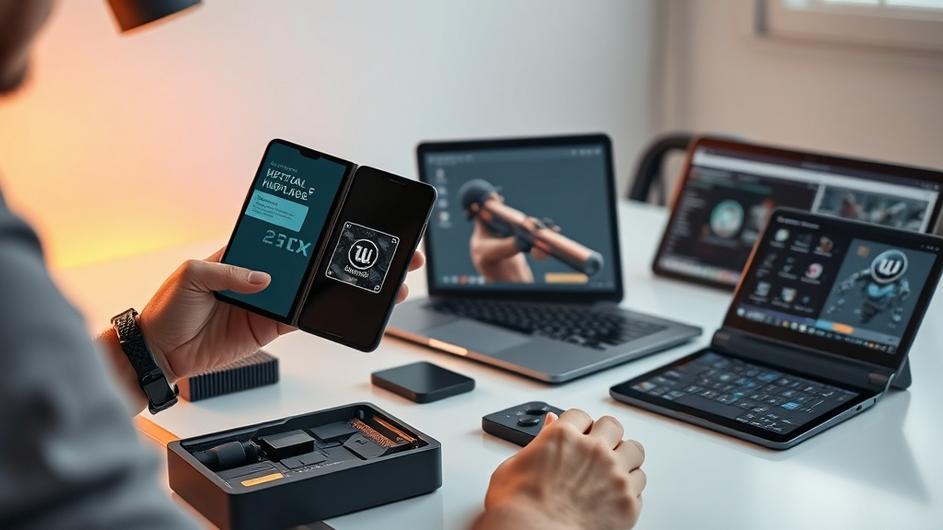
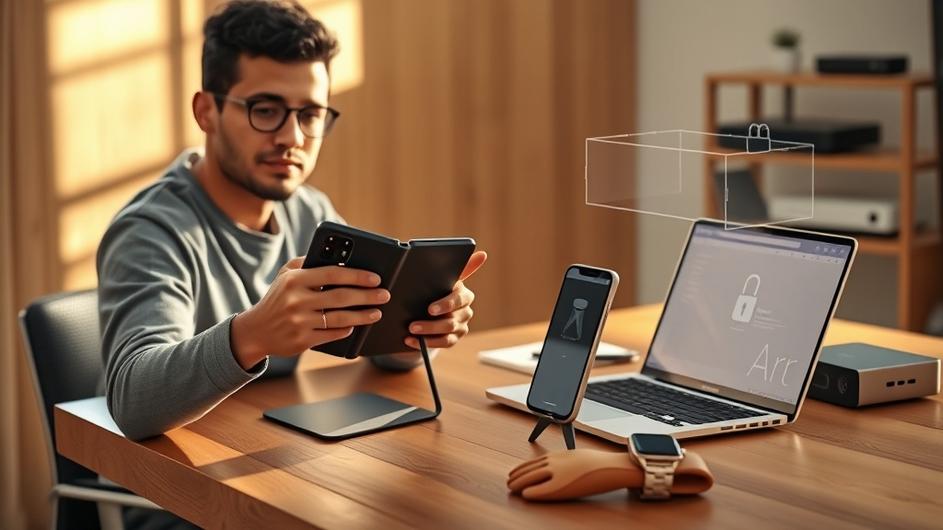
Let’s start with the hardware. Huawei just gave us our first real look at the Pura X Max through pre-launch hands-on images, and it’s showing us something called a ‘wide foldable.’ This isn’t just another folding phone, it’s a device that opens into a broader interior display rather than the tall, narrow tablets we’ve seen before.
As Notebookcheck reported, these images appeared just hours before launch, giving us a genuine peek at what Huawei’s calling a new interaction surface. That ‘wide’ idea isn’t just cosmetic, it changes how you use the device. Wider inner displays make multitasking feel more natural, landscape-first apps actually work properly, and it forces everyone to rethink how mobile UI should scale.
Seeing the Pura X Max in real-world shots highlights something important, manufacturers aren’t just tweaking hinge engineering anymore. They’re experimenting with display proportions, trying to find the sweet spot between portability and usability. This is part of a bigger trend we’ve been tracking in our analysis of how foldables and AR glasses are converging.
The Camera Wars Heat Up
Meanwhile, Oppo and Sony are playing the camera game hard. Oppo confirmed that its Find X9 Ultra will pack a 200-megapixel main sensor with 10x zoom, making photography the headline feature. Sony’s Xperia 1 VIII is reportedly following a similar path, according to leaked timing details.
Higher pixel counts let phones capture more detail and provide stronger digital zoom when paired with good optics. But here’s the catch, raw megapixels are only half the story. Software processing and sensor sensitivity make the difference between a marketing spec and something that actually works in low light. You can have all the pixels in the world, but if the computational imaging isn’t there, you’re just getting bigger files, not better photos.
This camera push is happening alongside what we’ve seen in April’s hardware developments, where companies are betting big on imaging as a key differentiator.
Where Does This Leave Apple?
All this movement puts serious pressure on Apple. MacRumors has been tracking a steady stream of rumors about Apple exploring a foldable iPhone, while iOS 26.5 and later iOS 27 hints show parallel software pushes. But Apple’s also facing short-term supply tightening for Mac mini and Mac Studio, a reminder that even the biggest players depend on manufacturing bandwidth and component chains.
Then there’s the satellite situation. News that Amazon will acquire one of Apple’s satellite partners raises strategic questions about service continuity and control over satellite-enabled features. For developers building apps that need seamless connectivity, ownership changes among satellite providers can ripple into service level agreements, testing regimes, and fallbacks for when connectivity gets spotty.
So why does this matter for the foldable conversation? If Apple’s watching, and they definitely are, the industry is showing that new form factors can be commercially meaningful. Computational photography and multimodal AI are becoming core to the experience, not just nice-to-have features. A foldable iPhone wouldn’t just be a larger display crammed into a different chassis. To win, it would need to deliver OS-level windowing that feels native, developer tools to adapt layouts, and hardware-software integration that beats the awkwardness we saw in early foldable generations.

AI Gets Physical with Meta’s Muse Spark
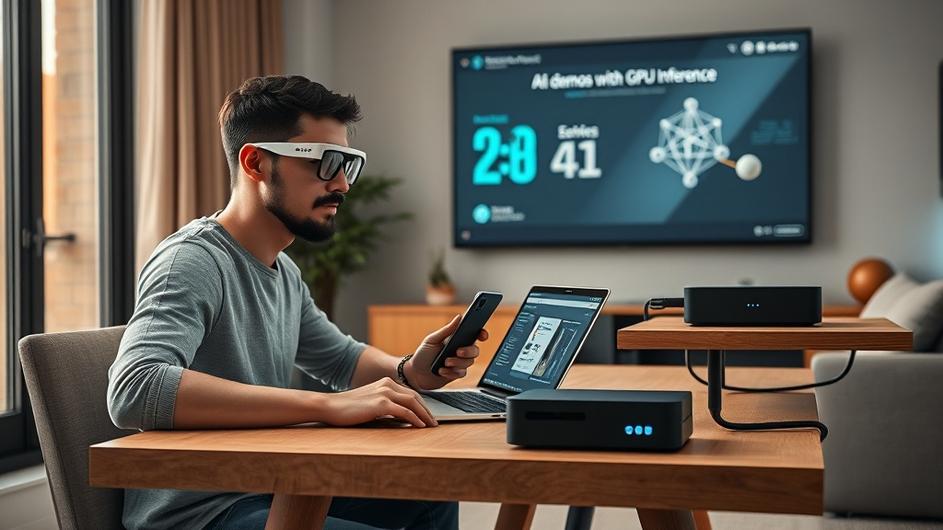
The other big shift happening is AI moving from cloud-first to distributed and embedded models. Meta’s announcement of Muse Spark, a multimodal model designed for real-world apps and wearables, signals how quickly AI is being adapted to consumer surfaces like smart glasses.
Multimodal means the model can process and combine text, images, and audio, enabling features like real-time captioning, scene understanding, and context-aware recommendations. As Glass Almanac explains, Muse Spark will appear inside Meta’s AI app and camera glasses, accelerating timelines for augmented reality features that felt aspirational just a year ago.
This aligns with what we’ve seen in Meta’s broader AI strategy, where the company is making pragmatic moves to stay competitive in the AI race.
For product teams wanting to integrate AI into hardware, the implications are twofold. First, latency and privacy concerns are pushing a lot of inference to the device or nearby endpoints, rather than relying on round-trip cloud calls. That has consequences for chip selection, thermal design, and SDKs. Second, the rate at which models like Muse Spark are rolling out raises important questions about robustness, safety, content accuracy, and user expectations. When AI powers glasses that augment reality in real time, even small errors can have outsized impact.
What This Means for Developers
Taken together, this week’s stories sketch a future where three forces meet. Form factor innovation, primarily through foldables, forces UI and app changes. Camera advances, with bigger sensors and longer zooms, reshape computational imaging and media workflows. And AI, especially multimodal models targeted at wearables, redefines what device interactions look like, blending visual context with conversational capabilities.
For developers, the immediate checklist is pretty practical. Think about fluid layouts and responsive UI patterns that go beyond simple screen-size breakpoints, because a wide foldable needs different ergonomics than a portrait phone. Design with variable compute in mind, so image pipelines gracefully scale between on-device and cloud inference depending on battery life and privacy policies. And add telemetry and fallbacks for intermittent connectivity, especially as satellite partnerships and ownership change in ways that can affect availability.
These considerations are exactly what we’ve been exploring in our guide to what developers should prepare for in 2026’s hardware moment.
The Big Picture
Industry players are betting that these elements compound rather than merely add together. A phone with a wide foldable screen and a 200-megapixel camera becomes a platform for richer AR content, if you can stitch live imagery with local AI and real-time annotations on a glasses display. That’s the future being sketched live by hardware leaks and AI rollouts this week.
There will be painful iterations, of course. Hinges will fail, models will make mistakes, and supply chains will tighten. But the high-level trajectory is clear. Devices are becoming canvases for multimodal experiences, and companies that align hardware, software, and AI infrastructure will have a durable advantage.
Looking forward, expect competition to accelerate cross-pollination rather than segmentation. Foldable form factors will force new developer tools, camera systems will push edge compute needs, and multimodal AI will migrate into wearables and companion apps. For engineers and product leaders, the opportunity is to design systems that treat displays, sensors, and models as a single coordinated stack, rather than separate components.
The winners will be teams that make complexity invisible to users, and that build flexible architectures able to adapt as sensors and models evolve. We’re watching a multipart experiment unfold where hardware innovation and AI capability collide, and as we’ve discussed in our analysis of what 2026 hardware leaks tell developers, this experiment is the signal to rethink assumptions.
For anyone building apps or devices, that means investing in adaptable UX patterns and preparing for an era where the phone, the glasses, and the cloud are parts of one continuous user surface. The sprint is on, and it’s happening in multiple directions at once.
Sources
Top Stories: ‘iPhone Ultra’ Rumors, Mac Mini and Mac Studio Shortages, and More, MacRumors, Apr 18 2026, https://www.macrumors.com/2026/04/18/top-stories-iphone-ultra-rumors/
Huawei Pura X Max: Pre-launch hands-on images show iPhone and Samsung how it’s done, Notebookcheck, Apr 19 2026, https://www.notebookcheck.net/Huawei-Pura-X-Max-Pre-launch-hands-on-images-show-iPhone-and-Samsung-how-it-s-done.1277655.0.html
Oppo officially reveals key specs of the Find X9 Ultra ahead of April 21 launch, Notebookcheck, Apr 19 2026, https://www.notebookcheck.net/Oppo-officially-reveals-key-specs-of-the-Find-X9-Ultra-ahead-of-April-21-launch.1277632.0.html
Sony Xperia 1 VIII: Launch details of Sony’s new flagship phone surface in the wild, Notebookcheck, Apr 15 2026, https://www.notebookcheck.net/Sony-Xperia-1-VIII-Launch-details-of-Sony-s-new-flagship-phone-surface-in-the-wild.1273538.0.html
Muse Spark Reveals Meta’s Plan For Smart Glasses In 2026 – Here’s Why It Matters, Glass Almanac, Apr 19 2026, https://glassalmanac.com/muse-spark-reveals-metas-plan-for-smart-glasses-in-2026-heres-why-it-matters/