
From Encrypted RCS to AR Glasses and Lamppost Data Centers, 2026 Is Rewiring the Tech Stack
Apple just shipped iOS, macOS, and iPadOS 26.5 with what looks like a small addition on paper. Encrypted RCS messaging, labeled beta and limited to a subset of carriers. But this quiet update signals something bigger. RCS stands for Rich Communication Services, the modern replacement for SMS that supports typing indicators, larger media, and better group messages. Adding encryption makes those richer conversations private by default. And Apple putting that capability in users hands tells us messaging interoperability is becoming a real priority.
At first glance that update might look incremental. A few Pride wallpapers. Some groundwork for ads in Maps. But in context it is part of a larger tension unfolding across devices, networks, and services. Apple is tidying the experience layer, adding privacy features while simultaneously preparing new revenue channels. The company still has an unfinished chapter to write on the AI assistant front too. The more capable, AI-backed Siri that Apple has teased repeatedly has not yet appeared in demos or public betas. That leaves a conspicuous gap between promises and deliverables as we approach the Worldwide Developers Conference next month.
Why That Gap Matters for AR
That gap matters because the next wave of hardware is aligning around augmented reality. Those devices will need both smarter local agents and a denser compute fabric to feel responsive. 2026 looks set to be the year AR hardware moves from niche demos to mainstream choices. Samsung shipped a Galaxy XR last year and is reportedly planning consumer launches this year in a mid-range price band. Snap is accelerating work with Qualcomm, aiming for earlier consumer-ready hardware. Magic Leap showed Android XR prototypes. Apple is said to be testing multiple smart glass designs, implying varied form factors and price tiers. The result will be an array of headsets and glasses that can, in some scenarios, feel like replacements for phones.
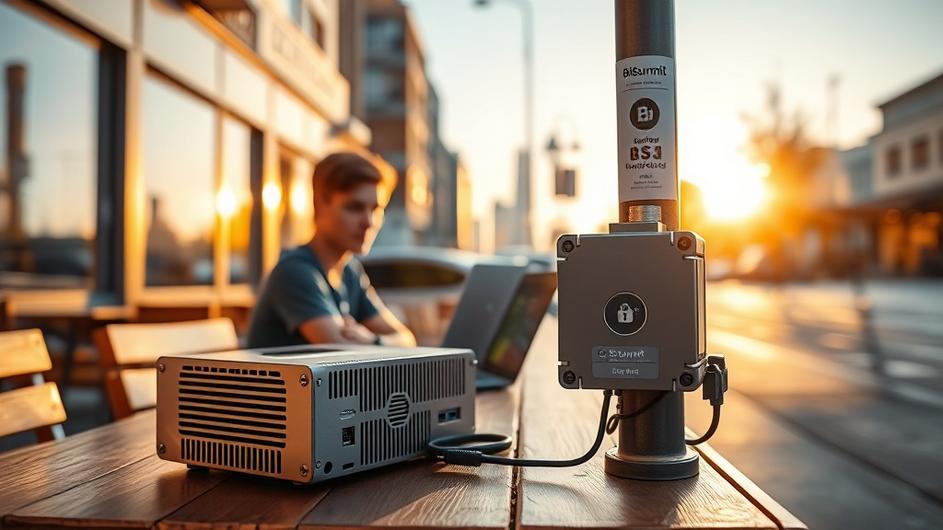
If AR glasses are to be more than novelty, they must solve a difficult equation. They have to be lightweight, always responsive, and run sophisticated AI for spatial understanding and contextual assistance. That pushes much of the heavy work closer to the user. This is where infrastructure innovations enter the story. Recent reporting about embedding tiny, solar-powered data centers in lampposts points to a practical model for edge computing. By placing compute nodes near end users, latency drops dramatically. Devices can offload expensive tasks without sending everything to distant public clouds.
Edge nodes in lampposts change more than performance. They alter the economic and security calculus. Nearby compute can enable new real-time features, and it can also be monetized in different ways. Imagine AR maps with locally rendered overlays, live translation and captioning, or multiplayer AR shared with low lag. Networks and carriers will be key partners here. Which circles back to RCS encryption and the carrier-limited rollout of that feature. Who controls access? Who owns the data paths? Who sells the context? Those questions will shape user experience and business models going forward. Smart eyewear and edge infrastructure are becoming two sides of the same coin.
The Security Reality Check
Security and content protection are already strained by the scale and size of modern software. Recent events make the stakes tangible. A high profile leak of Forza Horizon 6, where unencrypted preloads let pirates access a 155 gigabyte build early, underlines how distribution, encryption, and hardware-level enforcement are failing to keep pace with new release practices. Game publishers are talking about franchise-wide hardware bans for pirates, a blunt instrument that reflects frustration with leaks and cracks.
For developers and platform architects this is a warning. As compute shifts toward many small, edge-deployed nodes, secure provisioning, attestation, and safe key management become essential. Micro data centers will need hardware defenses and supply chain controls to prevent both data exfiltration and unauthorized content distribution. Those protections may include new classes of secure modules with self-protection features to prevent tampering in hostile edge environments. Whether those are secure enclaves, remote kill switches, or hardened chips, the principle is the same. Edge hardware must be easy to deploy and maintain, but also resilient against theft, tampering, and remote compromise.
For developers, that means designing for intermittent connectivity, robust content licensing APIs, and layered security that does not degrade the user experience. When cameras learn to see and wearables become primary interfaces, the attack surface expands dramatically.
What This Means for Developers
Taken together, these shifts point to an era where software, hardware, and infrastructure coevolve. Messaging services negotiate privacy and carrier relationships. AR hardware tries to eclipse the phone, demanding new UI patterns and fresh developer toolchains. Edge compute in lampposts and other urban fixtures gives those devices the low-latency intelligence they need. Content owners fight a losing battle against low-cost leaks and piracy, forcing tighter ties between software distribution, hardware identity, and runtime security.
For developers the practical implications are immediate. Invest in latency-aware design and graceful degradation. Assume compute will be both local and distributed, and build systems that can offload work securely. Treat privacy as a feature, not a regulatory checkbox. User expectations are changing alongside platform capabilities. And finally, anticipate monetization models that are hybrid, combining subscriptions, contextual ads, and edge-enabled services.
Crypto infrastructure is already demonstrating how distributed compute can be economically viable. The same thinking now applies to edge nodes powering AR experiences.

The Next Few Months
Apple will show its roadmap at WWDC, which could clarify the future of Siri and how Apple plans to bridge phone and glasses experiences. Hardware vendors will ship a wider selection of AR devices, testing which form factors users actually accept. Carriers and city planners will begin experimenting with edge infrastructure at scale. Publishers will keep refining how they protect big releases from leaks.
If these trends converge the result will be an ecosystem that is faster, more immersive, and more private on one hand, and more complex to build and secure on the other. We are not headed toward a single monolithic future. Instead we will see an emergent stack, with small compute nodes at the edge, diverse client hardware from glass to phone, and services stitched together by new agreements on privacy and monetization.
Apple pausing the iPhone 18 signals just how seriously the industry is rethinking the device hierarchy. Developers who understand where these layers intersect will be best positioned to build the experiences that make the next wave of devices feel inevitable.
Sources
- iOS, macOS, and iPadOS 26.5 updates arrive with encrypted RCS messaging and more (Ars Technica)
- 7 AR Developments In 2026 That Reveal Who Will Win The Next Hardware Wave (Glass Almanac)
- 7 AR Glasses Arriving In 2026 That Could Upset Phones (Glass Almanac)
- The lampposts in your street could double up as mini data centers (TechRadar)
- Forza Horizon 6 Has Been Leaked a Week Early (Digital Foundry)