2026’s Turning Point, From AR That Knows Where You Are to Hardware You Can Fix
If you’re building tech in 2026, you’re not just dealing with incremental updates anymore. The ground is literally shifting under your feet. We’re watching augmented reality finally get the spatial intelligence it needs, while consumer hardware faces new realities around pricing and who gets to fix it. At the same time, global politics is putting serious pressure on the supply chains that make everything possible. For developers and product teams, this creates a moment of unusual clarity, and urgency, where your software assumptions, hardware economics, and exposure to global risk all collide.
Let’s start with the augmented reality space, where a few seemingly modest advances are adding up to something genuinely transformative. Niantic’s recent updates to its visual positioning service and SDK, labeled VPS 2.0 and NSDK 4.0, are way more than just version bumps. For the uninitiated, visual positioning services let AR apps understand exactly where they are and how they’re oriented in the real world. They use camera input and detailed mapping data instead of relying solely on clunky GPS. The improvements here mean apps can localize faster and more reliably at a city scale, with fewer nasty surprises for your battery and sensor budgets.
For developers, this cuts out one of the biggest headaches in building AR experiences, that constant tug-of-war between accuracy and power consumption. It also unlocks new possibilities for persistent spatial anchors and commerce that’s actually tied to real-world coordinates. As we’ve explored in our look at why 2026 feels like the year AR gets real, this software foundation is arriving just as the hardware is becoming more accessible and varied.
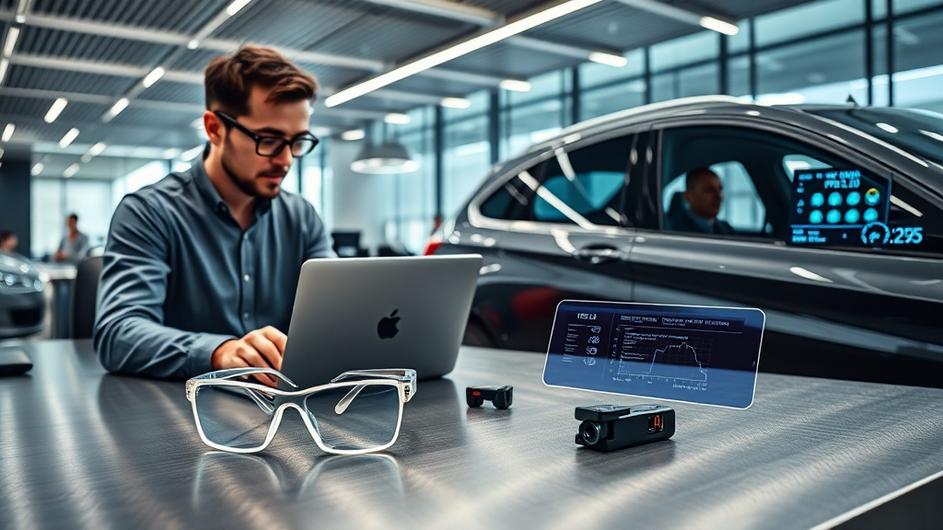
Meta’s aggressive pricing on its Ray-Ban smart glasses, combined with ongoing rumors about Amazon’s plans and continued pressure from Apple and Snap, has finally pushed smart eyewear into a price conversation that actually matters. When a mainstream brand makes augmented glasses affordable, designers can stop building for early-adopter constraints and start thinking seriously about scale. It’s not just about glasses, either. Automotive players are making moves too, with heads-up displays evolving from prototype curiosities to production-ready systems. Imagine navigation and contextual overlays that aren’t just phone-tethered gimmicks, but are fully integrated into the driving experience, with latency and safety constraints that demand careful engineering of entire pipelines and fail-safe behaviors.
This shift in how hardware and software hold together is fundamental. Apple, as always, remains a massive anchor in this changing field. The company’s 2026 moves highlight the competing pressures inside a major platform vendor. They launched a colorful, budget-friendly MacBook Neo, but that success created its own dilemma. When lower-cost devices sell well, your pricing and product segmentation choices get a lot harder, and internal debates about margins and market positioning come sharply into focus.
Meanwhile, Apple keeps shipping iterative hardware across phones, audio, and laptops, including some apparent surprises like refreshed AirPods Max. Small but crucial software updates, like iOS 26.4.1, have been part of the story too, fixing an iCloud sync issue that was messing with app data consistency for a lot of users. For developers, the lesson is straightforward, and maybe a bit uncomfortable, the platform is dynamic. Your back-end assumptions about sync, storage, and cross-device continuity need to be resilient enough to handle OS-level bugs and rapid patch cycles.
There’s also significant movement in how consumers can keep their devices working longer. Apple expanded its self-service repair store to include seven new devices, offering genuine parts and tools directly to users. This isn’t just a nice-to-have feature, repairability changes the entire lifecycle math for devices. For developers, it changes the expected tenure of hardware out in the wild. Your apps and services should now plan for longer device lifetimes, older hardware staying in circulation, and the real possibility that users will extend useful life through repairs instead of replacements. This has direct implications for your update policies, security patch windows, and the sustainability story you tell your users. As discussed in our analysis of April 2026’s hardware revelations, this trend is reshaping developer priorities.
All of these opportunities exist against a pretty tense background of geopolitical and supply chain friction. High-profile investigations and allegations around the diversion of advanced servers and AI components have put a huge spotlight on export controls and the need to protect intellectual property. Hardware makers, from server vendors to the companies assembling AR headsets, are being pushed to strengthen internal controls and to seriously reconsider where their critical components are sourced and assembled. As Supermicro’s recent statement shows, this is a top-tier concern. For teams building devices or services that rely on specialized accelerators or proprietary silicon, this means assessing risk not just from a performance standpoint, but from a compliance and business continuity perspective too.
So what should developers and product leaders actually do with all this? The landscape demands you build for variability. Devices will differ more in cost, capability, and repair status than they did just two years ago. Adaptive apps that scale gracefully from high-end AR glasses to budget laptops will have a clear edge.
Think localization-first for AR. With better VPS and SDK tooling, spatial computing will reward teams that design around robust position handling, graceful degradation when accuracy drops, and conservative power budgets. Can your app still deliver value when the precise location fix isn’t available?
Bake in resilience to platform churn. Fixes like iOS 26.4.1 remind us that even the most mature platforms ship bugs. You need to architect your sync and storage layers so data integrity can survive OS-level regressions. It’s about designing for the real, messy world of software updates.
Finally, treat supply and compliance as core product dependencies, not afterthoughts. Sourcing decisions and export controls can dramatically affect your time to market and which features you can actually ship. You need to factor these constraints into your roadmap from day one. This new reality, where everything from chips to courtrooms is rewriting the playbook, requires a broader view.
This moment reconnects software craftsmanship with physical reality in a way that might surprise developers who’ve been writing purely cloud-first code. The emerging class of glasses and automotive displays will reward careful human factors work, offline-first behaviors, and privacy-preserving localization techniques. Repairability and longer device lifecycles invite more sustainable product thinking, from over-the-air updates that respect older hardware to modular designs that actively fight obsolescence.
The early signals from 2026 point toward a near future where augmented reality becomes less about flashy gimmicks and more about dependable, usable infrastructure. It’s a future where hardware pricing and the right to repair widen the market significantly, and where geopolitical realities force companies to rethink how they source and secure their underlying systems. For builders, this is a call to sharpen both your technical craft and your strategic thinking. You need to design experiences that work across a increasingly fragmented device landscape, and you must make supply chain and compliance first-class considerations in your planning. Get that right, and you’ll be in a strong position to shape the next wave of spatial and pervasive computing that’s taking form right now.
Sources
7 AR Changes In 2026 That Will Reshape Phones, Glasses, And Shops – Here’s Why, Glass Almanac, Sat, 11 Apr 2026, https://glassalmanac.com/7-ar-changes-in-2026-that-will-reshape-phones-glasses-and-shops-heres-why/
iPhone in Space: The Many Apple Products That Left Earth, CNET, Fri, 10 Apr 2026, https://www.cnet.com/videos/omt-apple-in-space-iphone-17-pro-max-and-artemis-ii/
Top Stories: iPhone Rumors, Apple’s MacBook Neo Dilemma, and More, MacRumors, Sat, 11 Apr 2026, https://www.macrumors.com/2026/04/11/top-stories-iphone-rumors-macbook-neo-dilemma/
Apple Adds Seven New Devices To Its Self Service Repair Store, The Mac Observer, Thu, 09 Apr 2026, https://www.macobserver.com/news/apple-adds-seven-new-devices-to-its-self-service-repair-store/
Supermicro says it’s committed to protecting America’s advanced tech and IP, PC Gamer, Wed, 08 Apr 2026, https://www.pcgamer.com/hardware/supermicro-committed-to-protecting-americas-advanced-technologies-and-intellectual-property-as-investigation-into-former-employees-over-alleged-ai-tech-shipments-to-china-begins/