When Cloud Sandboxes Meet Pocket Power: How Safe Agentic AI and New Handheld Hardware Will Shape the Next Wave of Computing
You can spot a tech inflection point when two completely different parts of the industry start converging on the same answer. Right now, that answer is clear: AI is leaving the research notebook and entering the messy, beautiful chaos of real world systems. It is also landing in your hands, literally, on devices small enough to fit in a pocket.
Two stories from this week illustrate the shift better than most. One is about a company that used to mine Ethereum and now builds safer environments for AI agents to learn on the job. The other is about a handheld gaming device that packs enough graphics punch to run serious AI workloads locally. Together, they sketch a future where cloud scale training and local, interactive hardware reinforce each other in ways developers need to start preparing for today.
The Company That Went From Mining to Model Training
CoreWeave started life as an Ethereum mining operation. That feels like a lifetime ago in crypto terms, but the pivot tells you something about where infrastructure dollars are flowing. The company has quietly repositioned itself as one of the go-to GPU infrastructure providers powering the AI boom, and its latest product is a direct response to a problem that keeps AI researchers up at night.
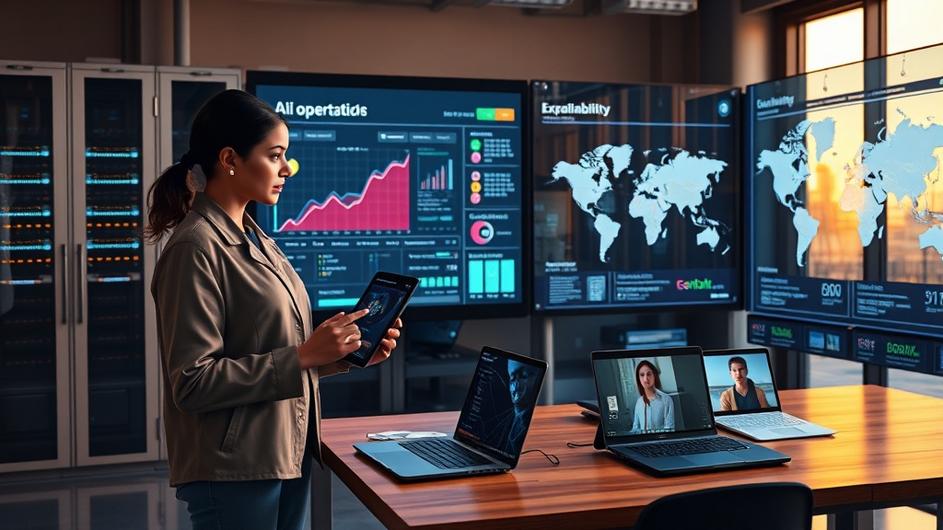
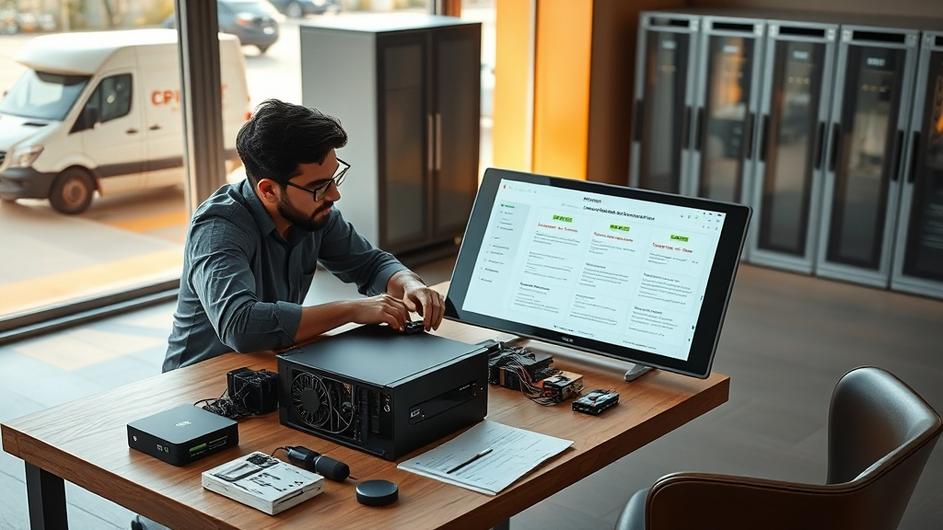
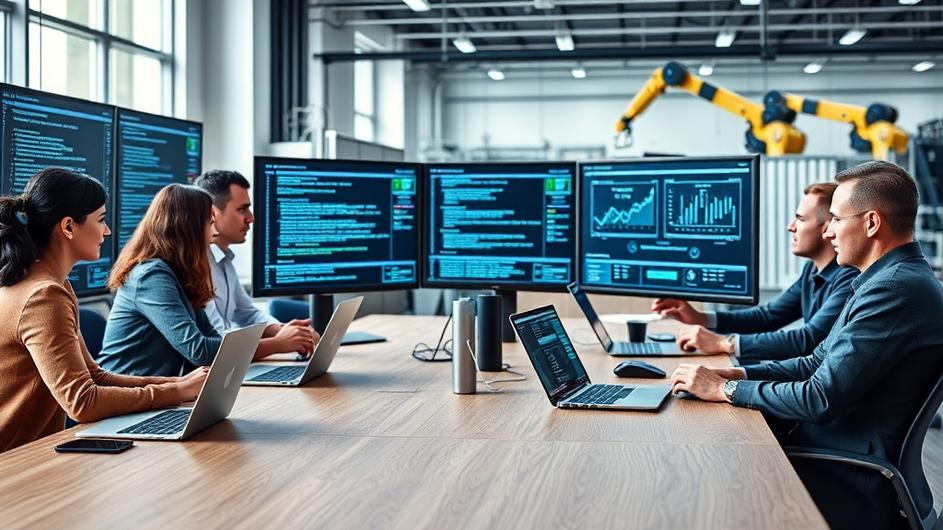
That product is called Sandboxes. It offers isolated execution environments built for reinforcement learning, agent tool use, and large scale model evaluation. If those terms sound like jargon, here is the plain English version. Reinforcement learning is a training method where AI agents learn by trial and error inside a controlled environment. Agentic AI refers to models that take multi step actions, call tools, or interact with external services. The problem is that running these agents against live production systems can break things. Badly.
Sandboxes let teams recreate realistic production scenarios without exposing real infrastructure. Failures get contained. Safety risks drop. So do costs. It is a practical solution to a problem that has haunted every team trying to deploy agentic AI in the wild: how do you test something that learns by doing without letting it do real damage?
There is a clever detail here too. Customers can run Sandboxes on their own CoreWeave infrastructure or tap into a serverless runtime hosted through Weights & Biases, the experiment tracking platform CoreWeave acquired back in 2025. Serverless means researchers do not have to worry about provisioning machines or managing capacity. They just scale experiments up and down as needed. For teams training agents to use real tools or running detailed evaluation pipelines, that combination of isolated environments and built in observability is a legit force multiplier.
Handheld Hardware Catches Its Breath
While CoreWeave is sorting out the cloud side of the equation, hardware makers are pushing the other end of the stack: the devices people actually touch and carry around. MSI’s Claw 8 EX AI+ is a good example of where this is heading.
Early hands on reports describe controller style grips and a design that borrows from console ergonomics. The comfort gains are modest, reviewers say, but the internals tell a bigger story. The Claw 8 EX AI+ adopts Intel Arc B390 graphics, which means significantly better performance and battery life compared to its predecessor. MSI is also pushing display innovation with a Triple Mode OLED that can handle high refresh rates and high resolution simultaneously. That points to a future where handheld visuals actually match the compute running underneath them.
Why does this matter for AI? Because more powerful local GPUs and specialized silicon in handhelds enable lower latency interactions, on device inference, and new forms of interactive AI. Gaming is the obvious use case, but productivity tools, creative apps, and AI assistants all benefit from compute that lives on the device rather than in some distant data center.
Why These Two Trends Belong in the Same Story
Putting a cloud sandbox product next to a handheld gaming console might seem odd at first. But the connection is real, and it runs both ways.
Sandboxed cloud environments let developers train and test agentic AI safely at scale. That reduces the risk of deploying models that control or augment real applications. Meanwhile, more capable edge hardware in devices like the Claw 8 EX AI+ means those trained models can run locally with low latency and strong privacy guarantees. Developers will need environments where they can validate agent behavior in production like scenarios before pushing models to devices that millions of people will use.
This is not a theoretical concern. The battle for AI inference is already shifting from pure cloud play to hybrid architectures. Companies are realizing that some workloads belong in the cloud and some belong on the edge. The question is how to bridge them effectively.
The Practical Questions Engineers Need to Answer
This interplay raises real engineering challenges. How do you reconcile the cost and observability needs of large scale reinforcement learning with the latency and privacy benefits of on device inference? How do you test agent behavior that depends on real user input, network variability, or third party APIs without risking outages?
Sandboxes address the safety and scale side of that equation. Hardware like the Claw 8 EX AI+ expands the range of experiences that can be delivered locally. But the glue between them, the tooling, the orchestration, the experiment tracking, still needs work. That is where cloud and edge convergence becomes a developer workflow problem rather than just an infrastructure one.
What Developers Should Take Away
Expect a hybrid workflow to become standard. Cloud sandboxes will accelerate agent training and debugging. Edge capable devices will democratize access to advanced AI experiences. Tooling that ties experiment tracking, reproducible environments, and serverless execution together will be a force multiplier for teams that get it right.
For researchers training agents with reinforcement learning, the CoreWeave Sandboxes approach offers a template: isolate the environment, contain the risk, and use serverless compute to scale without the ops headache. For hardware engineers and game developers, the MSI Claw 8 EX AI+ signals that handheld devices are finally getting the graphics and AI silicon needed to run serious local models.
Looking Ahead
The combination of secure, scalable sandboxes and more capable edge hardware will change what is possible in the next few years. Expect to see more agentic assistants that can safely interact with live systems. Richer interactive AI features will show up in consumer devices. New classes of games and applications will blend cloud intelligence with local responsiveness in ways that feel seamless to users.
The technical challenges around safety, observability, and ergonomics are not going away. But the trajectory is clear. Cloud and edge will coevolve. Developers who master this hybrid stack, who understand how to train safely in the cloud and deploy efficiently on the edge, will be best positioned to build the next generation of intelligent experiences.
Sources
- CoreWeave launches agentic AI tools to enhance real-world learning Crypto Briefing, May 2026
- New MSI Claw 8 detailed with battery life and gaming performance teased Notebookcheck, May 2026
- From Mining Rigs to Model Halls: How Crypto Infrastructure Is Powering the AI Era TechDailyUpdate
- From Chips to Cubes: How Agentic AI and Self-Optimizing Warehouses Are Rewiring Infrastructure TechDailyUpdate
- Power, Privacy, and the Edge: What Claude Mythos and Voxtral TTS Mean for the Next Wave of AI TechDailyUpdate
- From GTC to the Cloud: The Real Battle for AI Is the Inference Layer TechDailyUpdate
- From Monumental Models to Whisper-Quiet Voices: AI Is Reshaping Both Cloud Power and Edge Privacy TechDailyUpdate