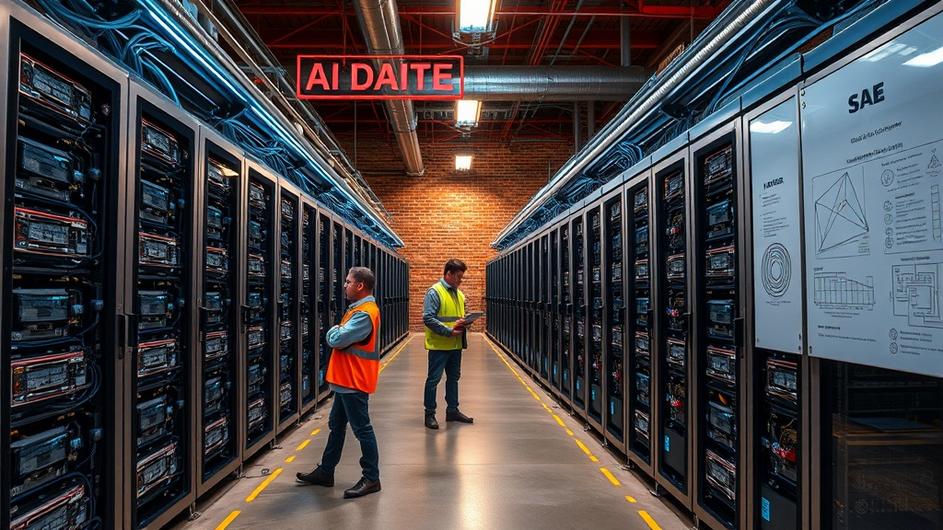

Who Owns the Future of Enterprise AI, Law Firms, and the Global Chip Supply
There’s a new group of tech players showing up at the intersection of policy, law, and raw computing power. Developers should take note. On Capitol Hill, a fresh lobby of AI integrators wants a formal seat at the table. Law firms are quietly accelerating their use of generative tools. And trade tensions over high-performance chips are deciding which countries get to build the next generation of AI systems. Put these trends together and you get a crucible where technical skill, legal responsibility, and geopolitical supply chains will determine who controls enterprise AI.
The Rise of the AI Integrators
AI integrators aren’t the big model makers you read about every day. They are the systems integrators, platform vendors, and software companies stitching models into business workflows, customizing interfaces, and managing data pipelines. Companies like Salesforce, Box, and Twilio are moving beyond product marketing to push for policy influence on the Hill. Their argument is straightforward: rules written without input from organizations that actually deploy AI will be brittle, expensive to follow, and probably counterproductive. They want standards that reflect operational realities, like latency limits for real-time services, data residency constraints, and practical approaches to auditability.
What does that mean for developers? If you’ve ever tried to deploy a model in production, you know the gap between a polished demo and a compliant deployment can be huge. Integrators are asking regulators to acknowledge that gap. And that could shape everything from how you log inference data to where you store training sets.
Law Firms Catch the Wave
That demand for practical rules comes at the same time law firms and corporate legal departments are dropping their skepticism about AI. A recent industry pulse showed a real vibe shift, with many firms embracing AI tools to speed up research, streamline document review, and even assist in drafting. For legal professionals, this isn’t efficiency theater. It’s a risk management exercise.
Firms that pilot AI systems learn early where models hallucinate, where training data carries bias, and how vendor contracts allocate liability. Those lessons will matter when regulators start demanding explainability, provenance of training data, or clear incident reporting. Some firms are already restructuring around these capabilities. Keystone Law’s recent moves show how legal practices are adapting to a world where AI changes how legal services are delivered and valued.
Where Integrators and Lawyers Converge
These two trends meet on a core problem developers will recognize immediately. Integrators need to deploy models that are performant, explainable, and compliant. Lawyers need procedures and contracts that assign responsibility when things go wrong. Both require robust observability, version control, and provenance tracking for datasets and models, the kind of practices that experienced MLOps teams already live by.
In short, the modern stack must include not just GPUs and APIs, but also legal workflows and monitoring designed for audit. This is where AI meets accountability in a very practical sense. If you’re building enterprise AI today, you need to think about how your system would hold up under regulatory scrutiny, not just how it performs on a benchmark.

The Chip Factor
That brings us to hardware. High-performance AI chips like Nvidia’s H200 series are the foundation for training large models and serving them at scale. When political leaders talk about countries restricting access to those chips, it’s not diplomatic theater. Chip export decisions shape where compute centers can be built. They influence cost, latency, and how fast innovation moves.
If a large market is forced to develop its own accelerators, you’ll see different tradeoffs in software, tooling, and model architectures. Developers should prepare for a more fragmented ecosystem. Some regions will optimize for proprietary hardware while others stay tied to established GPU ecosystems. That fragmentation has real consequences for how you architect AI systems today.
What Developers Should Expect
For teams building production AI, the implications hit close to home. Expect more demand for integration skills, people who can translate model behavior into business logic, and engineers who can instrument systems for compliance. Expect legal teams to push for codified testing regimes before deployment. Expect procurement to insist on contractual clarity around model updates and vendor responsibilities.
Expect cloud and hardware variability to influence architecture choices. The smart play is modular systems that can swap runtimes and accelerators without rewriting core business logic. This kind of infrastructure flexibility is becoming a competitive advantage, not just a nice-to-have.
The Standards Question
There’s a second-order effect worth watching. As integrators gain influence, they will push for standards that reduce operational friction. That can be good for developers if standards converge on interoperable tooling, open telemetry for models, and clear metadata conventions for datasets. It can also create vendor lock-in if powerful integrators set de facto requirements tied to proprietary platforms.
The interplay between regulators, lawyers, and integrators will determine which outcome wins. For now, the smart money is on AI systems built for scale and scrutiny from day one.
Looking Ahead
Companies and engineers who can blend technical rigor with legal literacy and an understanding of supply chain constraints will lead the next wave of enterprise AI. This isn’t a binary choice between innovation and regulation. It’s an emergent ecosystem where policy, contracts, and chips shape architecture decisions.
For developers, that means expanding skill sets beyond model training into deployment governance, observability, and contractual risk. Those who adapt won’t just build resilient systems. They will help write the rules that make those systems safe and scalable.
The future of AI will be shaped less by models alone and more by the institutions that integrate them, the lawyers who govern their use, and the geopolitics that determine access to compute. That intersection will define where the next set of winners and standards emerge.
Sources
- AI & Tech Brief: AI “integrators” hit the Hill, The Washington Post, May 15, 2026
- Law Firm Keystone To Return £1.5M To Shareholders, Law360, May 15, 2026
- How AI Is Resetting Corporate Law Practice, Tech Daily Update
- When AI Meets Accountability, Tech Daily Update
- From Chips to Cameras to Courtrooms, Tech Daily Update
- From Mining Rigs to Model Halls, Tech Daily Update
- AI at Scale, Tech Daily Update