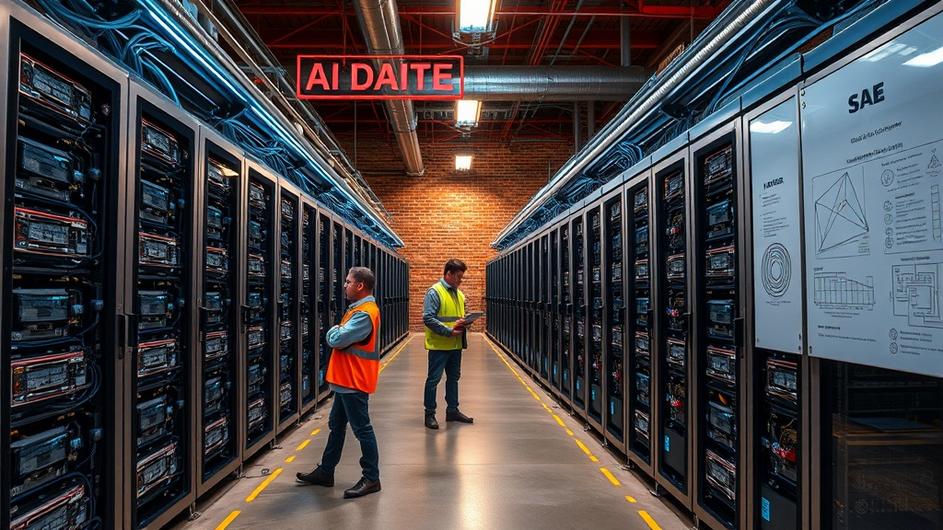

When Old Bugs and New AI Collide: Patching Linux and Preparing for Transformer Superpowers
You could be forgiven for thinking a nine-year-old Linux bug is ancient history, something best left in security archives alongside dial-up modem exploits. But this spring, that obscure footnote turned into an urgent emergency. Around the same time, Transformer-based models kept marching toward capabilities that feel less like pattern matching and more like something else entirely. General intelligence, some researchers now say. The two stories might seem unrelated, but for developers and infrastructure teams, they make a single uncomfortable point. Systems are only as resilient as the people and processes that maintain them. And the tools shaping our future intelligence are changing the risk landscape faster than most organizations can adapt.
The Nine-Year Window
This spring, security authorities confirmed that a long-dormant Linux flaw, nearly a decade old, can be used to gain root privileges on affected systems. Root is the administrative user on Unix-like systems, the account with unrestricted access. A local privilege escalation bug like this means an attacker who already has some access, even as an unprivileged user, can escalate to full control. The Cybersecurity and Infrastructure Security Agency, better known as CISA, issued warnings and urged immediate patching across enterprise fleets. The message was blunt and familiar. Update now, because the window between public confirmation and active exploitation is shrinking.
Why did a nine-year-old bug suddenly matter again? Part of the answer is scale and automation. Modern attack tooling means that once a vulnerability is confirmed and public details circulate, exploitation can be mass produced. Another part is complexity. The software supply chain and the sheer number of devices running Linux variants in cloud, edge, and embedded contexts create a massive attack surface. Many of those systems are not on aggressive patch cadences. A single overlooked kernel or distribution-specific package can become an island of compromise.
What Transformers Change
Into that world come Transformer models, the neural architectures that have redefined natural language understanding and generation. Transformers rely on self-attention, a mechanism that lets models weigh the importance of different input tokens relative to each other. That simple shift unlocked remarkable scaling behavior, improvements across tasks, and emergent capabilities as models grew. Researchers and industry voices now debate how close these architectures are to artificial general intelligence, the point where systems can flexibly reason across domains like a human.
Why pair a Linux root emergency with a conversation about Transformers? Because the same trends that make AI powerful also change how security is found, weaponized, and mitigated. On one hand, AI accelerates defensive work. Models can help triage alerts, summarize patch notes, and generate prototypes for fixes. On the other hand, large models can automate reconnaissance and vulnerability discovery at scale, accelerating an attacker’s timeline from proof of concept to active exploitation. We should not think of AI as only benevolent or only dangerous, but as a force multiplier for both defenders and attackers.
What This Means for Ops Teams
For developers and ops teams, the practical takeaway is operational. First, treat patching as continuous, not episodic. Automate kernel and package updates where feasible, test in staging, and maintain rollback plans. The automation of security workflows is no longer a luxury, it is a baseline requirement when exploit tooling runs at machine speed.
Second, increase observability. High-fidelity logs and targeted endpoint detection make it possible to spot suspicious escalation attempts early. Third, improve least privilege and segmentation, so that a single compromised node does not become a network-wide breach. If you are running containers on Linux hosts, this is doubly important. A root escalation in the kernel can mean the difference between a contained incident and a total cluster takeover.
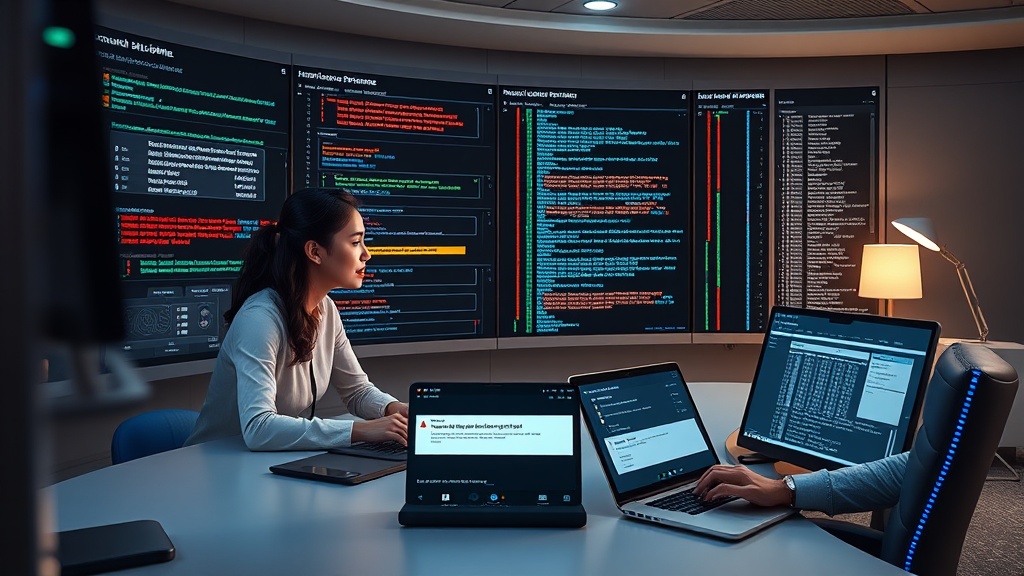
AI Governance Is Not Optional
Beyond those fundamentals, organizations must invest in AI governance. That means vetting models used for security tasks, understanding model provenance and data leakage risks, and running red team exercises that combine human attackers with automated tools. Co-innovation between security teams and AI engineers will be necessary, because domain expertise in system internals is still critical to contextualize model output. A Transformer that suggests a patch might be useful, but a human who understands memory management and kernel scheduling is the one who should review it.
We are witnessing a dual evolution. Infrastructure is aging under legacy assumptions while AI architectures accelerate capability growth. Both trends will dominate the coming years. The right response is not technological nostalgia, but pragmatic integration. Use AI to reduce toil, but enforce strict controls. Harden systems with automated patching, but verify with human-informed observability. Foster cross-functional teams that treat infrastructure, security, and ML as a single responsibility, not isolated silos.
Looking forward, expect more incidents that pair old vulnerabilities with new tooling. Expect AI to both uncover and fix problems faster. The winning organizations will be those that treat resilience as a product, continuously shipped, measured, and improved. The future of technology will be shaped by systems that are not only smarter, but also architected to fail safely, recover quickly, and learn from each incident. That combination of mature operational practice and responsible AI deployment is the most compelling path to a secure and powerful technological future.
As new platforms and architectures emerge, the gap between those who treat security as continuous iteration and those who treat it as a compliance checkbox will only widen. The old bug is a reminder that neglect has a long tail. The new AI is a reminder that acceleration changes everything. If your patch cadence is still monthly and your AI strategy is still a single pilot project, the next nine years will not feel like progress. They will feel like catch-up.
Sources
- Update Linux Now As 9-Year-Old Root Hack Confirmed, CISA Warns Users, Forbes, 03 May 2026
- Transformer Architecture, Superpowers, And The March Toward AGI, Forbes, 03 May 2026
- Navigating the Complex Landscape of Modern Technology Security, Tech Daily Update
- Navigating Trust, Security and Expertise in the Age of Generative AI, Tech Daily Update
- The Dawn of AI Agents, Tech Daily Update
- Navigating the New Frontiers of Crypto Security and Sovereignty in 2025, Tech Daily Update
- The New Era of VR, Tech Daily Update