
Self-Improving AI Meets Brand Creativity, What Developers and Agencies Should Expect
What happens when the machines that build machines start building themselves? We’re watching two quiet revolutions collide, and the impact will reshape everything from how we develop AI models to how brands connect with customers. On one side, research labs are automating scientific workflows, creating systems that can run experiments, tune parameters, and iterate without constant human oversight. On the other, creative agencies are adopting tools that translate abstract “vibes” into concrete outputs, sometimes deliberately blurring lines between real and synthetic content.
This isn’t science fiction anymore. It’s the new reality for developers building AI systems and marketers trying to stay ahead in an increasingly automated landscape.
The Self-Improving Research Engine
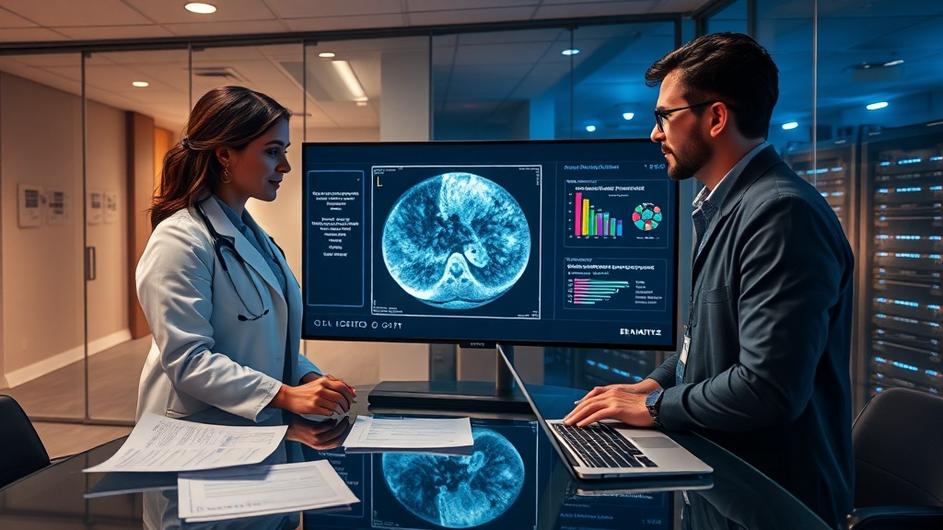
Major AI firms like OpenAI, Anthropic, and DeepMind have been quietly investing in what you might call “AI that builds better AI.” These aren’t just fancy AutoML tools, they’re full pipelines that handle data collection, model training, hyperparameter tuning, and evaluation, often orchestrated by search algorithms or reinforcement learning systems.
Think of it like a high-frequency trading bot for research. Instead of manually proposing a model architecture, training it, and checking results, an automated system proposes changes, evaluates outcomes, and proposes further improvements, creating a closed feedback loop. The goal is simple: accelerate discovery, reduce repetitive work, and scale experimentation beyond what human teams can manage alone.
For developers, the technical logic makes sense. We’re borrowing concepts from continuous integration, experiment managers, and automated machine learning, then extending them into sophisticated feedback loops. But here’s the catch: when decision-making concentrates in software, we need better tools for transparency, versioning, and rollback. It’s not unlike the challenges we’ve seen with smart contract automation in DeFi, where automated systems can amplify both gains and risks.
According to recent analysis, the AI industry’s push toward self-improving research systems represents a fundamental shift in how innovation happens. These systems don’t just work faster, they explore more ideas simultaneously, raising new questions about reproducibility, oversight, and what happens when the pace of discovery outstrips our ability to understand it.
Creative Automation Goes Mainstream
While researchers automate science, creative teams are automating art. New “vibe coding” tools let marketers specify high-level attributes like mood, pacing, or aesthetic style, then generate assets that match those cues. These platforms accelerate ideation, produce endless variations for A/B testing, and enable rapid personalization at scale.
In practice, this means brands can experiment with tone and format the way engineers experiment with model parameters. A clothing brand might generate hundreds of ad variations testing different emotional appeals. A streaming service could personalize thumbnails based on individual viewing history. The same technology that powers vibe coding for developers is now reshaping marketing workflows.
But there’s a dark side to this creative flexibility. When campaigns intentionally flirt with fakery for attention or April Fools’ stunts, they risk eroding consumer trust. The same capability that makes marketing nimble also increases misinformation risks. As emerging technology trends reports highlight, agencies need to navigate this new terrain carefully, balancing creative experimentation with ethical boundaries.
Where Research Meets Reality
The convergence of these trends creates practical challenges that neither developers nor marketers can ignore. Let’s break down what really matters.
Provenance isn’t optional anymore. When models or creative assets come from automated systems, we need metadata that records datasets, model versions, evaluation metrics, and human approvals. This isn’t just good practice, it’s essential for audits and reputation management. Think of it like blockchain’s immutable ledger for AI outputs, where every generated asset carries its creation history.
Human oversight remains non-negotiable. Automation should amplify expertise, not replace it. Human reviewers, policy checks, and staged rollouts preserve context that closed-loop systems might miss. This is especially true for AI agents making business decisions, where human judgment provides crucial guardrails.
Measurement needs to get smarter. For researchers, that means robust benchmarks and reproducible experiments. For marketers, success metrics must include ethical and compliance signals, not just engagement numbers. We’re moving beyond simple KPIs toward holistic evaluation frameworks that account for both performance and responsibility.
| Traditional Approach | Automated Approach | Key Considerations |
|---|---|---|
| Manual model iteration | Self-improving research loops | Transparency, reproducibility, oversight |
| Hand-crafted creative assets | Vibe-coded content generation | Provenance, authenticity, ethical boundaries |
| Linear development cycles | Parallel experimentation at scale | Infrastructure costs, quality control |
| Human-led decision making | Algorithmic optimization | Bias detection, explainability, accountability |

The Policy and Safety Imperative
Automated research scales both innovation and risk. Without clear logging and external evaluation, subtle biases or failure modes can propagate faster than humans can detect them. Remember, these systems optimize for whatever metrics we give them, and sometimes that optimization leads to unexpected outcomes.
Marketing that plays with the blurred line between real and fake must contend with consumer trust, platform policies, and legal exposure. What happens when a synthetic spokesperson becomes more convincing than a real one? Or when AI-generated testimonials cross into deceptive territory?
Developers and product leaders should collaborate with compliance, legal, and communications teams early in the process. Investing in tooling that makes automated decisions auditable isn’t just prudent, it’s becoming essential for regulatory compliance and brand protection. The lessons from AI market volatility and regulation show that proactive governance beats reactive damage control.
What Comes Next
Looking ahead, this fusion of self-improving AI and creative automation will reshape product cycles and campaigns in ways we’re only beginning to understand. Research that iterates itself will produce models faster, potentially accelerating breakthroughs in everything from drug discovery to climate modeling. Agencies that master intent-to-asset translation will test and learn in near real-time, creating more responsive and personalized customer experiences.
The winners in this new landscape won’t be the teams with the most automation, but those that treat automation as a force multiplier paired with human judgment, transparent processes, and accountable metrics. They’ll understand that speed without sustainability is just another form of technical debt.
For developers, this means building systems with audit trails and explainability baked in from the start. For marketers, it means developing ethical frameworks that guide creative experimentation. And for both, it means recognizing that AI’s impact extends beyond technical specs into social and regulatory domains.
The future promises faster innovation in both code and content, but it also demands new standards for transparency and control. As these parallel revolutions continue to collide, the most successful organizations will be those that balance automation’s power with human wisdom, creating systems that are not just smart, but also trustworthy and accountable.
What do you think? Will self-improving AI accelerate progress beyond our ability to govern it, or will human oversight keep these systems in check? The answer likely lies somewhere in between, in the careful balance between automation and accountability that defines our technological future.
Sources
1. Emerging technology trends brands and agencies need to know about, Ad Age, April 02, 2026
2. AI Industry Pursues Self-Improving Research Systems, Let’s Data Science, April 03, 2026