
From GTC to the Cloud, the Real Battle for AI Is the Inference Layer
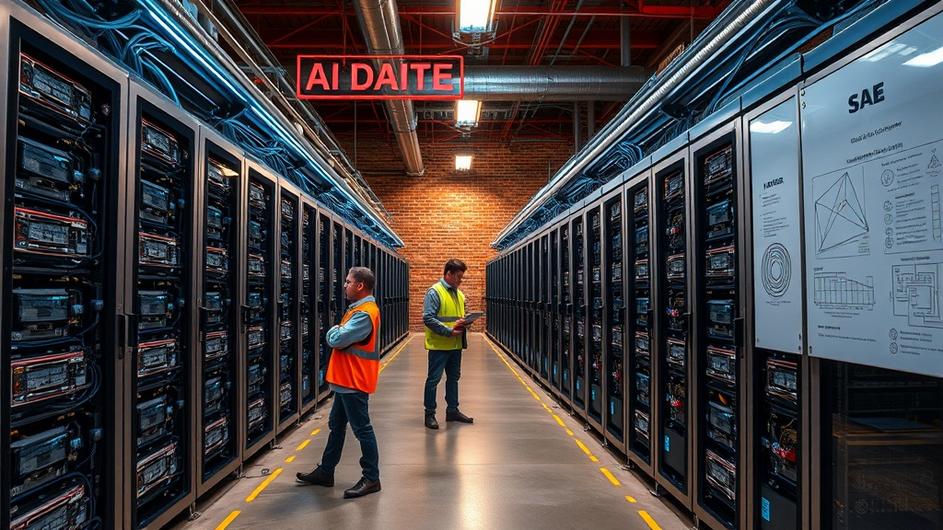
If you were watching NVIDIA’s GTC conference in San Jose this March, you could feel the shift happening. Jensen Huang didn’t just announce new chips or flashy demos, he framed the entire event around a simple but powerful idea: AI isn’t just an application anymore, it’s becoming the infrastructure itself. That single line explains why everything at GTC mattered, and why cloud architects, developers, and operators should be paying close attention.
Think about it this way. For years, we’ve treated AI models like software applications you build and deploy. But what happens when those models need to run at massive scale, with real-time responses, across global networks? Suddenly, you’re not just building apps, you’re building the foundation that everything else runs on. That’s the transition we’re witnessing right now.
The GTC Signal: From Spectacle to Infrastructure
This year’s NVIDIA GTC 2026 had all the usual elements, deep technical sessions, cinematic demos, and big partnership announcements. NVIDIA showed off what they’re calling “Vera Rubin-level” analysis for massive models, rolled out a new enterprise agent platform, and even teased a near-term gigawatt-scale deal with a high-profile startup. But the real story wasn’t in any single announcement.
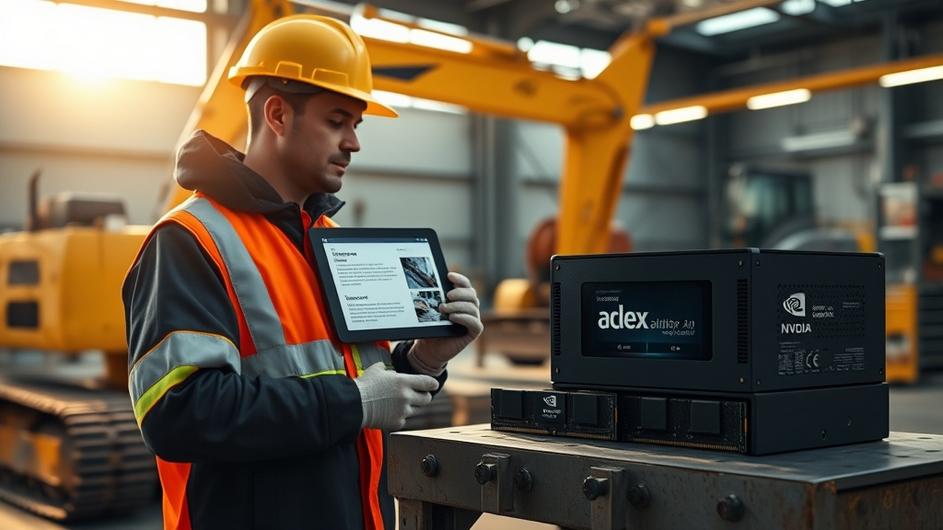
Take Disney’s session, for example. They demonstrated how GPU-accelerated simulation and reinforcement learning can move animated characters into physical spaces. Using NVIDIA’s Isaac tools, they’re training robots in virtual environments long before those robots ever touch the real world. It’s impressive, sure, but it’s also a signal. This isn’t just about better graphics or faster training, it’s about creating entire development pipelines that depend on specialized AI infrastructure.
What we’re seeing is a move toward what some are calling infrastructure intelligence, where AI capabilities become baked into the fundamental layers of computing. It’s similar to how cloud computing transformed from being about virtual machines to being about managed services and serverless functions. The value is shifting up the stack.
The Bottleneck Everyone’s Talking About: Inference
Here’s where things get technical, but stick with me because this matters. The industry is collectively hitting the same wall, the inference problem. Inference is what happens after you’ve trained a model, it’s when that model makes predictions or takes actions based on new data. For reasoning models, most of the runtime and cost sits in what’s called the decode stage, where the model generates output step by step.
This is where memory bandwidth, latency, and software optimizations all come together to create real-world performance differences. Faster, smarter decoding means lower latency for interactive applications, and significantly lower costs for scaled deployments. It’s the difference between a chatbot that responds instantly versus one that makes you wait, or between a robot that moves smoothly and one that hesitates.
Why should developers care? Because if you’re building anything that uses AI in production, inference performance directly impacts your user experience and your operational costs. It’s not just about having the most accurate model anymore, it’s about having a model that can run efficiently at scale.
Cloud Giants Enter the Fray
This brings us to the cloud providers, who’ve been watching this shift closely. Microsoft and Amazon Web Services have both announced major updates to their inference stacks recently, moves that mirror earlier work from Google and innovations from smaller players. Microsoft shipped a licensed inference engine from Fireworks AI into its Foundry platform, while AWS disclosed complementary choices to close gaps in inference throughput.
As analysis from Forbes points out, there’s a pattern here. Cloud providers are competing on more than just catalog size and global regions now. They’re racing to own what you might call the “last mile” of AI performance, the part users actually experience when an agent answers a query or a robot completes a task.
This competition is creating interesting dynamics in the cloud market. As we’ve seen with AWS’s recent challenges and investments, reliability and performance at scale are becoming differentiators that matter more than ever. When enterprises choose where to deploy their AI workloads, they’re looking for platforms that can deliver predictable latency and lower operational costs for large-scale, real-time applications.
Beyond Benchmarks: Why Inference Performance Is Strategic
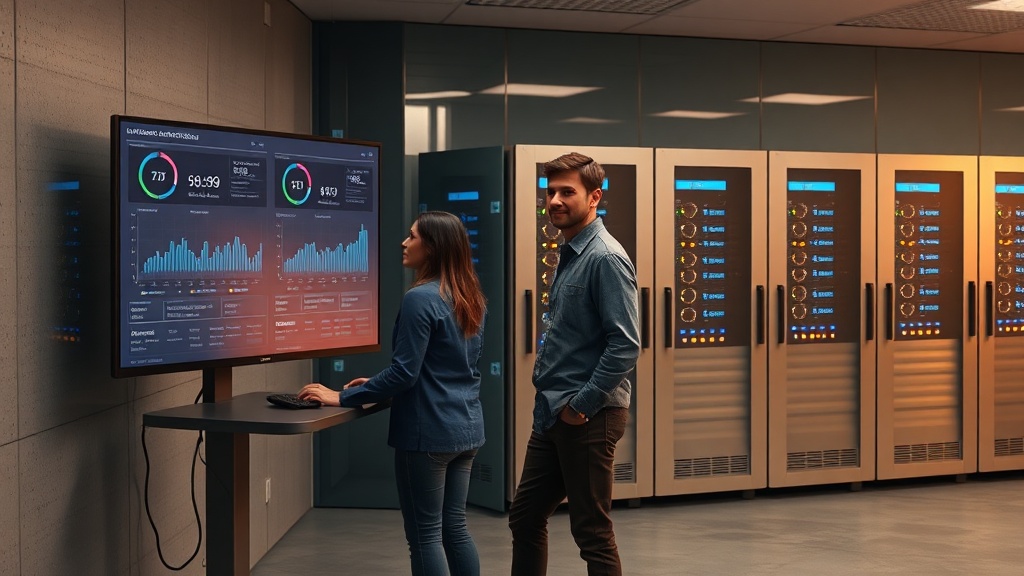
So why does this matter beyond technical benchmarks? Because inference performance has become a strategic lever for businesses. Enterprises aren’t just buying AI capabilities anymore, they’re evaluating entire platforms based on how efficiently those capabilities run in production.
For developers, this means rethinking how you approach AI projects. You need to optimize models specifically for the decode stage, adopt specialized inference runtimes, and tune interaction patterns to match the strengths of your underlying hardware. It’s no longer enough to train a great model, you need to deploy it efficiently.
For vendors, the pressure is on to build tighter integrations between software, compilers, and accelerators. The whole stack needs to work together efficiently, which is driving more co-design between hardware and software than we’ve seen in years. It’s not just about building faster chips, it’s about building systems where every component is optimized for AI workloads.
The Energy Equation Nobody Can Ignore
There’s another dimension to this story that’s becoming impossible to ignore, energy and public policy. Data center power use has moved from being a niche operational concern to a political and regulatory issue. NVIDIA’s messaging on this is interesting, they argue that accelerated computing, while power-hungry, is actually the most effective path to solving energy problems because faster, more efficient hardware lowers total energy per useful computation.
The gigawatt-scale deals being reported illustrate both the industrial scale of this transition and the responsibility vendors have to demonstrate energy efficiency as they expand capacity. It’s not just about performance anymore, it’s about performance per watt, and about being able to explain that efficiency to regulators and the public.
This creates new challenges for everyone in the ecosystem. Developers need to think about energy efficiency in their architectures, operators need to manage thermal limits and power budgets, and vendors need to provide transparency about their environmental impact. It’s becoming part of the total cost of ownership calculation for AI infrastructure.
What Comes Next: Specialization Wins
Looking at the stories from GTC and the moves from cloud providers, a clear pattern emerges, specialization is winning. We should expect to see more co-design between models and hardware, more inference engines optimized specifically for decoding, and more use of simulation to shrink development cycles for what some are calling “embodied agents.”
The most interesting engineering challenges will sit at the intersection of latency, cost, and thermal limits, not just model accuracy. As AI agents meet physical robotics, the requirements for reliable, low-latency inference become even more critical. A robot making decisions in the real world can’t afford to wait for cloud round-trips or suffer from unpredictable performance.
For developers, the practical takeaway is this: focus on the end-to-end pipeline, not just model training. Profile decode behavior, test inference runtimes on representative workloads, and consider simulated training for systems that will interact with the physical world. The iteration cycle is accelerating, and the tools are getting better, but you need to understand the entire stack to build effectively.
The Real Race Isn’t About Chip Size
Here’s the bottom line. The race we’re watching isn’t just about who builds the biggest chips or trains the largest models. It’s about who can turn raw compute into predictable, affordable, and sustainable intelligence in production. That capability will determine where enterprise AI lives, how quickly robots and autonomous agents get deployed, and how society balances innovation with power and policy concerns.
As we move deeper into what some are calling the year of reckoning for AI infrastructure, the companies that win won’t necessarily be the ones with the most impressive demos. They’ll be the ones that solve the hard problems of scale, efficiency, and reliability. They’ll be the ones that make AI infrastructure something you don’t have to think about, because it just works.
For anyone building with AI today, that’s the shift to watch. The applications are getting more sophisticated, but the real innovation is happening in the layers underneath. And that’s where the next generation of AI will be won or lost.
Sources
NVIDIA GTC 2026 opens today, The Next Web, Mon, 16 Mar 2026
AWS And Microsoft Are Borrowing What Google Already Built, Forbes, Sat, 14 Mar 2026