
When AI Learns to Build and AR Learns to Scale, The Next Wave of Computing Arrives
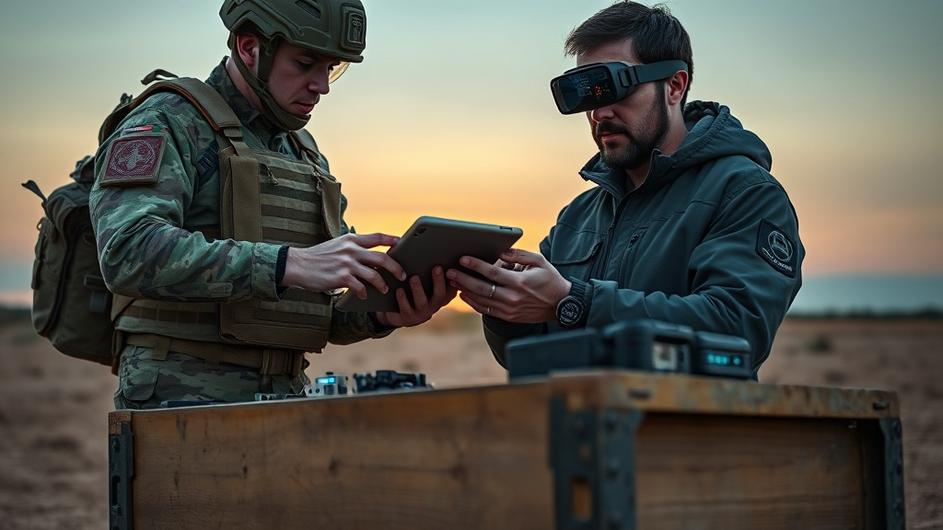
Something’s changed in the tech world lately. It’s not just another product launch or a minor spec bump. Over the past few months, there’s been a noticeable shift in how teams actually build things. Large language models and multimodal AI systems have started handling complex, expert-level work that used to require specialized human talent. At the same time, augmented reality hardware is finally moving out of research labs and into actual factories and stores. These aren’t separate trends, they’re feeding each other in ways that will reshape how we interact with technology.
What does this mean for developers, investors, and everyday users? Let’s break it down.
The AI Tipping Point
AI has crossed a crucial usability threshold. Engineers now routinely describe what they need in plain English, let the model run, and come back to find substantial, usable output. Recent model releases from major labs arrived almost simultaneously, and benchmark reports show these systems can complete tasks that used to take human experts hours or even days.
When machine learning models can write production-ready code, generate asset-ready 3D content, and assemble documentation autonomously, product teams stop doing rote work. Instead, they focus on strategy, integration, and quality control. This shift is happening right now, and it’s changing development workflows across the industry. As we’ve seen in our coverage of agentic AI models, the tools are becoming sophisticated enough to handle entire development tasks with minimal human intervention.
Why This Matters for AR
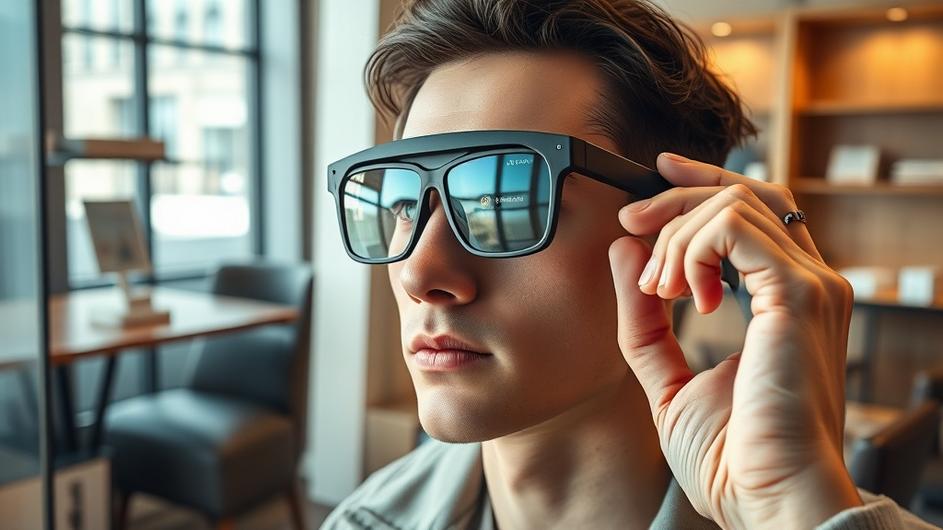
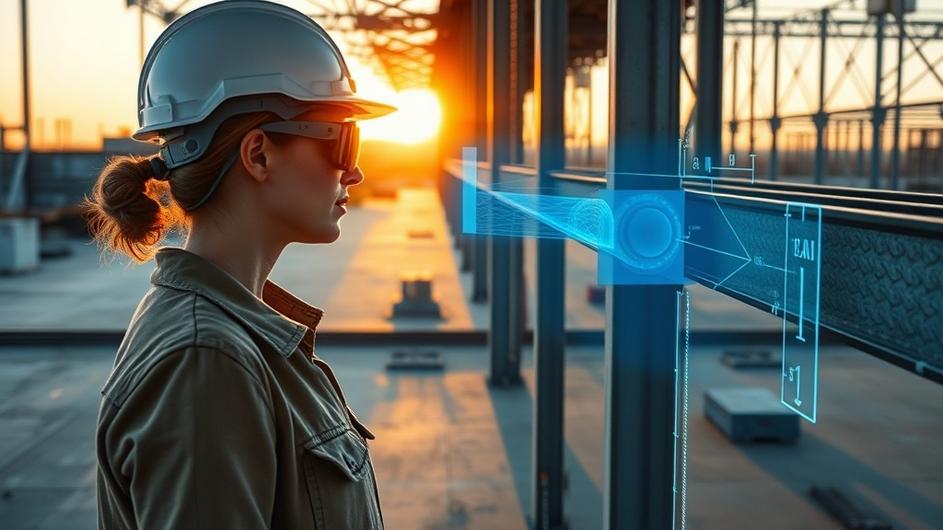
This AI capability matters tremendously for augmented reality because AR demands both rich content and bespoke experiences. A pair of smart glasses doesn’t become compelling because of optics alone. It needs avatars, virtual try-ons, context-aware overlays, and polished 3D product assets. Generative AI slashes the cost and time of producing those assets.
Consider this: tools that synthesize photorealistic product videos or generate 3D models from photos can turn a catalog update into an AR-ready pipeline in hours rather than weeks. That dramatically lowers the barrier to entry for retailers and brands contemplating in-store or at-home AR try-ons. Suddenly, creating immersive experiences isn’t just for companies with massive 3D modeling teams.
Hardware Makers Are Responding
Hardware manufacturers aren’t sitting on the sidelines. This year brought a wave of announcements that reoriented production strategy and distribution for AR devices. Snap moved to make AR glasses a standalone business, Meta signaled plans to scale Ray-Ban output dramatically, and partnerships between retailers and platform companies are moving try-on experiences from apps into physical stores.
These moves reflect two realities. First, demand for AR-ready content is spiking, so manufacturers need volume and standardized components to lower unit costs. Second, consumers still want occasional offline experiences where privacy and local performance matter. Bringing AR into stores or into standalone devices makes sense for both technical and consumer preference reasons. As detailed in our analysis of the 2026 hardware moment, we’re seeing a fundamental shift in how AR devices reach consumers.

What Developers Need to Know
For developers, the implications are immediate and practical. Pipelines are shifting from manual asset creation to AI-assisted generation, which requires new skills in prompt engineering, model validation, and asset hygiene. Integrating generative models into production systems means building guardrails for correctness, bias, and safety, plus automating tests that ensure 3D geometry, lighting, and animation meet UX standards.
On the hardware side, scaling production to millions of units forces tighter coordination with supply chains, firmware teams, and performance engineers who optimize for battery life and thermal constraints. It’s not just about writing code anymore, it’s about understanding the entire hardware-software stack. As we explored in our look at AR glasses and flexible AI chips, the hardware constraints directly shape what software can do.
Privacy and Distribution Tradeoffs
There are also significant privacy and distribution tradeoffs to consider. Moving AR try-on from phones into stores or standalone glasses offers better latency and offline processing, but it raises questions about data collection and consent. Who owns the facial scan data from a virtual makeup try-on? Where does that data get processed?
Partnerships that put AR in retail locations can be attractive for consumers who prefer local experiences or worry about cloud surveillance. Yet they introduce operational complexity for brands and developers who must support heterogeneous hardware and navigate regional regulations. It’s a balancing act between performance, privacy, and practicality.
Technical Challenges Remain
Let’s be clear, technical challenges haven’t disappeared. Generative models still make mistakes, and 3D reconstruction from imperfect inputs remains an active research problem. Real-time AR requires efficient models and edge compute, so teams need to balance fidelity with latency. But the acceleration we’re seeing changes the calculus for product roadmaps.
Tasks that once justified long development cycles can now be prototyped in days using AI. Once those prototypes prove out, scaled AR hardware can deliver those experiences to users at volume. This creates a feedback loop where better tools enable more ambitious projects, which in turn drive demand for better hardware. As highlighted in our examination of how consumer hardware has evolved, we’re witnessing a fundamental rewiring of the development-to-deployment pipeline.
The Convergence Moment
This is a pivotal moment in computing. The convergence of autonomous AI workflows and scaled AR manufacturing means developers will increasingly build systems where models generate assets and devices render them in the world. That creates opportunities for companies that can master pipeline automation, cross-disciplinary testing, and privacy-preserving deployment.
It also raises responsibilities. As AI systems take on more independent work, teams must ensure outputs are reliable and ethically sound. The viral discussion around AI potentially evolving independently highlights both the excitement and concerns surrounding increasingly autonomous systems.
Looking Forward
Expect a virtuous cycle to develop. Better models make AR content cheaper and more personalized, which drives hardware demand. Larger hardware footprints justify more investment in edge compute and local inference, which in turn enables richer, lower-latency experiences that further expand AR use cases.
For developers and product leaders, this is a call to adapt toolchains, invest in model governance, and rethink how user experience extends beyond screens into the physical world. The hardware announcements detailed in this analysis of 2026 AR production shifts show just how quickly the landscape is changing.
The next chapter of computing won’t be written by teams that specialize in just software or just hardware. It will be authored by teams that can orchestrate AI, hardware, and real-world context together. As we’ve seen in our coverage of Apple’s AR strategy, even the biggest players are repositioning for this convergence.
So what should you do? If you’re a developer, start experimenting with AI-assisted content generation tools. If you’re building hardware, think about how edge AI capabilities can differentiate your products. And if you’re investing, look for companies that understand both the software and hardware sides of this equation.
The shift is happening. The question isn’t whether AI and AR will converge, but how quickly, and who will be best positioned to build what comes next.
Sources
Internal References:
- A New Frontier: How Agentic Models, Creative AI and Desktop Tools Are Rewriting Developer Workflows
- 2026 Hardware Moment: From Apple Refreshes to Snap’s Specs and the Year AR Goes Mainstream
- How AR Glasses and Flexible AI Chips Will Redefine Wearables in 2026
- From Lab to Lens: From Pro Gear to the Mass Market – How 2025 and 2026 Rewired Consumer Hardware
- 2026 Device Moment: Apple’s Product Blitz, the AR Glasses Surge, and What It Means for Developers
External References:
- 70M Views! Viral Silicon Valley Article: AI Singularity Arrived, AI to Evolve Independently, Leaving Humanity Behind, 36 Kr, February 13, 2026
- 7 AR Announcements In 2026 That Shift Hardware Production – Here’s Why, Glass Almanac, February 13, 2026