Signals From the Edge: What New Hardware, AR Moves, Platform Outages, and Game Design Say About the Next Tech Era
Step back and look at the tech landscape in early 2026, and you’ll notice something interesting. It’s not just random noise. There’s a rhythm to it all, a story unfolding in real time. On the surface, you’ve got your usual mix of product leaks, big launches, and the occasional platform hiccup. But dig a little deeper, and a clearer pattern emerges. Platforms and experiences are converging, sometimes competing, and the developers who focus on resilience, interoperability, and creating genuinely delightful user experiences are the ones who’ll come out on top.
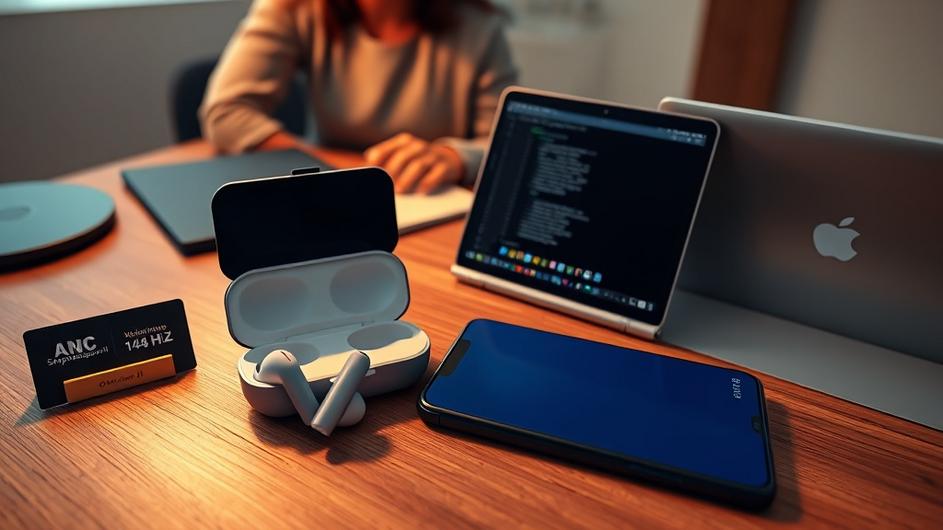
Remember when design was just about how something looked? Those days are long gone. Take the recent leak of Samsung’s Galaxy Buds 4 Pro. The images show a noticeably flattened stem, a shift toward cleaner, more subtle industrial design. This isn’t just a cosmetic tweak. Those stems house crucial components like microphones, sensors, and touch surfaces. Changing their form directly impacts audio capture quality, how well active noise cancellation works, and even how comfortable they are to use.
For the engineers building these devices and the developers creating audio apps, a small hardware change like this forces a rethink. Assumptions about microphone arrays, beamforming algorithms, and spatial audio rendering all get thrown into question. If stems are getting flatter, you can bet software teams are already working on updates to adjust voice activity detection and wind-suppression filters for the new microphone geometry. It’s a perfect reminder that what happens on the hardware side never stays in hardware. It ripples through the entire software roadmap, something we’ve seen repeatedly in the early signals from 2026 hardware.
The Mainstream March: Apple, Google, and the Middle Market
While leaks give us a peek at the future, the established players keep marching forward with their public roadmaps. Apple has a March 4 hardware event scheduled, and analysts are betting it will focus on iPads and MacBooks. Over at Google, the Pixel 10a continues the company’s push into the value midrange segment, consistently delivering more than you’d expect for its price.
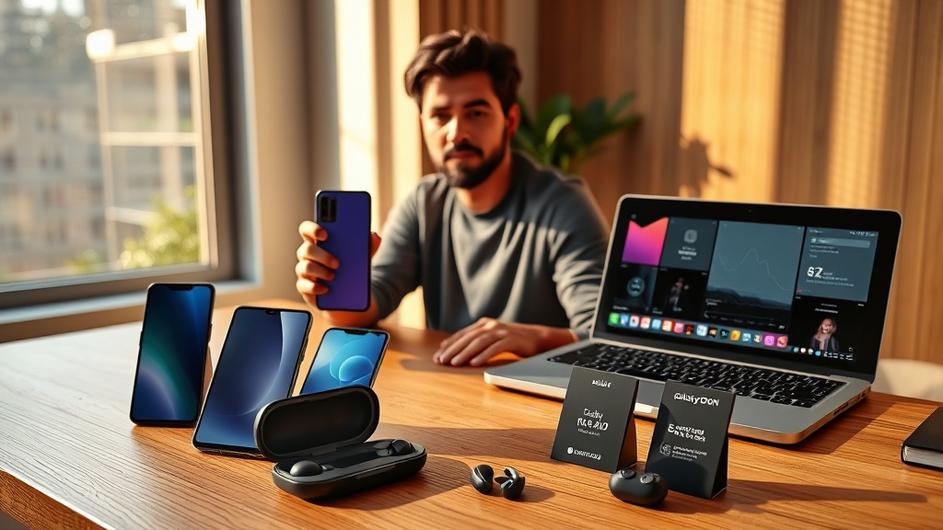
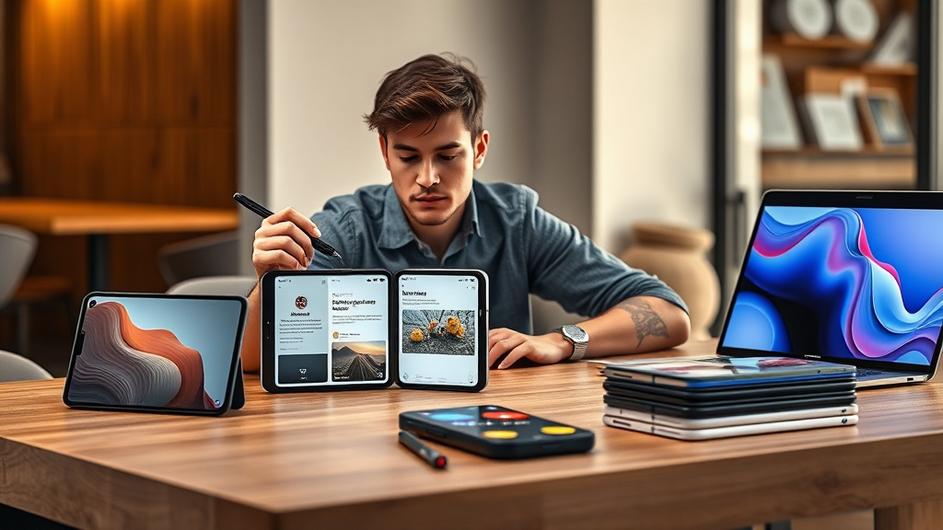
What does this tell us? Two things, really. First, the big incumbents are getting really good at optimizing for the middle of the market while still keeping their flagship products distinct. Second, and this is crucial for developers, the device landscape is becoming incredibly heterogeneous. You can’t just build for the latest, most powerful tablet. You need to plan for everything from pro-grade machines that drive complex workflows to affordable phones that are expanding the total user base. This device momentum in 2026 means your app needs to perform well across a wide spectrum.
When Platforms Stumble: The YouTube Outage Lesson
Hardware is one thing, but what about the software platforms we all rely on? They’re not immune to growing pains either. A recent partial outage on YouTube showed how a single platform incident can send shockwaves through an entire ecosystem. This wasn’t a complete blackout. It was partial, which is actually the more common failure mode in today’s distributed systems.
These partial outages are particularly revealing. They expose the weak links in monitoring, error handling, and fallback user experiences. For any developer building on top of a major platform, the lesson is painfully practical. You have to expect intermittent API failures. You need to design your client applications to degrade gracefully, not crash catastrophically. Clear error messaging for users becomes non-negotiable.
Think about caching critical content, maintaining offline modes where it makes sense, and building in local fallbacks. The goal is simple: your video player or voice feature shouldn’t completely fail just because a content delivery network or an authentication endpoint has a hiccup. Resilience is no longer a nice-to-have feature. It’s the price of admission.
AR’s Pragmatic Pivot: From Novelty to Everyday Utility
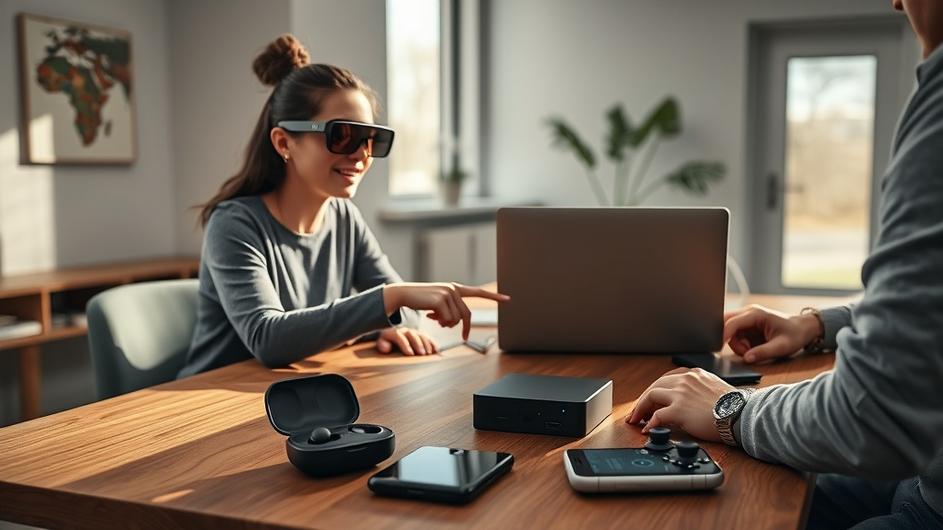
If reliable hardware and stable platforms are the table stakes, then augmented reality is busy redesigning the entire table. What we’re seeing in 2026 is a clear, pragmatic shift. AR is moving away from being a novelty and toward becoming a genuine utility. Look at partnerships like Warby Parker and Google, aiming to create affordable, prescription-ready glasses. That’s a game-changer. It could transform AR from an enthusiast’s appliance into a regular accessory you wear every day.
Snap is pushing AR toward social-first wearables, while Niantic is expanding its location-based Lightship platform beyond games. For developers, this changes everything. AR is no longer an experimental sandbox. It’s evolving into a multi-vendor ecosystem where success depends as much on optical design, retail distribution, and app store policies as it does on clever code. This convergence is exactly what we explored in our look at why AR hardware and other industries are converging.
This new reality brings both constraints and opportunities. The optical and power budgets of wearable frames are limited. You can’t pack high-end sensors and powerful compute into a pair of glasses, at least not yet. This limitation is pushing development toward edge-cloud hybrid models. Local sensors on the glasses handle initial input filtering, while heavier inference tasks get offloaded to the cloud.
Developers will need to become experts at partitioning workloads, optimizing for latency, and designing experiences that degrade gracefully when network connectivity is spotty. User experience becomes paramount. Wearable AR needs to be subtle, context-aware, and low-friction. It should provide information without overwhelming the wearer. Since tooling and industry standards will inevitably lag behind product launches, the teams that invest early in adaptive, modular AR architectures will have a significant head start. The AR glasses surge in 2026 is creating both excitement and new technical challenges.

The Game Design Dilemma: Lore vs. Market Realities
Sometimes, you can learn a lot about platform strategy by looking at the world of games. Valve’s upcoming title, Deadlock, sparked interesting conversation precisely because it’s “just” a MOBA (multiplayer online battle arena). Many fans of Valve’s rich universes were hoping for something more, something that would expand the lore in new directions.
That reaction highlights a tension every developer faces, especially when working with beloved intellectual property. Players and fans crave novelty and deeper story expansion. Meanwhile, market forces and business realities often push teams toward genres with proven monetization models and player retention mechanics. It’s a constant balancing act between creative ambition and commercial safety.
From a pure systems architecture perspective, this same debate plays out in infrastructure decisions. Do you build a durable, reusable service platform that can support multiple different game types down the road? Or do you tailor everything for one high-probability hit? The smart answer, more often than not, is to do both. Build shared backend services for matchmaking, analytics, and player accounts, but keep your gameplay servers modular. That way, teams can experiment with new genres without triggering a complete system rewrite.
What This Means for Builders and Leaders
So, where does all this leave us? If you’re leading a tech team or building products yourself, a few practical priorities come into focus.
Start by designing for failure modes, not just the happy path. Partial outages are part of the modern internet fabric. Your applications need client-side resilience, and your operations team needs clear tooling to diagnose issues quickly.
Next, expect hardware to constantly nudge your software assumptions. A new earbud geometry or a novel wearable form factor will change sensor inputs and user interactions. The solution is to decouple your signal processing logic from your core application logic. Make it swappable.
Also, start treating AR as a genuinely cross-disciplinary problem. Success won’t come from coding skills alone. You need to understand optics, think about retail channels, and navigate platform policies. It’s a holistic challenge.
Finally, when you’re building on top of existing platforms or working with established IP, invest in flexible service layers. Create architectures that let your teams pivot between different product forms or genres without starting from scratch each time. The future of wearables in 2026 depends on this kind of flexible thinking.
The next few years are going to reshape how we carry computing power, how creators connect with audiences, and how games and apps capture our attention. The developers and product leaders who anticipate device heterogeneity, who invest in graceful degradation, and who embrace modular, adaptable architectures won’t just survive these shifts. They’ll be the ones defining what comes next. The future of tech is being written in the small details—a leaked earbud design, a platform outage, a strategic AR partnership—just as much as in the grand keynote launches. Pay attention to those signals from the edge. They’re telling you exactly what you need to build.
Sources
- New leak reveals beautiful flat stem Galaxy Buds 4 Pro design, SamMobile, Thu, 19 Feb 2026
- YouTube is partially busted right now, PC Gamer, Wed, 18 Feb 2026
- The Morning After: What to expect from Apple’s March 4 hardware event, Engadget, Fri, 20 Feb 2026
- 6 AR Moves In 2026 That Could Reshape Tech Giants – What Changes Next, Glass Almanac, Sun, 15 Feb 2026
- I’m sad Deadlock is ‘just’ a MOBA—not because I don’t like them, but because I’m in love with Valve’s lore and characters enough to want any other game instead, PC Gamer, Mon, 16 Feb 2026