Samsung Unpacked 2026 and the New Hardware Landscape, From Privacy Displays to 144 Hz Tablets
You know how tech events usually go. There’s the big reveal, the flashy specs, the “revolutionary” claims. But Samsung’s Galaxy Unpacked 2026 felt different. It wasn’t about reinventing the smartphone. Instead, it was more like a checkpoint in a longer story, one where hardware refinements and smarter software are quietly changing how we actually use our devices day to day.
Think about it. When was the last time a phone feature genuinely surprised you? Samsung seems to be asking a different question: what if we just made the things we already use work better? That’s the quiet shift happening right now, and it’s reshaping everything from how we protect our privacy on crowded trains to how developers build apps for tomorrow’s devices.
The Galaxy S26: Practical Upgrades Over Flashy Overhauls
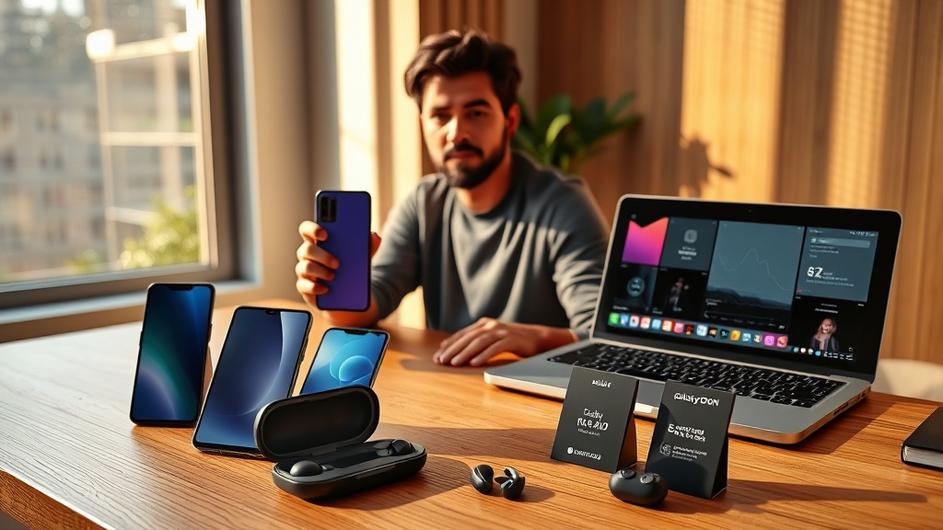
At the heart of the announcements were the three Galaxy S26 models. You’ve got the compact 6.3-inch base model, the 6.7-inch Plus, and the massive 6.9-inch Ultra. The Ultra, as usual, gets the fanciest camera and display tech. But here’s what’s interesting: Samsung didn’t overhaul the sensors. They went practical.
They widened the apertures on the main and ultrawide cameras. That means they capture more light. For anyone who’s ever tried to take a photo in a dim restaurant or at a concert, that change isn’t just a spec sheet bullet point. It’s meaningful. For developers working on imaging apps, it means they can improve low-light computational photography without waiting for radical new sensor designs. It’s an incremental win that matters more in real life than on paper.
Under the hood, the chipset story continues its regional split. Many S26 phones will run on Qualcomm’s Snapdragon 8 Elite Gen 5, while some markets might still get Samsung’s own Exynos 2600. For engineers and performance nerds, that means optimization work has to account for subtle differences. Battery life, thermal management, and machine learning workloads can behave differently depending on the silicon. It’s a reminder that global hardware isn’t as uniform as we sometimes assume.
Privacy Display: Finally, A Screen That Actually Guards Your Secrets
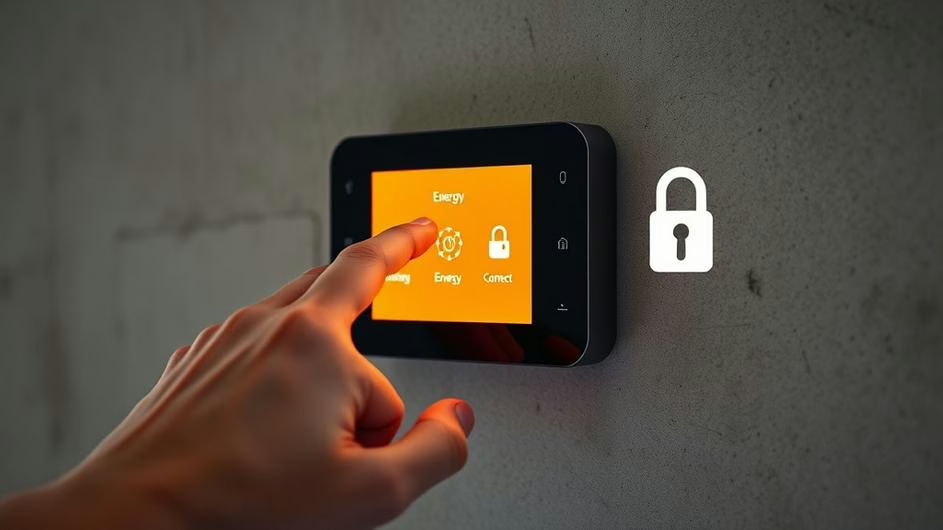
This was arguably the most intriguing part of the event. Samsung introduced something called Privacy Display. It’s a hardware and software hybrid that narrows the viewing angles to stop shoulder surfing. In practice, the screen controls pixel brightness and the viewable cone so that content stays clear for you but becomes unreadable to anyone looking from the side.
It’s not a brand new idea, but Samsung’s implementation looks genuinely usable. It integrates into the OS and apps instead of forcing you to toggle some awkward manual mode. For enterprises handing out phones to employees, or for anyone who values their privacy on public transit, this is a big deal. But it also raises questions for developers. How do UI layouts and notifications behave when the screen is in narrow-angle mode? It’s a new constraint to design for, and it’s part of a broader shift in how we think about screen habits in 2026.
Speaking of displays, Samsung’s pitch this year moved beyond the usual nit number wars. The focus was situational: making screens readable in harsh sunlight while still preserving battery and color accuracy. These are the kinds of optimizations that benefit real world use more than any headline spec ever could.
Audio Gets Its Moment: The Galaxy Buds 4 Pro
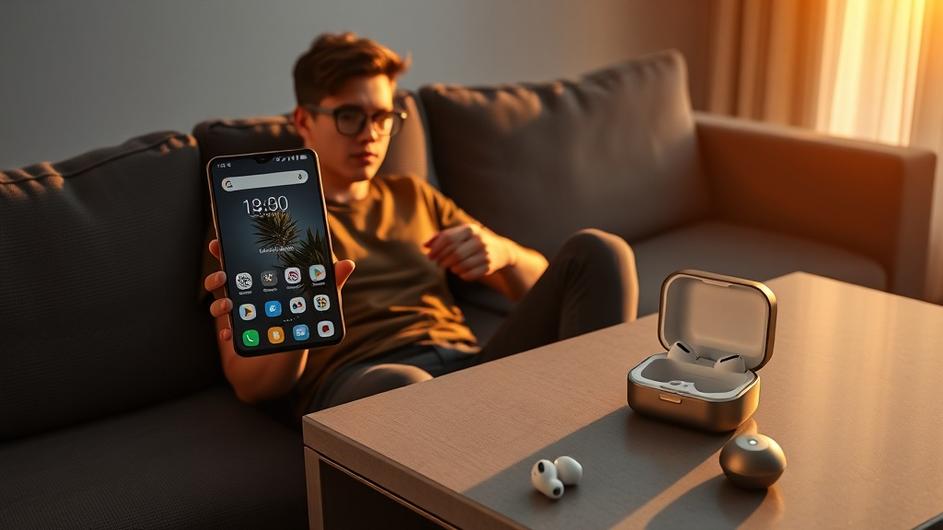
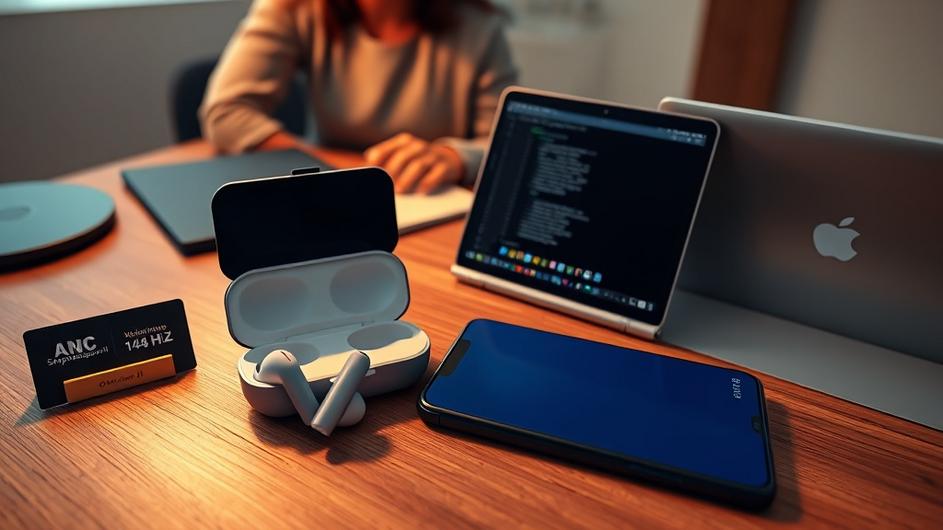
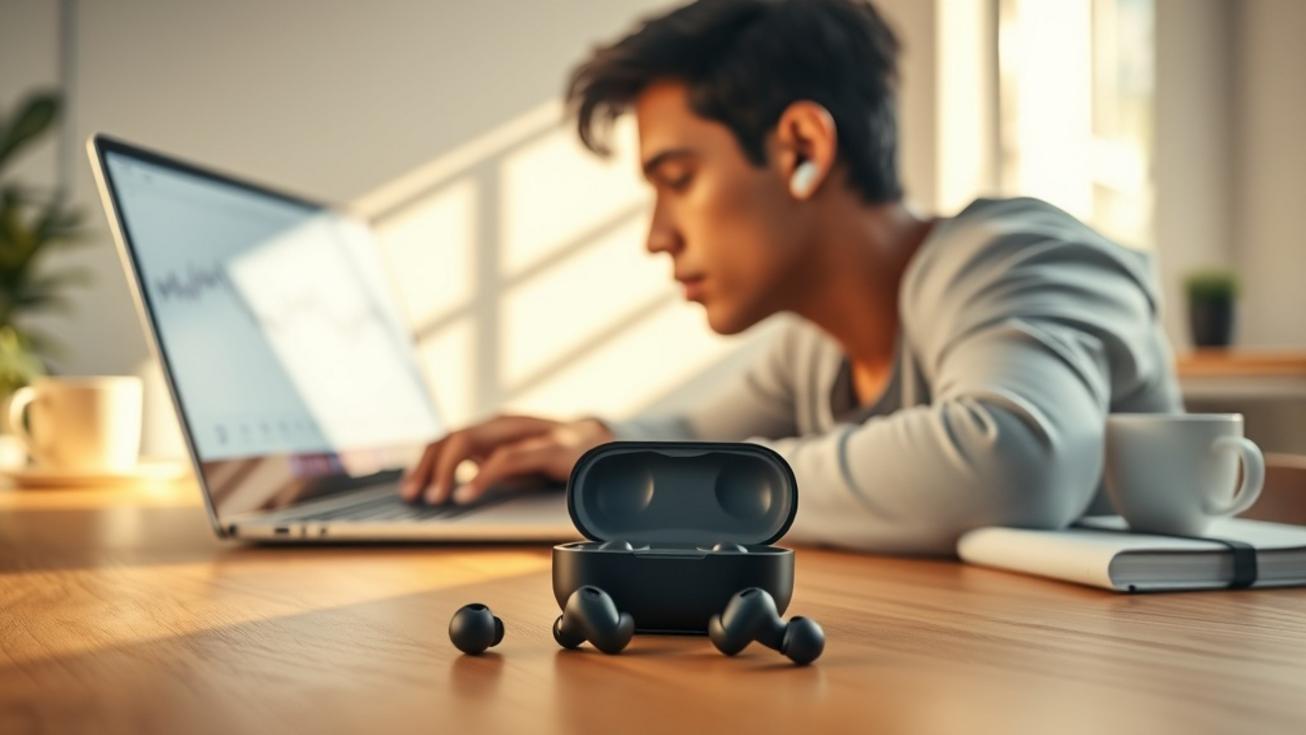
Audio finally got some serious attention. Samsung unveiled the Galaxy Buds 4 series, including the Buds 4 Pro. Expect better active noise cancellation, longer battery life, and tuning that leans into spatial audio features. For developers building audio-driven apps, whether for gaming, conferencing, or music, tighter integration with low-latency codecs and system-level audio processing opens doors to richer experiences.
It’s part of a larger trend where audio is becoming a first-class citizen in the device ecosystem, not just an accessory afterthought. This matters for everything from immersive AR experiences to professional communication tools.
AI Goes Agentic: From Suggestions to Actions
AI was woven through the announcements, but with a new twist. Publications like ZDNET highlighted “agentic AI” features. That’s a fancy term for AI that can take multi-step actions on your behalf, not just offer suggestions. The key here is on-device processing. Local models and system-level hooks make these features more private and responsive, since they don’t need to constantly send your data to the cloud.
For developers, this is both an opportunity and a responsibility. Apps can leverage device AI for on-device inference and context-aware behaviors. But they also have to handle permissions and explainability carefully. Users need to understand what the system is doing with their data. It’s a shift that’s part of the broader quiet forces shaping mobile technology right now.
Not every wishlist item got checked off, though. Reviewers noted that Samsung still hasn’t integrated magnets into phone backs for enhanced accessories and MagSafe-style charging. That omission keeps the accessory ecosystem fragmented. It’s a missed opportunity for seamless charging and mounting, and it shows that physical ecosystems are still lagging behind software maturity.
The Broader Hardware Picture: Xiaomi’s Affordable Power Play
While Samsung was refining its flagships, the broader hardware landscape was shifting in complementary ways. Xiaomi globally launched the Pad 8, a mid-range tablet that brings surprisingly premium specs. We’re talking a 144 Hz display and RAM configurations starting at 12 GB for the base model in Europe, all for around 449.90 euros.
This makes a compelling case that capable Android tablets can be both affordable and desirable for creative work, media consumption, and as secondary development targets. For developers building cross-device experiences, that’s welcome news. A broader tablet base means more potential users for tablet-optimized apps. It’s another signal in the early 2026 hardware wave that’s redefining what consumers expect.
What This Means for Builders and Users
Taken together, these developments point to a pragmatic moment in consumer tech. Manufacturers are refining the surfaces where users actually interact with devices, rather than chasing headline features that look good in ads but don’t improve daily life.
For the tech community, the short-term focus should be on integration. Build experiences that respect privacy while leveraging local AI. Optimize performance across different chip variants. Design UIs that can handle narrow viewing angles and new audio behaviors. For product teams, there’s a clear invitation to rethink accessories, because the physical ecosystem still has catching up to do.
Looking ahead, the industry seems to be moving toward devices that do fewer flashy new things and instead do existing things better. That’s ultimately good for users, but it raises the bar for developers who want to stand out. The next wave will be defined less by single gadget breakthroughs and more by how devices collaborate: phones that compute privately, earbuds and tablets that extend workflows, and software that ties these elements together seamlessly.
If you’re building for the next two years, focus on context-aware features, on-device AI, and cross-device continuity. Those are the areas where real user value will emerge as hardware continues its quiet but meaningful evolution. And as we look toward the wearable and AR future, these foundational improvements in displays, audio, and AI will become even more critical.
Sources
1. The 8 Biggest Announcements from Samsung’s Galaxy Unpacked 2026, CNET, Wed, 25 Feb 2026
2. Everything announced at Samsung Unpacked 2026: Galaxy S26 Ultra, Privacy Display, Buds 4 Pro, ZDNET, Fri, 27 Feb 2026
3. Samsung Galaxy S26 launch live: S26, S26 Plus, and S26 Ultra specs, Galaxy Buds 4, price, release date, and what is expected, Android Central, Wed, 25 Feb 2026
4. Xiaomi Pad 8 now official globally with 144 Hz display and mid-range pricing, Notebookcheck, Sat, 28 Feb 2026
5. The Morning After: What to expect at Samsung’s Galaxy Unpacked event tomorrow, Engadget, Tue, 24 Feb 2026