Practical Intelligence: How 2026 Is Turning Smart Tech into Real Savings
If you’ve been scanning the tech headlines lately, you might notice something different about 2026. It’s not just about flashy new features or incremental upgrades. This year, the conversation has shifted toward something more substantial, smart engineering that actually delivers tangible benefits. We’re seeing privacy-first home hubs, LiDAR-equipped robot mowers, and mysterious new devices from AI labs, all pointing toward what feels like a year of pragmatic convergence.
What does this mean for you? Devices are getting smarter in ways that translate into real savings, lower energy bills, and less daily friction. For developers and system architects tasked with stitching these pieces together, that’s more than just a marketing promise, it’s a fundamental shift in how we think about connected technology.
The Quiet Revolution in Where Intelligence Lives
At the heart of this change is something subtle but significant, where the intelligence actually resides. Remember when everything had to talk to the cloud? That assumption is fading fast. On-device AI is maturing, with models running locally on hubs, wearables, and everyday gadgets. This approach cuts down on latency, keeps your private data where it belongs, and often reduces those pesky ongoing cloud service costs.
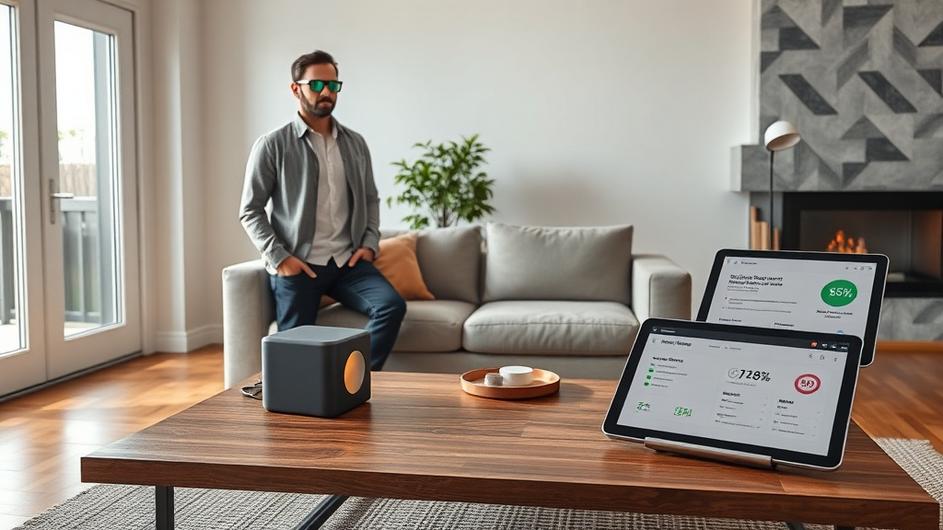
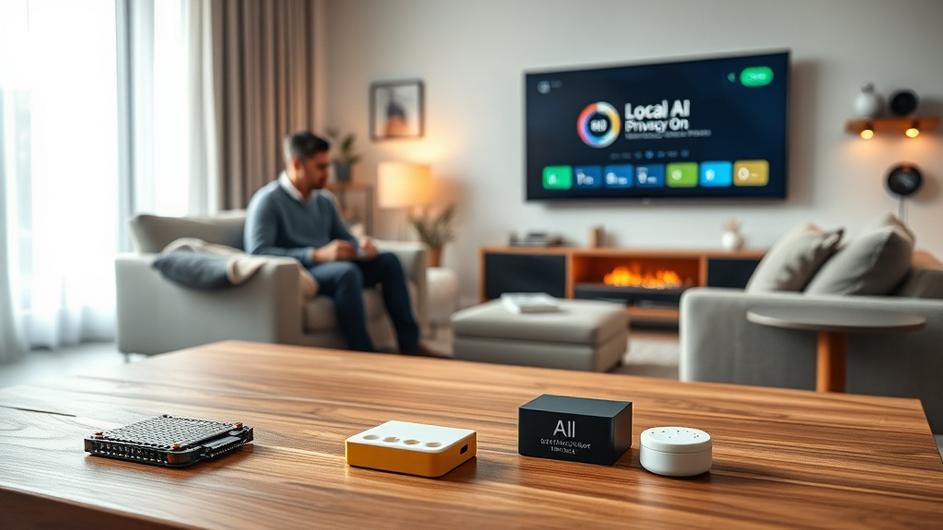
Take the OVAL smart home hub as a prime example. Slated for a spring 2026 launch with a price tag around $570, OVAL emphasizes what they call “on-device intent interpretation.” In plain English, that means it can figure out what you want without shipping every single voice command off to some distant server. For households that value privacy and want automation that actually works reliably, this tradeoff is becoming increasingly attractive. Could this be the beginning of a broader move away from cloud dependency?
Better Sensors, Real Savings
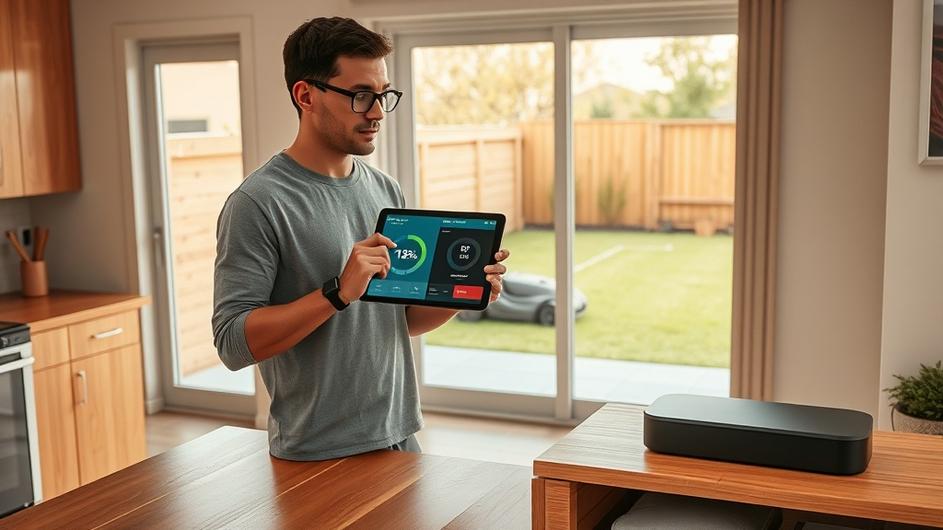
Now, pair that on-device intelligence with improved sensor hardware, and the savings potential gets concrete. Consider the new wave of robot mowers using LiDAR technology. These laser-based systems map your yard with centimeter accuracy, enabling more efficient mowing paths, fewer collisions, and precise boundary detection. The result? Shorter runtimes, lower electricity consumption, and less wear and tear on the hardware itself.
The same principle applies across your home. Better sensing in heating, ventilation, and lighting systems means fewer false positives and less wasted power when rooms sit empty. It’s not just about convenience anymore, it’s about cutting your utility bills in measurable ways. As highlighted in a recent Gadget Review analysis, these practical savings are becoming a primary selling point for 2026’s smart home gadgets.
Wearables and AR Enter the Mainstream
CES 2026 made it clear that wearables and augmented reality are crossing over from niche to mainstream in ways that directly connect back to the smart home. High-refresh-rate smart glasses, some showcasing 240Hz rendering for truly immersive applications, hint at entirely new interfaces for controlling home systems. Imagine visualizing your energy consumption in real time, right there in your living room, or adjusting your thermostat with a glance.
For developers, this means thinking beyond mobile screens. Spatial interfaces and contextual overlays will create opportunities for novel control surfaces, but they’ll also demand carefully designed APIs to prevent fragmented user experiences. The question isn’t whether these interfaces are coming, but how quickly developers can adapt to this new paradigm.

Big Players Double Down
Unsurprisingly, the major platform players aren’t sitting this one out. Apple rumors suggest a refreshed lineup that could include a new smart home hub, a Face ID doorbell, and expanded AI features for Siri, possibly alongside long-anticipated AR glasses. As MacRumors recently reported, these moves signal Apple’s deepening commitment to the connected home space.
A tightly integrated hub and doorbell could simplify authentication and secure entry, while native biometric options might finally reduce the friction of multi-device setups. If Apple does ship more home-centric hardware, developers should expect both new frameworks and tighter ecosystem constraints. This makes cross-platform interoperability more crucial than ever, doesn’t it?
Unexpected Entrants Shake Things Up
Meanwhile, companies from unexpected corners are pushing into the smart home arena. Ikea continues expanding its affordable smart offerings, making connected technology accessible to broader audiences. Consumer robot vendors keep iterating on household automation. Even OpenAI, better known for its models and APIs, has teased a mysterious device, signaling that AI incumbents are seriously exploring end-user hardware.
For engineers, this proliferation creates both challenges and opportunities. More vendor-specific devices mean increased demands on integration layers, but new form factors could also introduce low-latency, model-enabled local services that further reduce our reliance on cloud infrastructure. It’s a classic case of fragmentation driving innovation, even as it complicates the landscape.
The Manufacturing Backbone
Behind all these product moves lies significant manufacturing progress. Advances in production lines and materials, documented across industry reports and specialty engineering outlets, enable faster iteration and new component combinations like OLED displays and custom silicon. The same supply chain efficiencies that let smartphone makers offer dozens of color and storage variants now allow companies to test specialized hardware, from hybrid-electric demonstrator aircraft to niche home hubs.
For developers, this means a faster cadence of hardware-driven opportunities, but it also increases the need for robust testing and modular software that can adapt to diverse hardware capabilities. As noted in The Week In Technology, these manufacturing advances are reshaping multiple industries simultaneously.
The Smartphone Reality Check
Look at the smartphone space for a practical example of how these trends play out. When a leading vendor removes lower storage tiers and ships numerous color and storage permutations, as recent leaks suggest for flagship models, the result is a more fragmented device population. For app developers and service teams, this reality drives critical choices about local caching, offline-first modes, and storage-aware behavior.
Optimizing for real-world constraints like limited storage has become part of delivering resilient, efficient apps that complement the energy and privacy savings being built into hardware. It’s no longer just about features, it’s about performance within constraints.
Converging on Responsibility
All these threads converge on a single proposition, smarter products that are also more responsible. When homes interpret intent locally, when sensors are precise enough to avoid wasteful behavior, and when manufacturers prioritize manufacturability and modularity, everyone wins. Users get lower bills and fewer headaches, while engineers face work that’s both more interesting and more demanding.
Design teams must balance model size, latency, and privacy considerations, while backend developers rethink billing and sync patterns to complement on-device capabilities. As we’ve seen in our coverage of AI’s move into the physical world, this represents a fundamental shift in how we architect connected systems.
What Comes Next?
Looking ahead, the immediate months will reveal how these experimental pieces assemble into coherent platforms. Expect tighter integrations from large ecosystems, more modular APIs from platform vendors, and a wave of devices that assume some intelligence lives at the edge. Open standards for communication and device discovery will be crucial, because the real savings only materialize when components cooperate across vendors.
In short, 2026 feels less about futuristic promises and more about practical results. The combination of on-device AI, better sensing, and maturing manufacturing is turning smart gadgets into tools that genuinely reduce costs and complexity. For developers and technologists, that’s an invitation to build systems that are efficient, private by default, and interoperable. The next generation of devices needs to deliver not just novelty, but measurable value that shows up where it matters most, in our daily lives and our monthly budgets.
As smart home technology continues evolving, the focus on practical intelligence over empty spectacle might just be the most significant trend of all. After years of hype, we’re finally getting smart tech that works smarter for us, not just flashier.
Sources
- 9 Smart Home Gadgets That Will Actually Deliver Real Savings in 2026, Gadget Review, Tue, 20 Jan 2026
- Top Stories: iPhone 18 Pro Leaks, Siri Chatbot, Apple AI Pin, and More, MacRumors, Sat, 24 Jan 2026
- The Week In Technology, Jan. 26-30, 2026, Aviation Week Network, Mon, 26 Jan 2026
- OpenAI’s Mysterious Upcoming Device, Higher Streaming Prices in 2026, Portugal Cracks Down on Polymarket | Tech Today, CNET, Wed, 21 Jan 2026
- Samsung Galaxy S26 without 128GB model: EU retailer leaks all 30 colors and storage options in Europe, Notebookcheck, Sat, 24 Jan 2026