Mobile Momentum, AR at the Edge, and the Fragile Network That Binds Them
If the first months of 2026 feel like a pressure test for the modern tech stack, that’s because they are. Chipmakers are quietly redesigning silicon to balance raw performance with thermal reality, memory suppliers are racing to feed the generative AI beast, and augmented reality is finally slipping out of research labs and into actual retail stores. Meanwhile, the services we all depend on for content distribution keep wobbling under load. For developers and builders watching this unfold, the message couldn’t be clearer: hardware is rewriting the rules, but software reliability matters more than ever.
Take the latest whispers about Samsung’s Galaxy S26 family. Early units surfaced online recently when someone tried to sell a handset for $1,650, a classic sign that global launches are imminent and that enthusiastic testers are already in the wild. This isn’t just another hardware leak story. According to Notebookcheck’s report, the device rumors point to something more interesting happening under the hood. Qualcomm’s Snapdragon 8 Elite Gen 5 might ship in a slower configuration for some vendors, reportedly missing a performance core entirely.
On paper, that sounds like a downgrade. In practice, it’s a pragmatic tradeoff that tells us where mobile computing is headed. Missing that top-end core reduces peak single-thread performance, sure, but it allows for better thermal balance and battery life in those impossibly thin metallic chassis we all love. It also helps silicon vendors match yields to actual demand. For mobile software engineers, this means planning for wider performance variance across devices than ever before. Heavy compute paths need to be adaptive, background work should be scheduled conservatively, and benchmarks should emulate both the best-case silicon and the watered-down versions.
At the same time, Samsung is quietly evolving its software layers, with early evidence of One UI 9 testing across Fold and Flip devices. Foldable form factors add complexity for developers, but they also unlock entirely new UX patterns. If you’re building apps today, you can’t just think about fixed screen sizes anymore. Window management, state continuity, and truly responsive layouts are becoming table stakes. It’s part of a broader shift we’re seeing in how developers approach device diversity.
Hardware feeds software, and power users are watching the memory market with particular interest. Samsung has reportedly shipped HBM4 memory that exceeds specifications, the priciest AI memory Nvidia has ordered to date. HBM stands for high-bandwidth memory, a stacked design that delivers very high throughput per watt, and HBM4 brings that capability to next-generation AI accelerators. For teams building models and inference engines, this is genuinely good news. Higher memory bandwidth eases bottlenecks for large models, enabling lower latency for on-device or edge inferencing, and reducing the constant need to offload everything to remote servers. It’s another piece in the ongoing chip wars that are reshaping AI infrastructure.
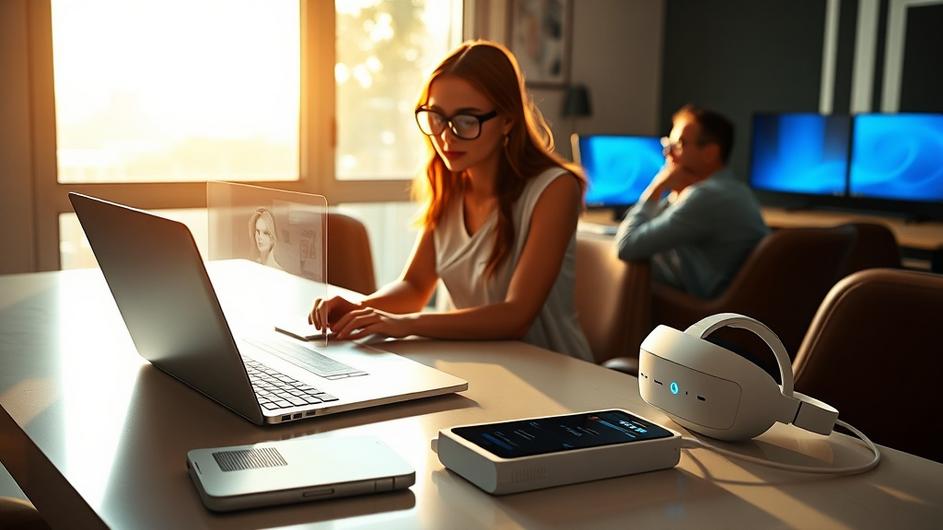
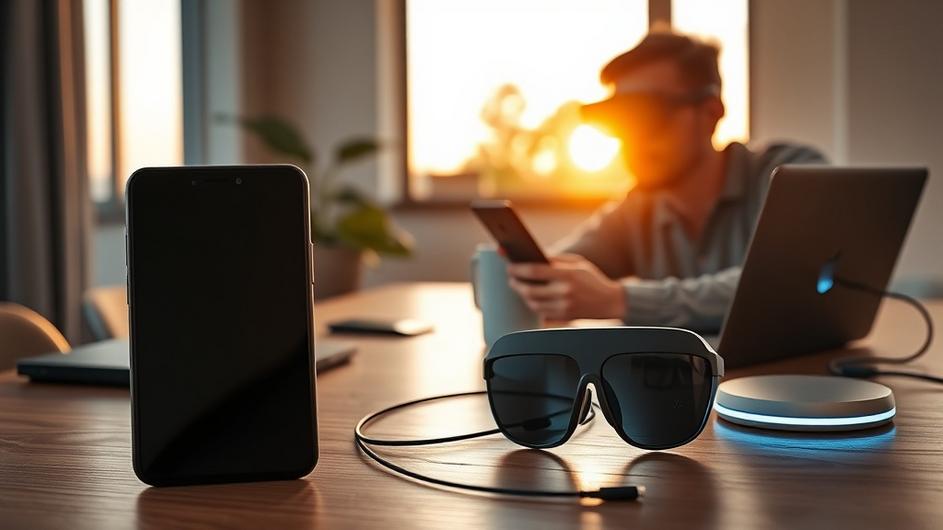
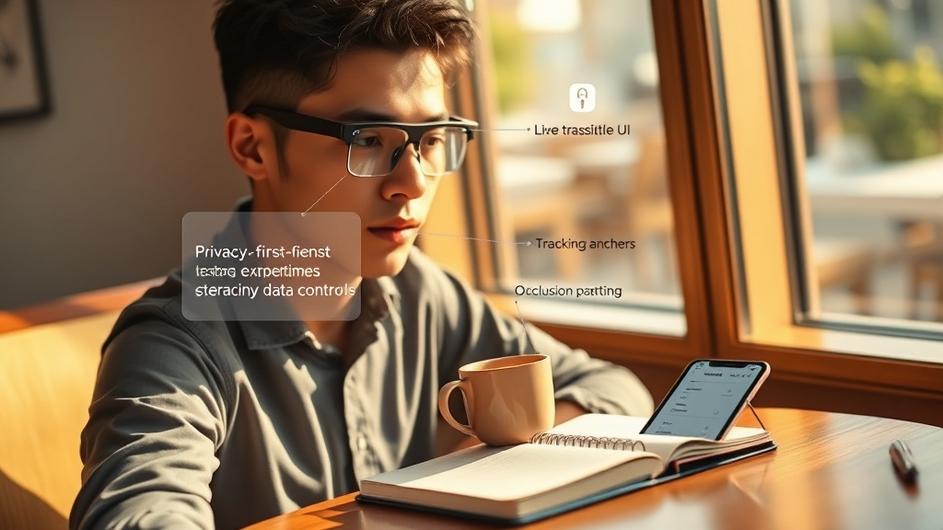
If silicon is the new plumbing, augmented reality is the next appliance being hooked up to it. 2026 might finally be the year AR stops being a novelty and starts becoming a retail reality. Partnerships like Warby Parker and Google aim to ship AI-enabled prescription glasses at everyday price points, which could finally align hardware, distribution, and actual fashion. Snap continues to push social AR through its Specs, leaning into ephemeral sharing rather than niche productivity use cases. Meanwhile, Niantic is extending location-based AR beyond gaming, attempting to create durable real-world overlays that people might actually use.
Retail-first AR matters because it solves a basic adoption problem that’s plagued the technology for years. Consumers buy eyeglasses. They don’t buy developer kits. If AR arrives embedded in familiar products with clear use cases, developers will suddenly have a larger, more patient audience to build for. For creators, that means designing lightweight AR interactions that respect battery and thermal limits, and that can gracefully fall back to standard mobile interfaces when needed. As we’ve explored in our look at how AR glasses will redefine wearables, this shift changes everything from distribution to design philosophy.
But here’s the thing: while we’re busy assembling this future hardware stack, our software platforms remain surprisingly fragile. Mid-February saw a partial outage of YouTube, a stark reminder that even the largest services experience availability hiccups. Creators felt it immediately, with live streams interrupted and uploads delayed. For developers of distributed systems, YouTube’s downtime serves as a case study in the cascading effects of platform instability. Redundancy isn’t optional anymore. Observable telemetry, graceful degradation, and good retry semantics have become practical defenses against an internet that can’t always be trusted.
The impact of platform instability ripples into other domains, most notably gaming. The release of Deadlock, a new MOBA in Valve’s universe, drew a surprisingly emotional response from players. Some were disappointed because the title chose the familiar MOBA blueprint over deeper single-player or narrative experiences featuring Valve’s beloved characters. As one PC Gamer writer expressed, that reaction reminds us that communities have expectations that go beyond technical polish. Game developers must balance systemic reliability, monetization, and creative ambition. Players reward novelty and narrative depth, and they’re quick to penalize safe recycling of genre norms.
Across all these threads, there’s a common tether: the voice assistants that increasingly tie our devices to cloud services. Apple’s schedule appears to be shifting in 2026 as well, with Siri-related delays reported ahead of new MacBook, iPhone, and iPad launches, including the anticipated iPhone 17E. Voice assistants and on-device AI aren’t extras anymore. They impact release timelines because they touch everything from privacy to latency to the tight coupling between hardware and OS-level optimizations. That coupling will only deepen as AR glasses and high-bandwidth memory become more widespread.
So what should developers and tech leaders actually take away from this rapid succession of shifts? Let’s break it down without the robotic numbering.
Assume heterogeneity is the new normal. Expect devices with differing core counts, memory bandwidths, and thermal envelopes. Build adaptive code paths, profile on mid-tier hardware, and design for graceful degradation from the start. Your app might run beautifully on flagship silicon, but how does it perform when one of those performance cores goes missing?
Design for intermittent platforms because services will fail. The user experience should survive short outages without falling apart. Caching, local-first approaches, and clear error states don’t just preserve functionality, they preserve trust. When YouTube goes down, your app shouldn’t become unusable.
Embrace retail channels for AR and plan for low-friction discovery. If mainstream AR is sold through eyewear brands and social apps rather than specialty stores, distribution will naturally favor lightweight, privacy-aware experiences. This isn’t about building for early adopters anymore, it’s about building for everyone. As Glass Almanac notes in their analysis of 2026 AR moves, the distribution game is changing fundamentally.
We’re at a hinge point where more capable silicon, practical AR hardware, and ever-present cloud services meet a stubborn reality: networks and platforms still fail. The winners will be the teams that see both sides of that equation, who build ambitious features but keep their systems resilient, and who optimize for the messy diversity of 2026 hardware. The result should be more useful AI at the edge, AR that’s actually wearable, and software that hums along even when the broader internet hiccups.
The next 12 to 24 months will show whether this stacking of capabilities yields real daily value, or whether we’re simply shuffling novelty from one silo to another. For developers, this is a rare opportunity. Shifting infrastructure means new product levers, and those who code for the long tail of devices and users will shape what mainstream tech becomes. It’s not just about keeping up with the latest hardware moment, it’s about building for the reality that most people experience.
What does that reality look like? It’s phones with different performance profiles, AR that lives in your glasses rather than your phone screen, and services that work even when the big platforms stumble. It’s messy, it’s diverse, and it’s where the real innovation happens. The question isn’t whether you can build for the perfect scenario, but whether you can build for the imperfect one that most users actually inhabit.
Sources
- New Samsung Galaxy S26 smartphone reveals itself as someone tries to sell it for $1,650, Notebookcheck, 14 Feb 2026
- YouTube is partially busted right now, PC Gamer, 18 Feb 2026
- 6 AR Moves In 2026 That Could Reshape Tech Giants & what changes next, Glass Almanac, 15 Feb 2026
- I’m sad Deadlock is ‘just’ a MOBA not because I don’t like them but because I’m in love with Valve’s lore and characters enough to want any other game instead, PC Gamer, 16 Feb 2026
- Siri Delays?! New Macbook, iPhone, iPad Expected Soon, CNET, 13 Feb 2026