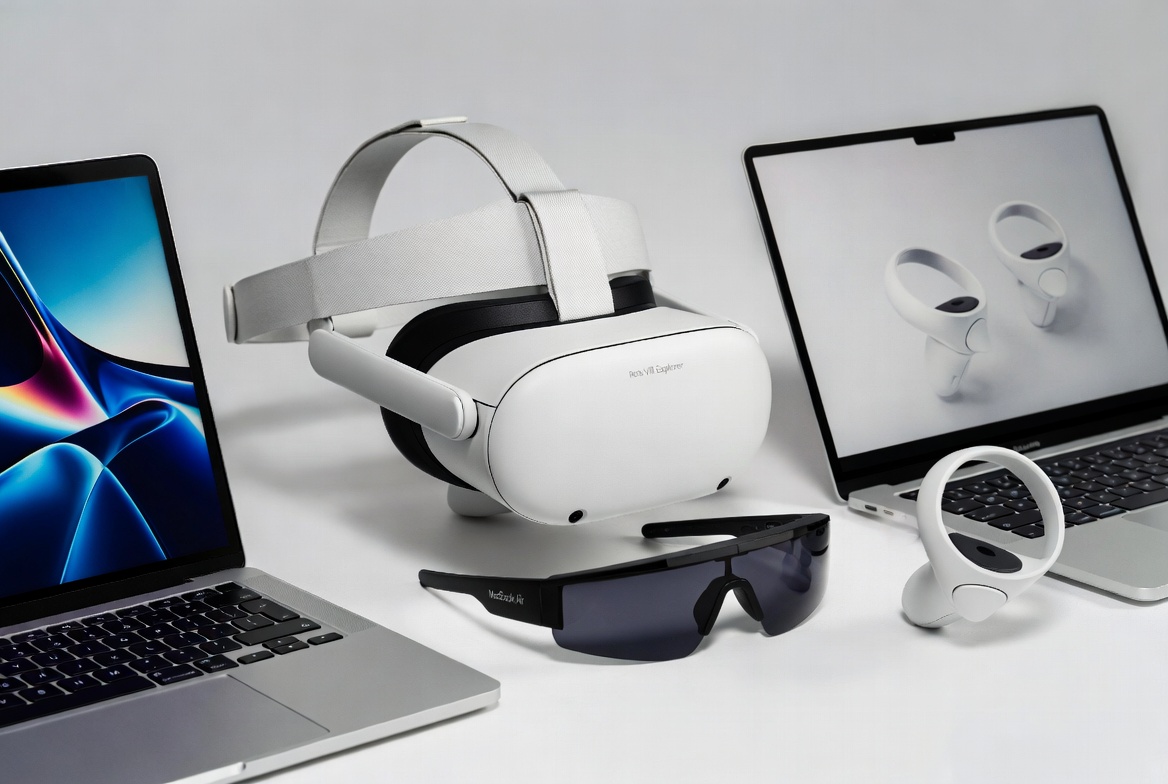
Inside 2025’s Gadget Boom, From Spatial PCs to Immersive VR
Look around at this year’s gadget releases and you’ll notice something different. It doesn’t feel like just another product cycle anymore. What we’re seeing in 2025 looks more like an infrastructure upgrade for the next internet era. For crypto investors, developers, and power users, this hardware wave isn’t about shiny toys. It’s about building the client layer where Web3 actually lives, where decentralized apps, tokenized assets, and AI agents will operate.
From VR rigs that physically move your body to laptops so efficient they barely sip power, the most interesting devices share a common thread. They’re blending immersion, mobility, and subtle AI in ways that could fundamentally change how we trade digital assets, build decentralized applications, and secure our crypto holdings.
When VR Gets Physical: The New Interface for Digital Value
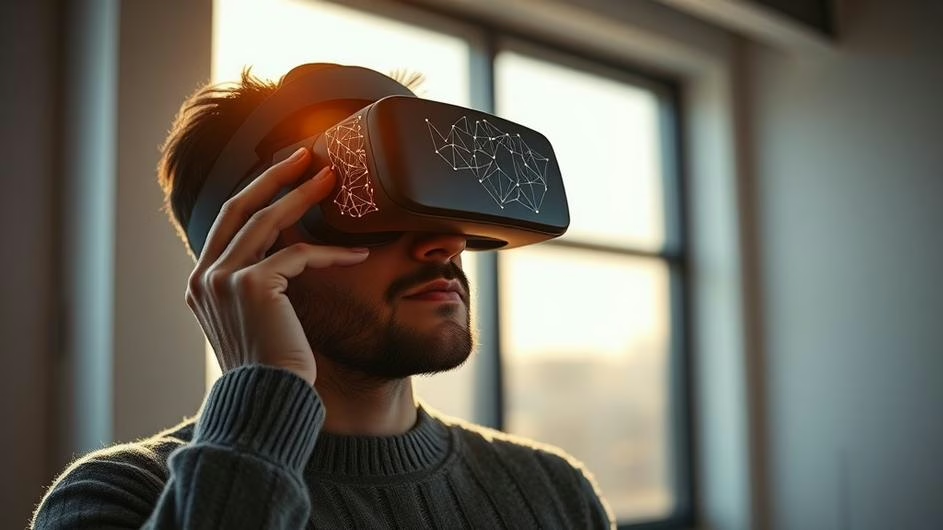
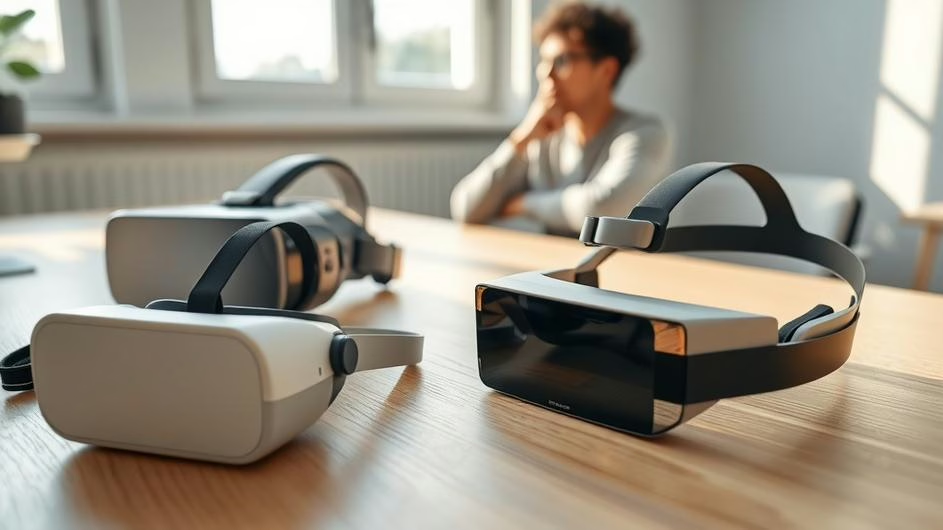
Take the Roto VR Explorer as a starting point. This isn’t your typical VR headset. It’s a motorized chair designed for full-body engagement. When you’re racing or flying in virtual space, you feel every twist and turn. The system syncs motion with the virtual environment so your body follows what your eyes see. You don’t just watch the action, you’re physically part of it.
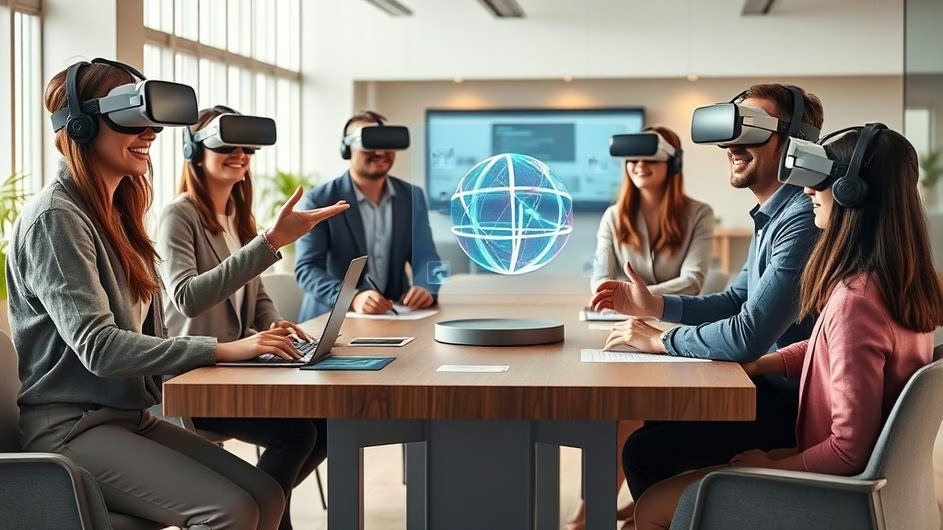
On the surface, this might sound like a gaming novelty. But for Web3 enthusiasts, rigs like Roto hint at something bigger. They point toward a future where high-value digital experiences, from token-gated concerts to virtual trading floors, start to feel genuinely physical. Imagine a DAO treasury vote happening inside a virtual boardroom where participants sit in motion rigs, gesture naturally, and interact with 3D dashboards showing real-time protocol metrics.
The deeper the sense of presence, the more natural it becomes to treat digital assets as real property rather than speculative numbers. As VR hardware matures, we should expect more crypto-native experiences that tie ownership and identity to immersive environments. NFTs already function as tickets and access keys. Pair them with embodied devices and you get a new class of experiences where governance, trading, and collaboration feel like being on an actual trading floor, not staring at a browser tab.
Smart Glasses: Your Head-Up Display for Crypto
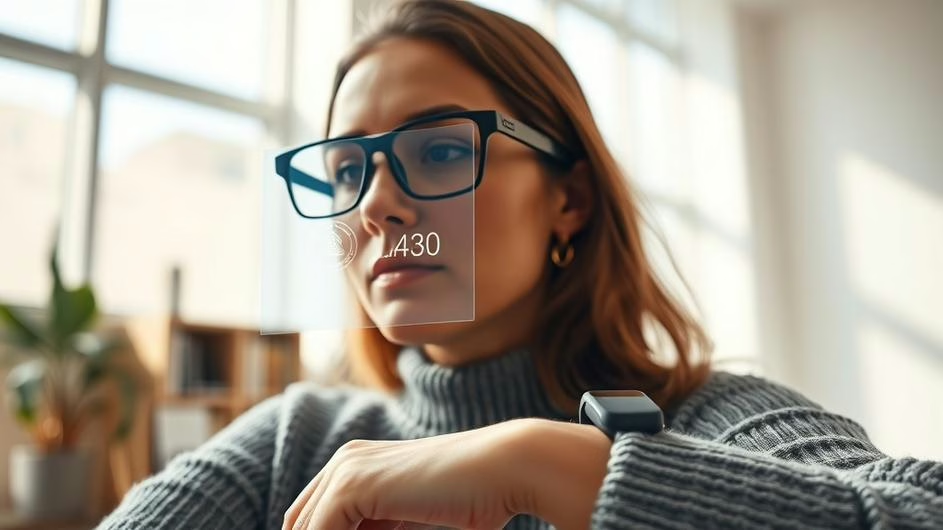
If Roto VR pulls you completely into virtual worlds, smart glasses represent 2025’s approach to blending crypto with physical reality. TechRadar’s review of the Xreal One Pro is pretty straightforward. They call it the best pair of smart glasses they’ve tested this year, thanks to hardware tricks that deliver a crisp, stable image with a surprisingly usable field of view.
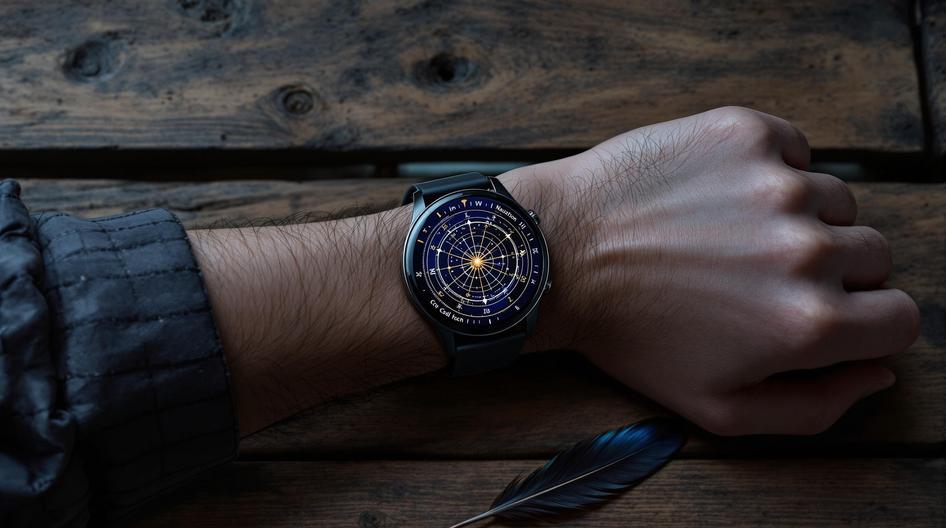
Think of smart glasses as a head-up display for your crypto data. That could mean real-time wallet balance overlays while you’re tapping a hardware wallet, yield metrics floating over QR codes at a conference, or on-chain reputation scores appearing next to usernames in a hackathon workspace. Spatial computing, which blends digital interfaces with our physical surroundings, gets much more interesting once financial primitives become part of that overlay.
There’s a security angle here too. Authenticated glasses could act as context-aware verification devices. Instead of typing a seed phrase into a laptop, you might confirm high-value transactions with a glance at a private holographic prompt visible only to you. This kind of hardware-based confirmation would complement multi-factor authentication and could make phishing attacks significantly harder to pull off.
The M4 MacBook Air: Quiet Power for Crypto Developers
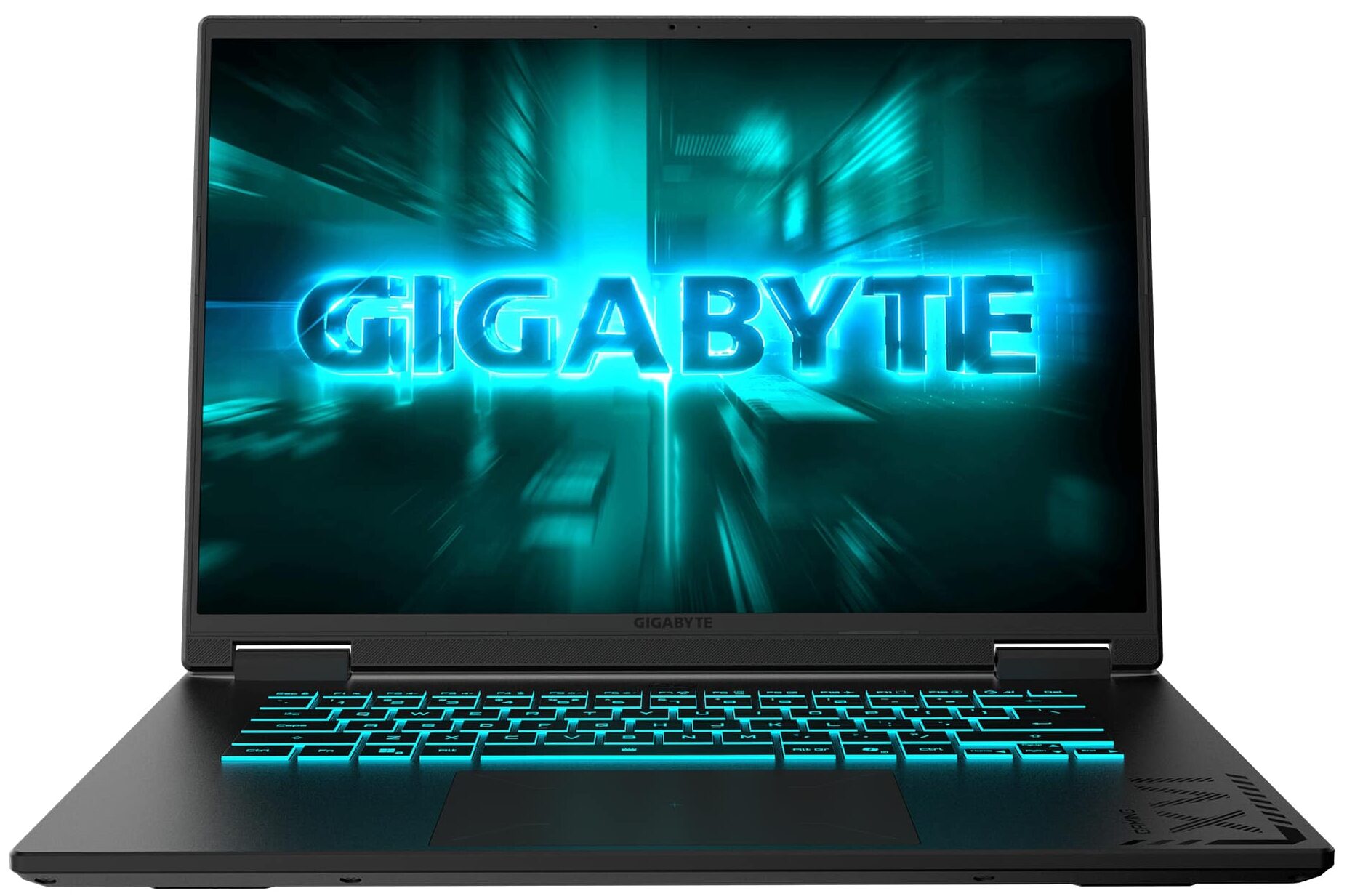
On the more traditional computing front, 2025 is the year ultraportables stopped feeling like a compromise. Apple’s MacBook Air with the M4 chip combines strong performance with a thin, light form factor at a price that’s surprisingly competitive for the category.
For developers building in the crypto space, the practical implications are clear. You’ve now got a machine that can spin up Docker containers, compile smart contracts, and run multiple testnets while still fitting comfortably on a plane tray table. The energy efficiency of chips like the M4 also hints at a future where powerful local devices work alongside cloud-based, often decentralized, compute networks.
Consider these laptops as command centers for AI agents that query blockchains, monitor DeFi positions, and suggest risk adjustments. Some of that intelligence will run locally for privacy, while some will tap into decentralized compute networks that expose GPU power in tokenized form. Lightweight but capable laptops make that hybrid model actually usable for real people doing real work.

Cool Tech Meets Tokenization
Zoom out from the headline laptops and headsets, and 2025 is packed with what retailers simply call “cool tech.” Shopping guides showcase digital iPhone cases that turn your phone into a mini billboard, frozen drink makers that feel like countertop robots, and smart home accessories that pack sensors, connectivity, and AI into packages costing less than fifty bucks.
On their own, these look like lifestyle products. But view them through a Web3 lens and they point toward a world where almost every gadget can become an on-chain actor. Imagine a digital phone case that displays NFTs dynamically or rotates through DAO proposals in real time. Or a smart drink maker that joins a tokenized loyalty program, earning you points each time you run a batch and settling rewards on a low-cost chain.
Sites like The Gadget Flow already aggregate crowdfunding projects, niche robotics, smart living tools, and cryptocurrency accessories in one stream. It’s a window into how fragmented hardware categories are converging. The same feed that shows you a personal drone or home robot also surfaces hardware wallets, Web3-enabled speakers, and VR gear.
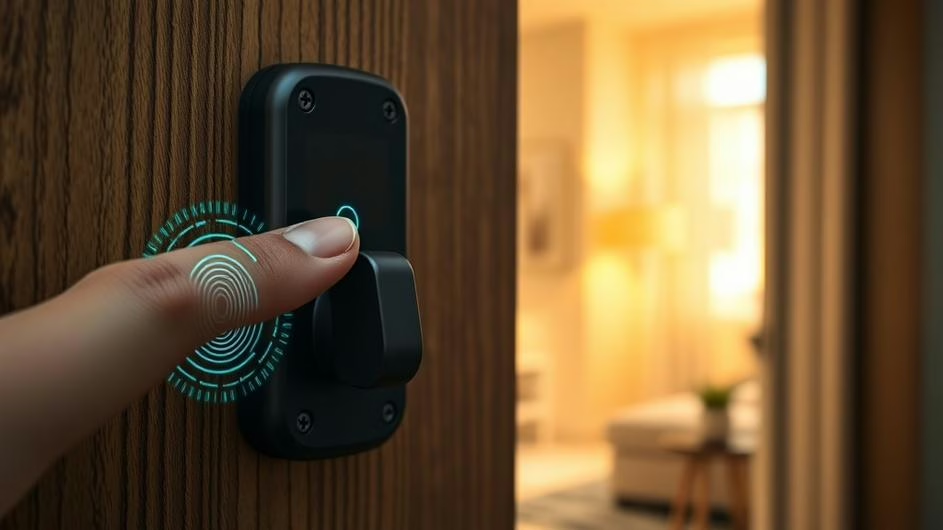
In practice, this means crypto won’t live in a separate hardware category for much longer. Wallet chips will sit alongside audio codecs on motherboards. DeFi dashboards will be preloaded widgets on smart TVs. Tokenized mobility passes will live in the same interface that unlocks your scooter or personal vehicle.
Minimalism, AI, and the Quieter Side of 2025 Tech
Trend analysts looking across this year’s releases notice something else. 2025 tech trends blend functionality with innovation, serving both minimalist and high-tech lifestyles. Some devices explicitly push back against constant connectivity. There are reduced-connectivity phones that limit apps and notifications in the name of focus. Others lean directly into AI-powered smart systems that anticipate your needs before you even articulate them.
For crypto users, this convergence of minimalism and intelligence might sound contradictory, but it’s not. Reduced-connectivity phones could become ideal cold wallet companions. They stay offline most of the time, yet they can activate just enough secure connectivity to sign a transaction or check a balance through a hardware enclave.
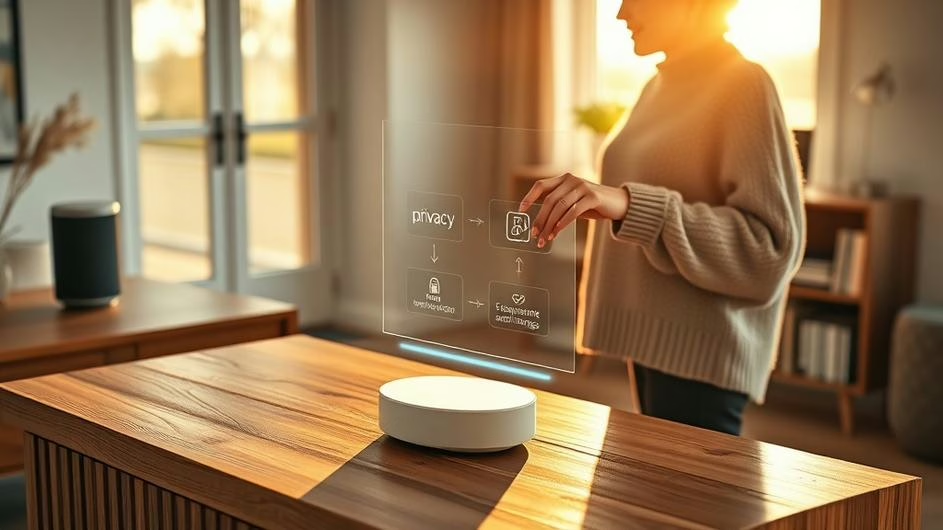
On the flip side, AI-powered devices will form the front line for blockchain security. Picture a router that automatically detects suspicious connections to phishing domains targeting your Web3 wallets, or a home assistant that warns you when a transaction looks inconsistent with your usual pattern. These are simple concepts, but they rely on the blend of local AI inference and on-chain data that 2025 hardware finally makes practical.
What This Hardware Wave Really Means for Crypto
Look at these gadgets together and you’ll see they’re more than consumer luxuries. Immersive VR rigs create believable digital spaces where tokenized assets feel tangible. Smart glasses and spatial laptops turn Web3 tools into ambient overlays that live in your field of view. Cool everyday tech plants the idea that every device can participate in decentralized economies. Minimalist and AI-first designs help make security and privacy less of a burden.
For the next phase of crypto adoption, the key question isn’t just which chains will win or how regulations will evolve. It’s which devices people will actually use to interact with these systems. The answer is taking shape right now, in the hardware we’re strapping to our faces, placing on our desks, and sliding into our pockets.
As 2025 continues to unfold, expect the boundary between gadgets and Web3 infrastructure to blur even further. The best hardware won’t just run crypto apps. It will be built with decentralized identity, programmable money, and AI-enhanced security as design constraints from the start. When that happens, the future of crypto will look less like an abstract financial experiment and more like the default operating system for how we interact with our gadgets, our data, and each other.
Sources
1. “20 New Gadgets And Inventions (2025) That You Will Want to …”, YouTube, 2025
2. “The best tech of 2025 so far – the 17 finest gadgets we’ve tested this year”, TechRadar, 2025
3. “20 Best Cool Tech and Gadgets in 2025”, Today, 2025
4. “Top 100 Tech Trends for 2025”, TrendHunter, 2025
5. “Best Cool Tech Gadgets of 2025”, The Gadget Flow, 2025
6. “Gadgets of 2025: Reshaping How We Build and Use Web3”, TechDailyUpdate
7. “How 2025’s Smartest Gadgets Are Rewiring the Crypto-Native Lifestyle”, TechDailyUpdate
8. “Inside 2025’s Smartest Gadgets and What They Mean for Web3”, TechDailyUpdate
9. “Gadgets 2025: Mixed Reality, Smart Audio and the Next Wave of Web3”, TechDailyUpdate
10. “Inside 2025’s Gadget Wave: Reshaping Crypto, Computing, and XR”, TechDailyUpdate