Hardware Reckoning: microLED, AI Devices, and the New Supply Chain Shaping 2026
Remember when hardware innovation was mostly about cramming more transistors onto a chip? Those days are fading fast. As 2025 wrapped up, something shifted in the tech landscape. It wasn’t just another incremental spec bump. Instead, we saw display breakthroughs, AI hardware ambitions, and manufacturing realignments converge into what feels like a new chapter for consumer tech.
Think about the signals we got in December. Google and Samsung showed off a sleeker Android XR prototype that actually looked wearable. Then came reports that OpenAI moved production of its first consumer device from Luxshare to Foxconn. These aren’t random announcements. They’re telling us the race has changed.
It’s not just about better specs anymore. The game now revolves around platform readiness, component supply chains, and where devices get built. These factors will define what developers and product teams can actually ship in 2026. And if you’re building anything in the immersive tech space, you should pay attention.
Why microLED Matters More Than You Think
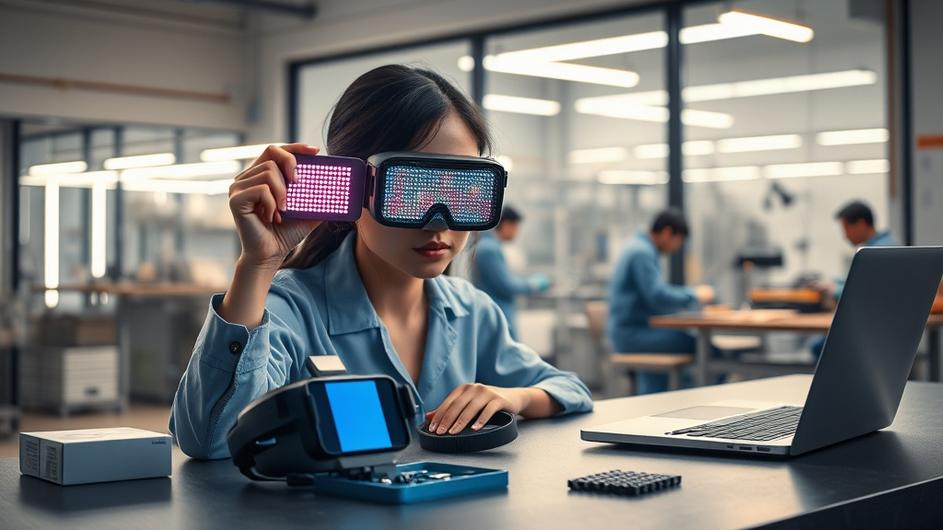
That Google-Samsung prototype reveal in December wasn’t just another headset demo. According to reporting, the device that accompanied the Android XR platform launch used microLED displays. That detail matters more than most people realize.
MicroLEDs are tiny, self-emissive pixels that offer higher brightness, better contrast, and longer lifespan than traditional LCDs. For augmented reality, where brightness and power efficiency determine whether virtual content can comfortably overlay the real world, microLED solves several practical pain points that have held back AR adoption.
But here’s what’s really interesting. The timing of this reveal aligns with what we’ve been seeing in hardware innovation trends throughout 2025. Android XR isn’t just another software platform. It’s built to give developers a single set of tools and APIs for immersive experiences across devices.
With a working prototype and clear platform roadmap, developers finally have a concrete target. That accelerates app development and testing in ways that abstract SDKs never could. Expect a faster cadence of AR apps and developer investments in 2026, especially as OEM partners step up hardware support and component supply stabilizes.
The Manufacturing Shift That Changes Everything
Hardware isn’t just about screens and SDKs, though. Manufacturing choices determine whether devices scale, how fast they reach markets, and what geopolitical risks they carry. The report that OpenAI shifted production of its first consumer device to Foxconn highlights this reality in stark terms.
Foxconn brings scale and a proven history in consumer electronics assembly. But the move also reflects a broader industry push to diversify supply chains, a response to the fragility revealed by trade tensions and component shortages over the past few years.
For designers and engineers, this matters because your manufacturing partner affects everything from the bill of materials to quality control and time to market. It also matters for where sensitive design and production work happens, which feeds into regulatory and security conversations that are becoming increasingly important.
When a device is branded as a flagship AI product, the choice of manufacturer signals corporate priorities, risk tolerance, and the seriousness of a consumer launch. It’s not just about finding the cheapest assembly line anymore.
What CES and Year-End Shows Tell Us
CES and other year-end tech shows offer perspective on how these pieces fit together. Looking back at CES history helps explain why trade fairs still matter in our digital age. Big reveals at CES have historically accelerated entire categories, from TVs to cars, and 2025 followed this pattern.
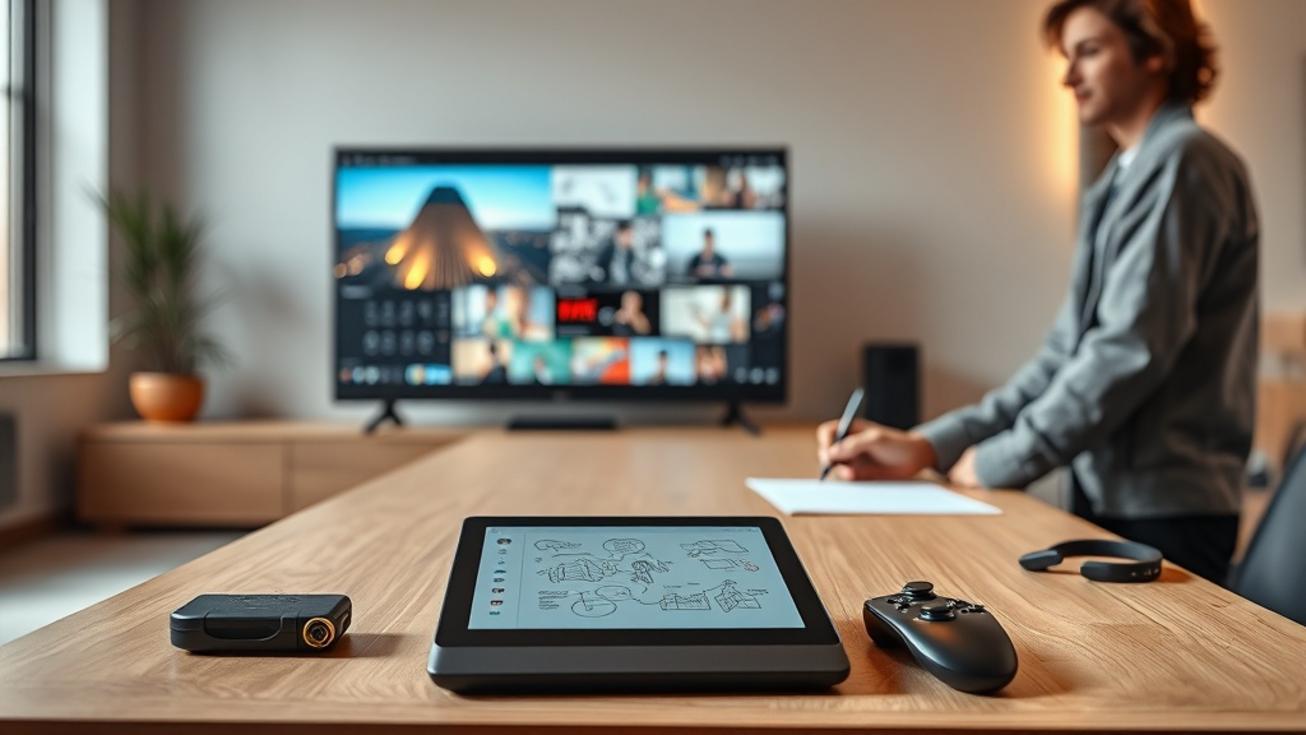
Companies used the stage to show inventions and prototypes that clarify future roadmaps, including new TV and monitor tech where displays meet compute and content in surprising ways. As CNET’s analysis shows, these events still drive industry momentum in ways that virtual announcements can’t replicate.
Gadget roundups from late 2025 reinforce that innovation is broad and sometimes unexpected. From E Ink devices that bring better color and note-taking ergonomics to niche gaming peripherals and pocketable 360 cameras, the consumer landscape is diversifying. Not every breakthrough goes mainstream in year one, but these products signal the practical uses manufacturers will chase when new components and software ecosystems make them feasible.
Automotive’s Parallel Evolution
Automotive technology is part of this story too. Carmakers like BMW and Mercedes used year-end events to preview software-defined vehicles and connected features that depend on steady chip supplies and robust over-the-air update systems. The Nexperia chip disruptions of 2025 showed that vehicles and consumer electronics share a fragile dependency on a handful of suppliers.
The industry response, as detailed in Automotive News coverage, is to redesign systems for redundancy and invest in flexible software that can adapt when hardware changes mid-production. Sound familiar? It’s the same supply chain resilience thinking that’s reshaping consumer electronics.
What This Means for Developers and Product Teams
So what does all this mean if you’re building tech products? The implications are concrete and immediate.
First, prioritize cross-device design. As platforms converge, your app should scale from phone to headset to in-vehicle displays. The walled gardens are breaking down, and users expect continuity.
Second, design for variable hardware characteristics. Supply chain shifts will cause bills of materials to change during development cycles. Your software needs to handle that gracefully.
Third, invest in simulation and remote testing, especially for display-dependent UX. Access to prototype microLED hardware will be limited early on, so you’ll need ways to validate experiences without physical devices.
These strategies align with what we’ve seen in recent hardware development trends, where adaptability has become as important as raw performance.
The 2026 Landscape: Where Software Meets Supply Chains
The 2026 technology landscape will be shaped as much by manufacturing and supply chain moves as by breakthroughs in silicon or software. Expect the next wave of user experiences to arrive where ecosystem readiness, component availability, and manufacturing capacity align. That alignment is what turns an intriguing prototype into a product millions can use.
As we move forward, keep an eye on a few key areas. Watch how quickly Android XR and similar platforms mature and deliver developer tools. Monitor how microLED production scales and whether costs fall fast enough to appear in mainstream devices. Observe how major AI companies navigate manufacturing partnerships while managing geopolitical and security concerns. And track how industries like automotive continue to redesign systems to be resilient when components are constrained.
The big picture here is promising. Convergence between display innovation, software platforms, and diversified manufacturing will enable richer, more durable devices. For developers, that’s an invitation to build for adaptability, test early, and treat supply chain uncertainty as a feature of the product lifecycle rather than a bug.
The next breakthrough won’t be a single gadget. It will be the moment when software, supply, and silicon finally move in sync, delivering hardware that feels inevitable rather than experimental. And based on what we saw at the end of 2025, that moment might be closer than we think.
As Gizmodo’s December roundup showed, innovation is already happening across multiple fronts. The question isn’t whether these technologies will mature, but how quickly they’ll converge into products that redefine what’s possible.
Sources
Glass Almanac, Android XR Platform Reveals Raxium microLED Backing In 2022: Why 2025 Matters, Glass Almanac, Thu, 01 Jan 2026, https://glassalmanac.com/android-xr-platform-reveals-raxium-microled-backing-in-2022-why-2025-matters/
Times of India, OpenAI shifts AI device manufacturing to Foxconn: Report, The Times of India, Fri, 02 Jan 2026, https://timesofindia.indiatimes.com/technology/tech-news/openai-shifts-ai-device-manufacturing-to-foxconn-report/amp_articleshow/126305689.cms
CNET, 4 World-Changing Gadgets, 1 Giant Trade Show: What the History of CES Says About the Future, CNET, Wed, 31 Dec 2025, https://www.cnet.com/videos/4-world-changing-gadgets-1-giant-trade-show-what-the-history-of-ces-says-about-the-future/
Gizmodo, The Best Gadgets of December 2025, Gizmodo, Wed, 31 Dec 2025, https://gizmodo.com/the-best-gadgets-of-december-2025-2000704366
Automotive News, BMW continues Neue Klasse journey, Mercedes plans tech reveals at CES, Automotive News, Wed, 31 Dec 2025, https://www.autonews.com/technology/ane-ces-2026-mercedes-bmw-volvo-honda-plans/