
Hardware Boldness and Software Rethinks: What April 2026 Reveals About the Next Wave of Devices
If you’re tracking consumer tech in early 2026, you’re watching what feels like a live stress test. Design gambles, stretched product cycles, and platform shifts are all happening at once, reshaping not just what our devices do but how developers actually build for them. From whispers of an Apple foldable resurrecting the fingerprint sensor to Sony completely rethinking flagship phone aesthetics, and augmented reality finally maturing into everyday tooling, the current rhythm isn’t about small upgrades. It’s about rewriting the fundamental interaction models we’ve grown used to.
The Fingerprint Makes a Comeback, and It’s All About Form Factor
Apple, the company synonymous with subtle iteration and tight integration, might be preparing for a pretty conspicuous pivot. Rumors swirling around the so-called iPhone Fold suggest Apple is seriously considering bringing back the fingerprint sensor, a biometric method many in the industry thought was retired for good after Face ID made facial recognition mainstream.
The reasoning here is purely practical, not nostalgic. Foldable designs fundamentally change how people hold and open their devices. A physical sensor can offer a more reliable, ergonomic unlock when a screen is bent or when your face isn’t perfectly aligned with the front camera. For developers, this is a stark reminder that hardware form factors influence user experience at a deep level. Biometric authentication flows need to be designed with context sensitivity in mind. A fingerprint sensor isn’t a step backward. It’s a smart adaptation to the new constraints posed by flexible glass and mechanical hinges, a trend we’ve been tracking in our look at how the 2026 mobile wave is rewriting devices.
When Hardware Slows Down, Software Speeds Up
That same theme of adaptation pops up in a less glamorous corner of the ecosystem. The Apple TV 4K line, which as of early April 2026 has gone years without a meaningful hardware refresh, illustrates a different but crucial industry trend. Some product categories are simply stabilizing. We’re seeing longer device lifespans where software-driven feature updates take clear precedence over the annual hardware churn that defined the last decade.
For platform and app developers, this creates a dual reality. On one hand, you need to optimize for devices that might not get new silicon for years but are running increasingly powerful and complex system software. On the other hand, the software feature set can and will change without new hardware arriving, making API compatibility and graceful degradation essential design concerns. It’s a shift toward maturity, where the platform’s longevity matters as much as its peak performance.
Sony’s Bold Canvas Redraw
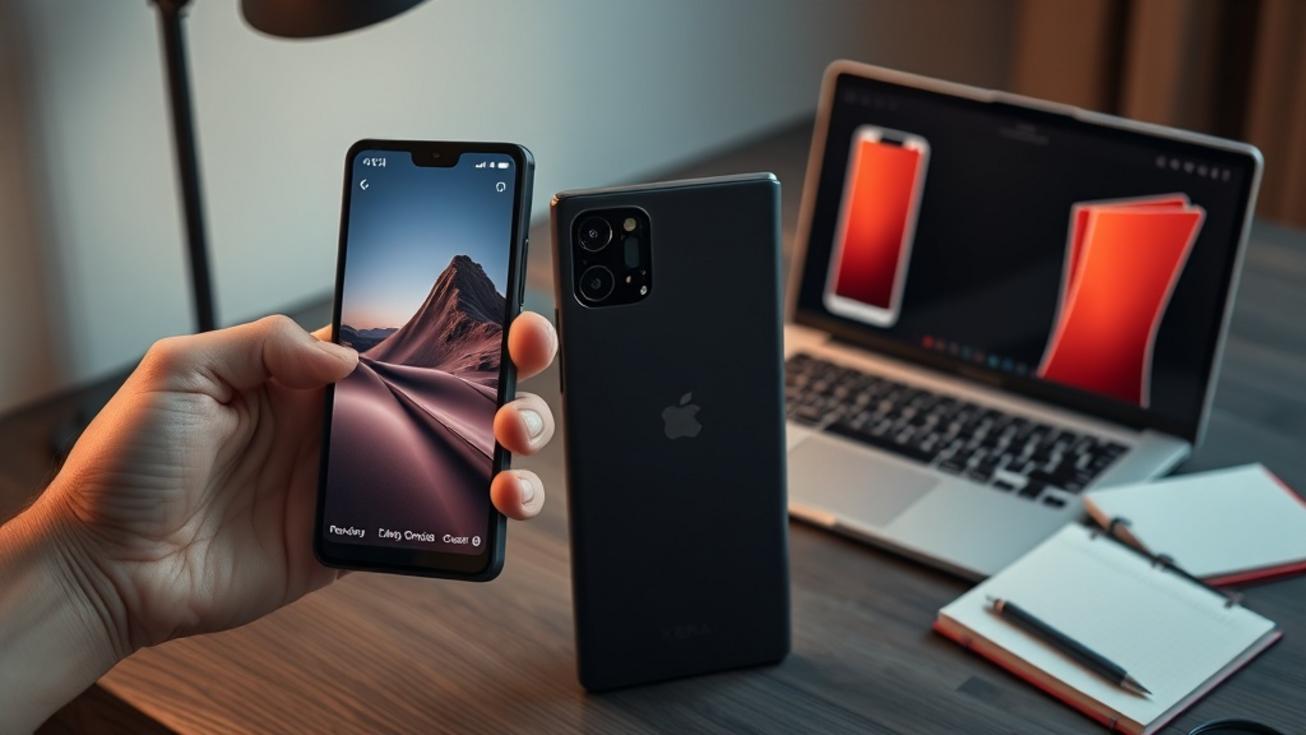
Now, contrast that steadiness with what Sony appears to be planning. The rumored next flagship, the Xperia 1 VIII, looks poised to break with tradition completely. Leaks point to a tall 21:9 display, a squared-off camera module, and a move away from noticeable bezels toward a modern punch-hole front camera. Under the hood, the device is tipped to run Qualcomm’s latest Snapdragon 8 Elite Gen 5 and pack a dramatic 200-megapixel telephoto sensor, signaling a major push for photographic versatility.
Bold hardware moves like this aren’t just marketing fluff. They give app teams explicit permission to rethink layouts, to reclaim vertical screen real estate, and to experiment with truly cinematic aspect ratios for media applications. When a manufacturer changes the canvas this dramatically, developers face a clear choice: cling to legacy layout assumptions or embrace a new visual grammar. This push into new interfaces and displays is a key part of mobile’s 2026 story.
The Quiet, Fast-Moving AR Revolution
Underpinning a lot of these hardware conversations is a quieter but faster-moving revolution in augmented reality. 2026 is shaping up to be the year AR leaves the demo stage and becomes a practical, usable layer for everyday apps and work. VisionOS updates and the continued momentum of devices like the Apple Vision Pro have raised the quality bar, while platforms like Niantic’s Lightship and the earlier integration of 8th Wall’s tooling have dramatically broadened the reach of WebAR.
If you’re not familiar, WebAR refers to augmented reality experiences that run directly in a web browser, no app installation required. That single fact lowers the friction for prototypes, marketing campaigns, and lightweight utilities immensely. Meanwhile, enterprise camera platforms and new, dedicated app stores for AR are beginning to bring immersive features directly into workplace workflows. As we noted in our analysis of the 2026 hardware moment, AR is going everywhere, and developers need to be ready.
The implication for builders is profound. Cross-platform toolchains that let creators target phones, headsets, and the web simultaneously are becoming strategic assets. AR workflows demand distributed compute, low-latency sensor fusion, and incredibly careful privacy design around camera access and spatial mapping. Forward-thinking enterprises are starting to treat capable camera platforms as core infrastructure, similar to how they view identity management or cloud storage. If you’re building for AR now, the focus should be on resilience across different lighting conditions and device classes, and on designing UI metaphors that can survive the translation from a touchscreen to a headset.
Constraints as Catalysts, Even in Play
You can even see this principle of adaptation and constraint in entertainment. An April Fools’ gag from a major shooter franchise turned into an actual, tiny game map, one so small it completely rewrites expected player behavior. That moment is genuinely instructive.
Games have always been laboratories for interaction design. Extreme experiments, even playful ones, reveal emergent dynamics you can’t predict on a whiteboard. Small, constrained spaces change pacing, reward different skills, and create intense social microcosms. The exact same principle applies to app and service design. Limitations force clarity. Constraints, whether from a folded screen, a novel aspect ratio, or a new input method, can be powerful catalysts for novel experiences. It’s a mindset shift from seeing new hardware as a nuisance to treating it as a creative brief, a topic we explore in our piece on how new platforms are rewriting developer priorities.
The Practical Takeaways for Builders
So what does all this mean if you’re developing software today? The threads weaving through April 2026 suggest a fascinating ecosystem where hardware audacity and platform maturity are starting to coexist. Manufacturers are willing to try radical new form factors and camera strategies, even as some product lines consolidate into longer, more stable cycles. Meanwhile, the software and tooling are finally catching up, with AR and web-first approaches lowering the barriers to entry for immersive experiences.
For developers, the practical checklist is clear, though deceptively simple:
Design for context, not a single input method. Biometric expectations change with how a device is held. AR introduces spatial and voice inputs. Your app’s flows need to be adaptive.
Expect real heterogeneity. Screens now vary wildly in aspect ratio, curvature, and hinge behavior. Truly responsive layout isn’t a nice-to-have anymore. It’s table stakes.
Favor cross-platform tooling and web-first AR when discoverability matters, but don’t sacrifice crucial native performance just for the sake of novelty.
Instrument for conditional features. Whether it’s a high-resolution camera mode or a UI built only for headsets, your app should be able to unlock new capabilities gracefully without breaking on older devices.
Treat constraints as design opportunities. A tiny map, a folded screen, or a new sensor shouldn’t be a problem to solve. It should be the reason you rethink your interaction priorities, much like the evolving strategies discussed in our look at 2026’s rewritten hardware playbooks.
What’s Next?
The coming months will be telling. If foldables gain serious mainstream traction, they’ll push questions of biometric design and UI elasticity right to the foreground. If AR development stacks consolidate around more interoperable toolchains, immersive features will shift quickly from experimental projects to standard product roadmap items. And if certain hardware categories continue to peacefully extend their lifespans, developers will need to master the balance between innovation and broad, long-term compatibility.
We’re at a juncture where bold hardware experiments and maturing software platforms are feeding each other. Audacious designs narrow the space for complacent user experiences, while stronger, more capable developer platforms make supporting risky hardware bets less costly. The result is arguably the most interesting phase of the modern device era, one where the physical shape of our phones, the presence of new sensors, and the steady emergence of spatial computing will rewrite user expectations. Developers who understand that interplay won’t just survive the shift. They’ll be the ones shaping what comes next.
Sources
- Forget Face ID: Why Apple’s Foldable is Bringing Back the Fingerprint Sensor, Geeky Gadgets, 03 Apr 2026
- Sony Xperia 1 VIII leaks with fresh design and 21:9 display, Notebookcheck, 01 Apr 2026
- Apple TV 4K might break a record no one wants to see happen, 9to5Mac, 01 Apr 2026
- 6 AR Shifts In 2026 That Will Reshape Apps And Work Here’s Why, Glass Almanac, 01 Apr 2026
- Black Ops 7’s April Fools’ joke is very much real: the smallest Call of Duty map in history, PC Gamer, 01 Apr 2026