Galaxy Unpacked 2026 and the Quiet Forces Shaping the Next Mobile Era
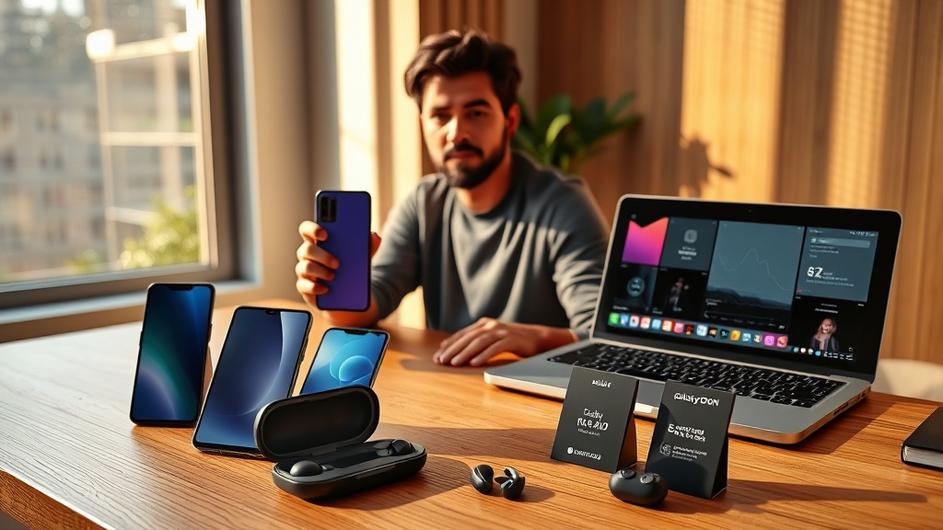
If you were expecting fireworks from Samsung’s latest Galaxy Unpacked event, you might have been disappointed. But that’s exactly the point. The Galaxy Unpacked 2026 felt less like a ritual and more like a hinge moment, where modest hardware refinements meet steady software ambition. The trio of Galaxy S26 phones confirmed what many had already guessed, yet the event mattered because Samsung framed this generation around practical improvements, tighter AI integration, and broader ecosystem thinking, not just headline specs.
Think about it this way. We’re past the era where every phone launch needs to reinvent the wheel. Instead, we’re seeing something more interesting, a maturation of the mobile platform where incremental gains add up to meaningful user experiences. It’s a shift that echoes broader trends we’ve been tracking in early 2026 hardware signals across the industry.
The Three Sizes That Tell a Story
At the center of the launch were three sizes, each aimed at familiar but distinct user needs. The base S26 lands with a smaller footprint, the S26 Plus occupies the mainstream 6.7-inch sweet spot, and the S26 Ultra pushes the 6.9-inch end of the spectrum. According to Android Central’s live coverage, these aren’t just random choices. They represent Samsung’s understanding that one size doesn’t fit all in today’s mobile market.
Those display diagonals matter, but the real story Samsung emphasized was a shift in how displays are evaluated. Instead of competing only for the highest peak brightness number, Samsung teased a new display technology that prioritizes day-to-day usefulness. It’s about improving real-world visibility and power efficiency, not just winning spec sheet battles.
For developers, that’s an important cue. It suggests UI designers should consider adaptive layouts and brightness-aware visuals, rather than optimizing exclusively for extreme spec values. It’s a more pragmatic approach that aligns with how people actually use their devices.
Under the Hood: Consolidation and Choice
Here’s where things get interesting for the tech-savvy crowd. Most markets will get Qualcomm’s Snapdragon 8 Elite Gen 5, the new premium system-on-chip designed for sustained performance and better AI acceleration. But some regions may still see Samsung’s Exynos 2600, a reminder that device behavior can vary by market.
This split matters beyond marketing. Performance, thermals, and on-device AI capabilities will influence how apps run, especially for compute-heavy tasks like on-device ML inference, real-time image processing, and advanced camera features. Developers building for global audiences need to account for these variations, something that becomes increasingly important as AI chips redefine wearables and other connected devices.
Camera Updates: Evolutionary, Not Revolutionary
Let’s be honest. Camera updates were evolutionary, not revolutionary. Yet they point to a directional shift worth noting. The hardware across the S26 line is largely familiar, but the Ultra benefits from wider apertures on the main and ultrawide cameras. This lets more light in and improves low-light capture without relying solely on computational tricks.
Meanwhile, Samsung continues to push camera features powered by AI, from smarter subject isolation to contextual editing tools. For engineers, the lesson is clear. Computational photography is now a co-design problem, where sensor, optics, silicon, and software must be tuned together. It’s no longer about throwing more megapixels at the problem.
Audio as Ecosystem Glue
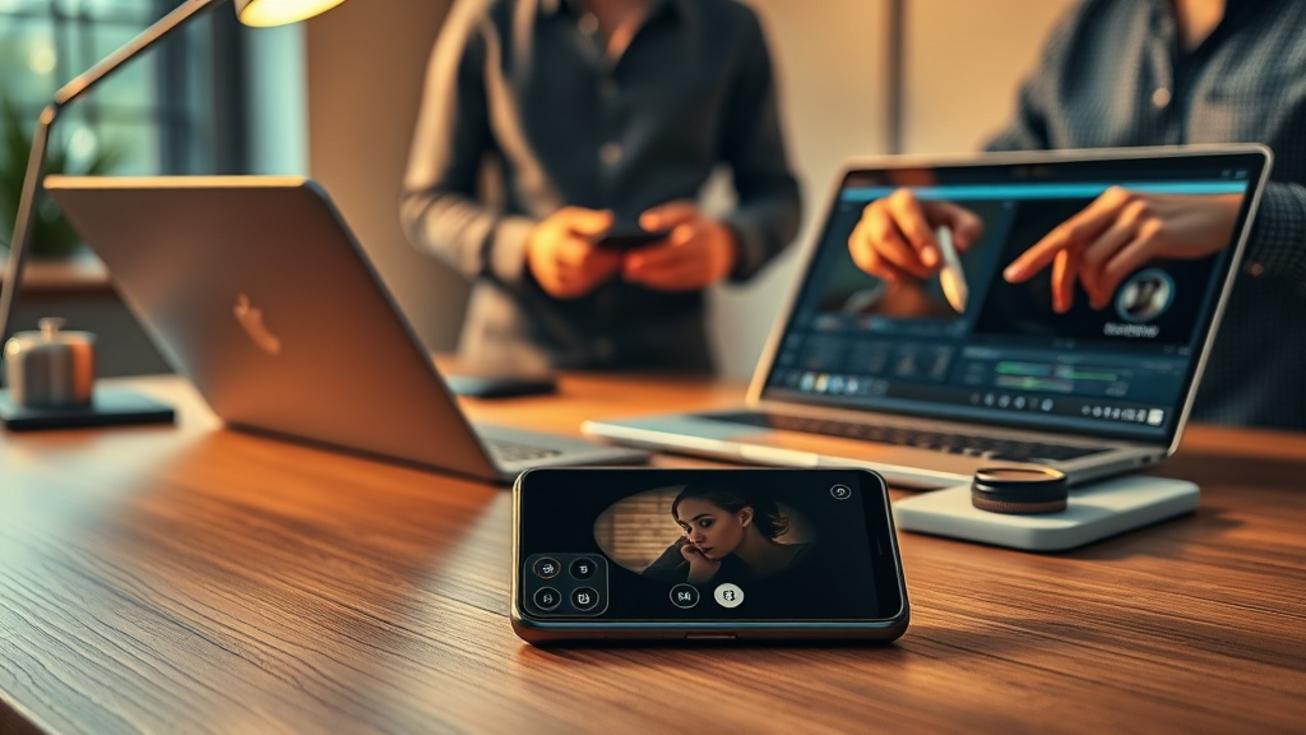
Audio is no afterthought in Samsung’s 2026 strategy. The company introduced the Galaxy Buds 4 series with a refreshed aesthetic and meaningful internal upgrades. These new buds signal Samsung’s intent to knit audio more tightly to its devices, improving voice capture, noise control, and seamless handoff across phones and tablets.
For those building audio or communications apps, these improvements will change baseline expectations for latency, codec support, and multi-device pairing. It’s part of a broader trend we’re seeing where hardware and audio are rewriting the device playbook across the industry.
Software: The Connective Tissue
Software is where Samsung’s ecosystem thinking becomes most apparent. Leaks around One UI 9, Samsung’s Android 17-based update, hint at deeper integration for Samsung Internet and broader polishing across the platform. Early test builds surfaced on foldable prototypes, suggesting Samsung is using the next One UI to ready a new generation of devices, including Fold 8 and Z Flip 8 models.
Rumors even mention a crease-less foldable, which if realized would shift the industrial and UX constraints developers face when supporting folding displays. One UI 9 also underscores Samsung’s habit of rolling out incremental but meaningful refinements, such as improved multitasking and window management. These matter to developers porting desktop-style experiences to phones and tablets, and they’re part of why 2026 starts with a new playbook for OS upgrades across the mobile landscape.
A Cautionary Note About Early Numbers
If there’s a cautionary note in this fast-moving context, it’s about trusting early numbers at face value. The recent revelation that Steam’s hardware survey misreported VRAM on some GPUs is a reminder that telemetry and survey tooling can be imperfect. For platform engineers and product teams, this means treating early benchmark and market data as directional, not definitive.
Validate performance across the specific chipsets and regions you target, and instrument real-world telemetry to understand how your users actually experience new devices. It’s a lesson that applies beyond mobile to any hardware-dependent software ecosystem.
What This Means for Developers
Taken together, Samsung’s announcements are less about dramatic reinvention and more about ecosystem maturity. Devices are becoming more predictable in their strengths, leaving the software, AI models, and developer tooling as the primary battleground. Better on-device AI accelerators change the calculus for privacy-sensitive features, enabling more capabilities to run locally rather than in the cloud.
Wider camera apertures and improved audio hardware raise the baseline quality for user-generated content, encouraging richer media experiences in social and creative apps. For developers, the practical takeaway is twofold.
First, embrace the incremental nature of platform change. Test across the different silicon variants and form factors, and favor adaptive UI and media strategies that scale from small to giant screens, and from single lens captures to multi-camera pipelines. Second, design for hybrid computation, where some intelligence runs on-device for latency and privacy, and heavier models can offload to the cloud when needed.
Samsung’s emphasis on real-world display improvements, compute variety, and tighter audio-device interplay makes this hybrid approach both necessary and achievable. It’s part of why we’re seeing pricing pressure and AI access rewrite 2026 hardware playbooks across the board.
Looking Ahead: The Maturing Mobile Ecosystem
Looking ahead, Samsung’s 2026 lineup signals a maturing mobile ecosystem where hardware continues to nudge forward, but the true leaps will come from software synthesis. Expect device makers to keep refining optics, sensors, and battery strategies, while software platforms deliver the practical intelligence that turns raw capability into user value.
The interplay between chipset variety, display pragmatism, and AI-driven experiences will define the next few years of mobile UX. As Engadget noted in their preview, these events are becoming less about shocking reveals and more about steady progress.
If you build for mobile, treat these announcements as an invitation to experiment, to instrument, and to recalibrate. The future won’t be won by the biggest numbers alone. It will be shaped by the teams who can fuse hardware consistency with nimble software, and who can translate incremental improvements into genuinely better user experiences.
That’s the quiet force shaping the next mobile era. It’s not about revolution. It’s about evolution done right.
Sources
- The 8 Biggest Announcements from Samsung’s Galaxy Unpacked 2026 Event, CNET, Wed, 25 Feb 2026
- Samsung Galaxy S26 launch live: S26, S26 Plus, and S26 Ultra specs, Galaxy Buds 4, price, release date, and what is expected, Android Central, Wed, 25 Feb 2026
- Samsung One UI 9: New feature for Android 17-based update leaked, Notebookcheck, Sat, 21 Feb 2026
- The Morning After: What to expect at Samsung’s Galaxy Unpacked event tomorrow, Engadget, Tue, 24 Feb 2026
- There is one more reason to take Steam’s hardware survey results with a pinch of salt, PC Gamer, Wed, 25 Feb 2026