From Leaks to Living Rooms, How Early 2026 Hardware Signals the Next Wave of Consumer Tech
Ever notice how the first few months of a new year often feel like a compressed preview of everything that’s coming in tech? This winter’s no different. We’ve seen phone prototypes popping up where they shouldn’t, new earbuds hitting the market, augmented reality partnerships forming, and even a decade-old game getting a fresh update that somehow feels relevant to tomorrow’s hardware. Taken together, these aren’t just random product launches. They’re clues about where hardware and software are actually converging, and what that convergence means for regular people.
Let’s start with the phones, because that’s where the drama usually begins. Someone recently tried to sell a Samsung Galaxy S26 prototype for about $1,650 before Samsung even announced the device. That little scandal tells us two things right away. First, flagship supply chains are still surprisingly leaky. Early units keep showing up on resale sites months before companies want them to. Second, and maybe more importantly, buyers should brace for another round of price pressure. Rumors are already swirling about Korean price increases across the S26 lineup.
Why do those whispers matter? Because the silicon inside these devices is shifting in ways that affect everyone’s wallet. Qualcomm’s shipping a Snapdragon 8 Elite Gen 5 variant that’s actually a deliberate step down from peak performance. Some versions skip the dedicated high-performance core entirely. That’s not a mistake. It’s a design choice that trades raw single-threaded speed for better thermals, longer battery life, and lower chip costs.
For manufacturers, this opens up new options. They can now tune devices more precisely for specific price points, cooling budgets, and battery targets. The next wave of phones won’t just be about who has the highest benchmark scores. They’ll be about how companies balance performance with everyday usability. It’s a subtle but significant shift that reflects where the market’s heading.
Samsung isn’t just juggling pricing and chip choices. The company’s also testing One UI 9 across its foldables, which tells us software refinement remains critical as form factors diversify. Foldables and other novel phone designs are moving beyond spec sheets. Their user experience, not their technical specifications, will decide which designs actually stick around.
Accessories Get Smarter From the Inside Out
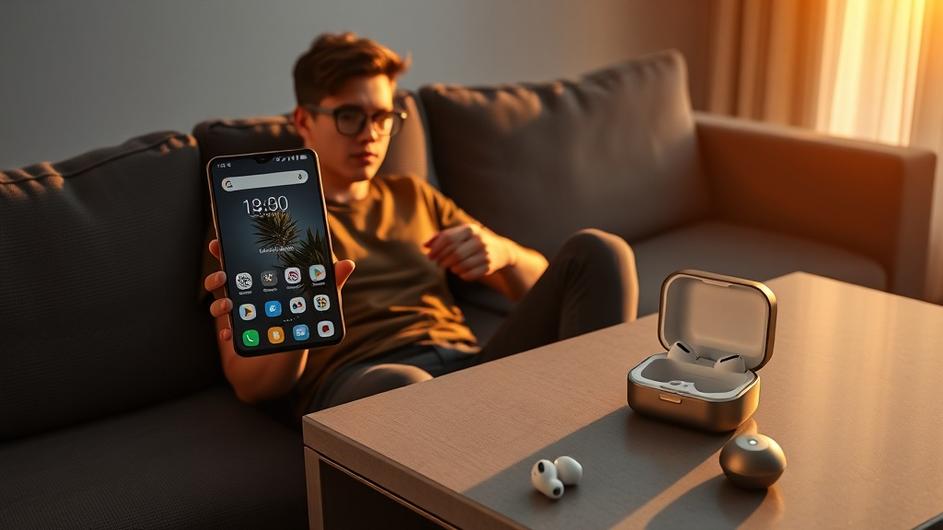
Meanwhile, companies are rethinking accessories from the ground up. Sony just revealed its WF-1000XM6 earbuds with a new QN3e noise-cancelling processor. Sony claims the QN3e is three times faster than the previous chip. That speed matters more than you might think. Noise cancellation depends on computational speed to analyze and cancel sound in real time. Faster processing reduces latency and improves the realism of spatial audio, whether you’re on a call or watching a movie.
What’s interesting here is how audio hardware is evolving in lockstep with the chips that drive it. Consumers will feel this progress more directly than they’ll notice raw CPU scores. Better noise cancellation means fewer distractions during work calls. Improved spatial audio makes movies more immersive. These are tangible benefits that people actually care about, not abstract performance metrics.
AR’s Quiet Move From Labs to Living Rooms
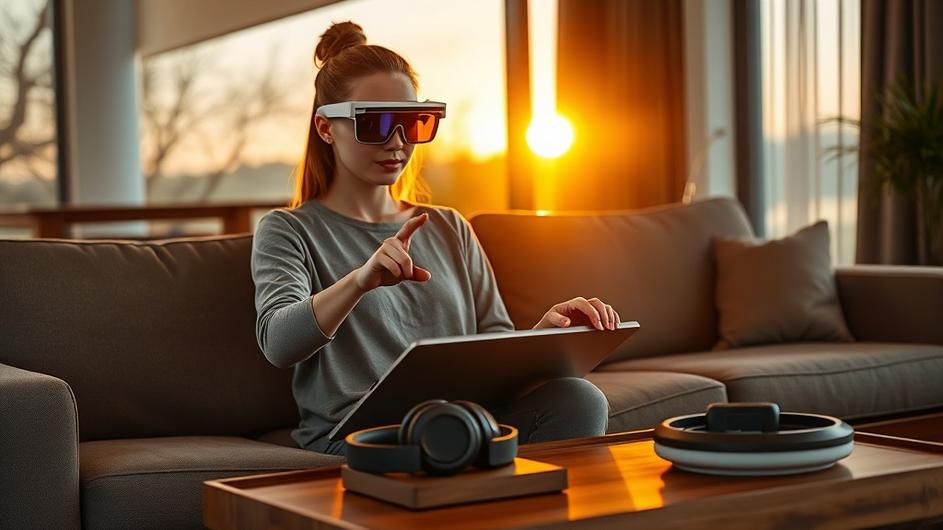
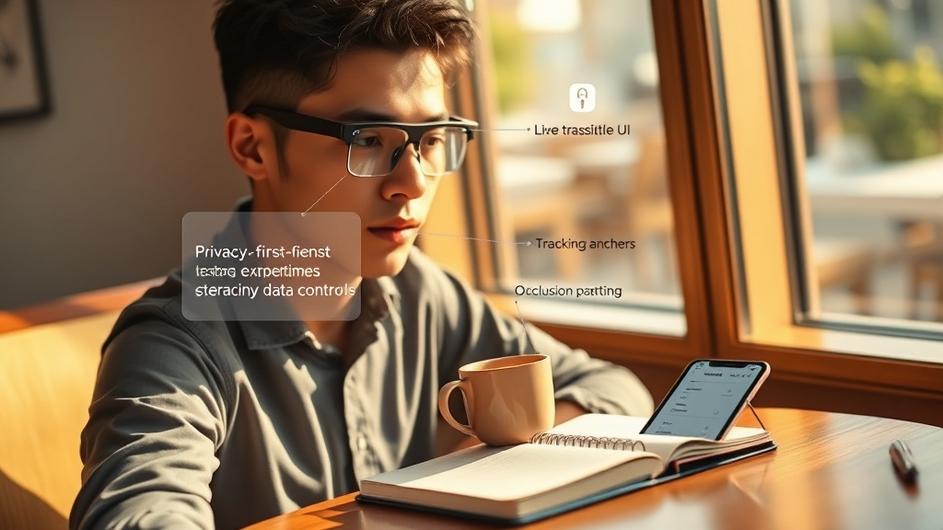
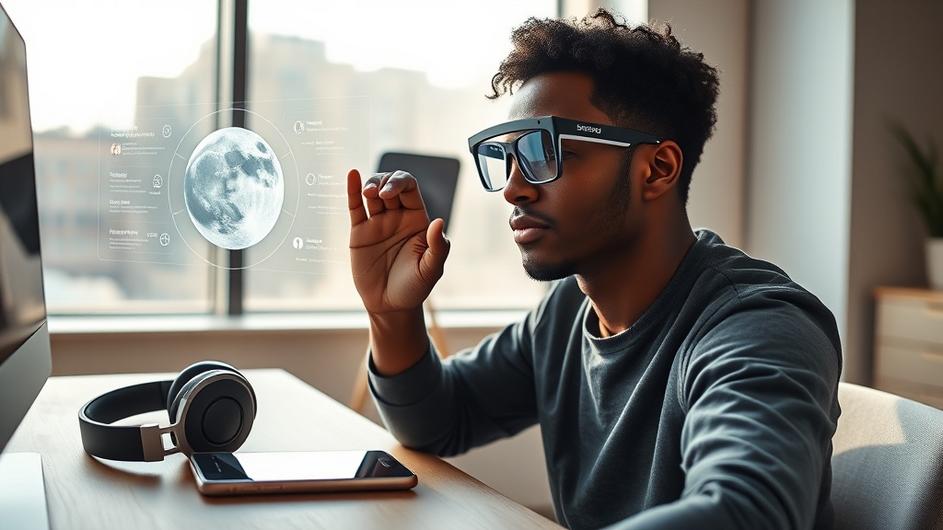
Beyond phones and earbuds, augmented reality is making a quiet but important shift from innovation labs to retail shelves. A partnership between Warby Parker and Google shows what a retail-first approach to AR hardware looks like. They’re focusing on everyday eyewear prices and practical features like prescription support. In parallel, Snap’s doubling down on social AR with more accessible Snap Specs, while Niantic continues iterating on location-based AR through its Lightship platform.
These moves signal a strategic change. Instead of demanding expensive headsets that few people want to wear, companies are making AR features available through objects people already use, or by integrating AR directly into social apps. That distribution focus could be what finally turns AR from a novelty into a daily utility. As we’ve discussed in our look at how AR is going mainstream in 2026, getting the distribution right matters as much as the technology itself.
According to analysis from Glass Almanac’s look at AR moves in 2026, we’re seeing at least six strategic shifts that could reshape how tech giants approach this space. The common thread? Making AR accessible through existing channels rather than asking consumers to adopt entirely new device categories.
Apple’s Recalibration and What It Means
Apple’s product calendar looms in the background of all this activity. Reports about Siri delays and expected MacBook, iPhone, and iPad updates suggest a period of recalibration. Apple appears to be refining how voice assistants and device families interact, and that work affects launch timing for new hardware.
The practical effect is that companies aren’t just racing to ship new silicon anymore. They’re tying hardware refreshes to software maturity, especially in AI features where the user experience depends on polished models and reliable system integration. This aligns with what we’re seeing across the industry, as detailed in our analysis of Apple’s 2026 device strategy.

Gaming as a Laboratory for Future Interfaces
Even the gaming world offers meaningful signals about where tech is heading. No Man’s Sky, the title famous for reinventing itself over a decade, recently added a gravity gun in its Remnant update. It’s a small example, but an important one. Games have become laboratories for user interaction and physics simulation at scale.
Tools developed to manipulate virtual objects with convincing weight and momentum inform real-world research into haptics, spatial audio, and AR interaction models. The same software-first mindset that keeps a decade-old game fresh is now influencing how companies prototype novel interfaces before committing to hardware rollouts. It’s a reminder that sometimes the most innovative thinking happens in places we don’t expect.
What This All Means for the Next Phase of Consumer Tech
Taken together, these threads point to a central theme. The next phase of consumer tech will be defined less by headline performance and more by intelligent trade-offs, distribution strategies, and integrated experiences. Chips will be tailored for thermal envelopes and battery life, not just for peak frequency. Retail partnerships will be crucial to move AR beyond enthusiasts. Accessories will lean on faster edge processors to improve daily features like noise cancellation.
Software updates will remain the place where new interaction models are tested and refined. As we explored in our piece on how pricing pressure is rewriting 2026 hardware playbooks, companies are facing new constraints that force smarter design decisions.
For developers and tech leaders, this means shifting priorities. Performance budgets still matter, but so do ergonomics, power consumption, and the practicalities of getting devices into people’s hands. Designing systems with graceful degradation, modular update paths, and clear privacy guarantees will become competitive advantages. Observability and feedback loops are also vital, because real user behavior will determine whether a foldable, a pair of smart glasses, or a new audio codec becomes mainstream.
Practical Implications for Different Stakeholders
So what does all this mean for different people in the tech ecosystem?
For users and consumers, expect a marketplace where choice is defined by the balance of cost, convenience, and context-aware features. The most successful products will be those that hide complexity behind thoughtful defaults, ship through everyday retail channels, and evolve via software. The hardware headlines will keep drawing attention, but the real story will be how these components come together to change what you can actually do in daily life.
For developers, the message is clear. Start thinking about how AR glasses and flexible AI chips will redefine wearables in practical terms. Consider how your applications might work across different form factors, not just different screen sizes. Pay attention to power efficiency and thermal constraints, because these will increasingly shape what’s possible on mobile devices.
For investors and analysts, watch distribution channels as closely as you watch technical specifications. A brilliant piece of technology that can’t reach consumers through the right channels will struggle. Look for companies that understand how to balance performance with practicality, and how to integrate hardware with software in ways that feel natural rather than forced.
For policymakers and regulators, these trends suggest new considerations around privacy, accessibility, and market competition. As devices become more context-aware and integrated into daily life, questions about data collection and user control become more urgent. The shift toward more distributed, software-updatable hardware also creates new challenges for product safety and consumer protection.
Looking Ahead to a Year of Refinement
In short, 2026 is shaping up to be a year of refinement rather than revolution. The leaks, launches, and creative updates we’re seeing now are small signs of a larger shift toward pragmatic, experience-driven innovation. Keep an eye on distribution strategies, edge processing gains, and software experiments, because they’ll determine which ideas remain curiosities and which become indispensable.
The winter tech preview we’ve just experienced suggests that the industry is maturing in interesting ways. Companies are learning that raw performance matters less than thoughtful integration. They’re discovering that distribution channels can make or break even the best technology. And they’re realizing that software updates can extend product lifecycles in ways that benefit everyone.
As we move deeper into 2026, expect to see more of this pragmatic approach. The flashy headlines will still grab attention, but the real progress will happen in the details. How devices handle heat. How long their batteries last. How easily they fit into existing retail channels. How gracefully they age through software updates. These might not be the most exciting topics, but they’re the ones that will determine what tech actually makes it from leaks to living rooms.
It’s worth remembering that some of the most significant tech resets happen when affordability meets capability. What we’re seeing in early 2026 suggests that balance is becoming a priority across the industry.
Sources
New Samsung Galaxy S26 smartphone reveals itself as someone tries to sell it for $1,650, Notebookcheck, Sat, 14 Feb 2026, https://www.notebookcheck.net/New-Samsung-Galaxy-S26-smartphone-reveals-itself-as-someone-tries-to-sell-it-for-1-650.1226794.0.html
6 AR Moves In 2026 That Could Reshape Tech Giants – What Changes Next, Glass Almanac, Sun, 15 Feb 2026, https://glassalmanac.com/6-ar-moves-in-2026-that-could-reshape-tech-giants-what-changes-next/
WF-1000XM6 earbuds officially launch as Sony reveals price and features, Notebookcheck, Thu, 12 Feb 2026, https://www.notebookcheck.net/WF-1000XM6-earbuds-officially-launch-as-Sony-reveals-price-and-features.1225437.0.html
Siri Delays?! New Macbook, iPhone, iPad Expected Soon, CNET, Fri, 13 Feb 2026, https://www.cnet.com/videos/siri-delays-new-macbook-iphone-ipad-expected-soon/
After 10 years No Man’s Sky still hasn’t run out of cool stuff to give you, so here’s a freakin’ gravity gun, too, PC Gamer, Wed, 11 Feb 2026, https://www.pcgamer.com/games/survival-crafting/after-10-years-no-mans-sky-still-hasnt-run-out-of-cool-stuff-to-give-you-so-heres-a-freakin-gravity-gun-too/