
From Lab to Lens, From Pro Gear to the Mass Market: How 2025 and 2026 Rewired Consumer Hardware
If you’ve been watching the hardware space lately, you’ve probably noticed something different. The past couple of years haven’t just been about incremental upgrades. They’ve felt more like a complete reshuffling of the deck, where engineering talent, investment dollars, and product ambition got redirected toward a single, pressing question: can we make novel hardware actually work for real people?
What started as lab experiments with augmented reality, tactile sensors, and robotics has entered a new, more urgent phase. Big consumer brands are now racing to prove that this stuff can be practical, comfortable, and, crucially, profitable. For the developers and hardware builders in the trenches, this shift changes everything. It rewrites product priorities, redefines integration points, and forces us to optimize for a whole new set of constraints.
The Corporate Clock Is Ticking Faster
One major dynamic that’s hard to ignore is how corporate strategy has compressed development timelines. Throughout 2025 and into early 2026, we’ve seen a flurry of reorganization and bold public bets. Snap spun off its Specs group to attract outside investment and speed up product decisions, while simultaneously signaling heavy investment in smart glasses. Meta, not to be outdone, publicly outlined massive planned spending for its Reality Labs, a clear signal that AR and AI are graduating from the research budget to the scale-up department.
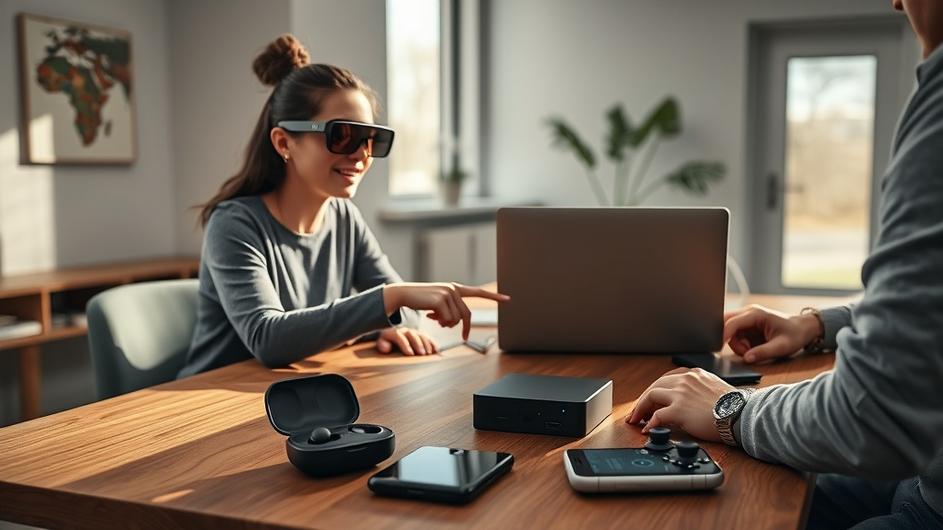
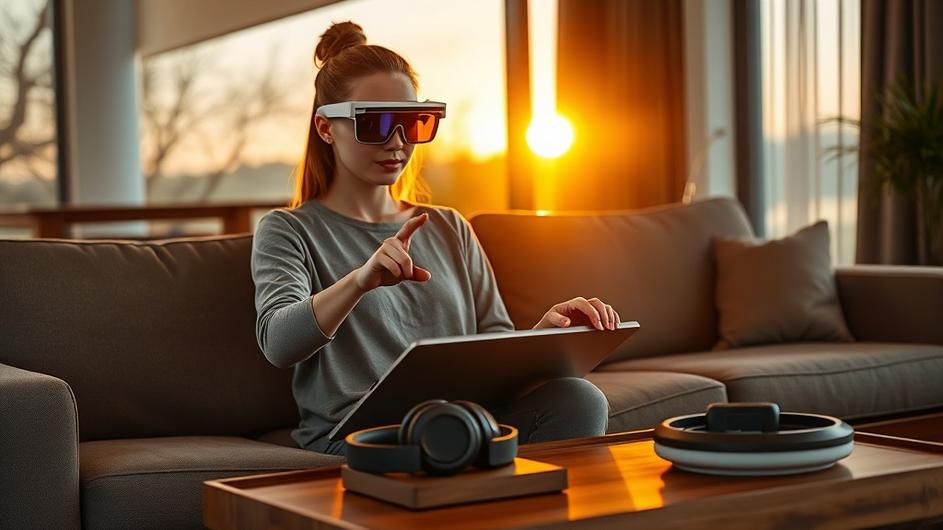
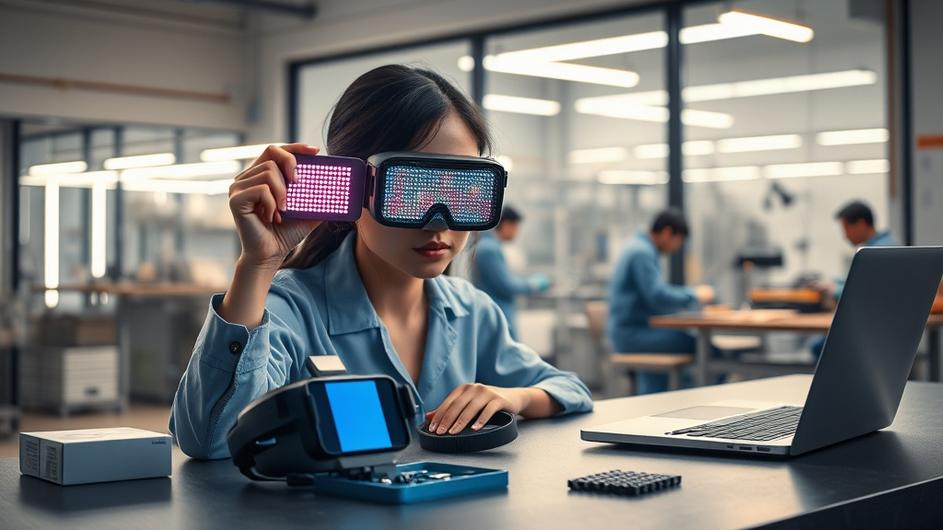
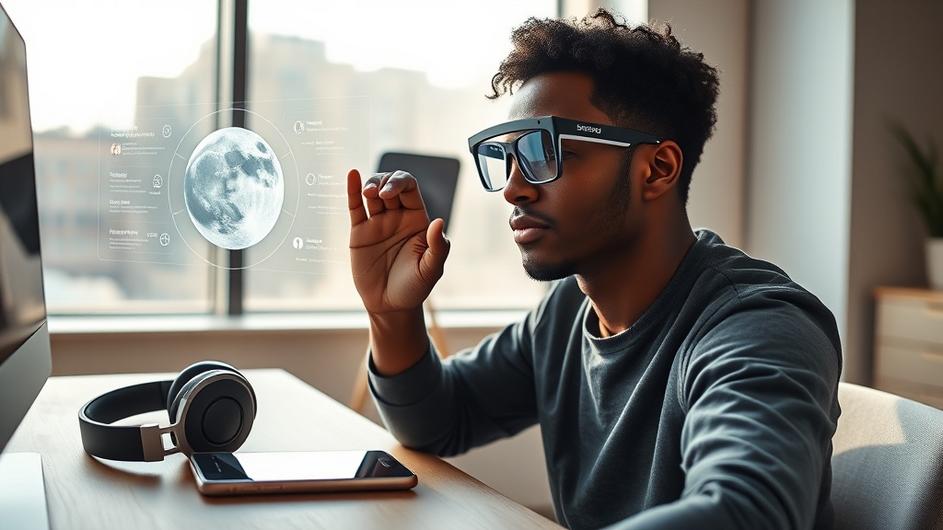
Perhaps the most concrete move came from Samsung, which confirmed it will ship consumer AR glasses in 2026. This isn’t just another prototype announcement. It’s a trusted phone and display maker committing to put a product on shelves, which fundamentally shifts the market’s expectations. These moves create a much tighter runway for everyone. What used to be forgiving experimental dev kits are now becoming real engineering challenges that have to satisfy mass-market consumers on day one. As highlighted in a recent analysis of 2026 AR developments, the race is officially on.
When High-End Tech Goes Mainstream
The second big trend is a classic tech story, but it’s accelerating. Cutting-edge innovations are spreading from premium, pro-grade gear into more affordable consumer tiers. Any developer who’s watched professional sensors or exotic battery tech eventually trickle down into mainstream devices will recognize this pattern.
A perfect example is playing out in input hardware right now. Logitech’s G Pro X2 Superstrike mouse introduces an induction-based approach to switches and sensing. It’s expensive, aimed at elite gamers. But here’s the key part: the engineers behind it openly say this technology can and will be adapted for cheaper mice over time. As reported by PC Gamer, the company’s chief engineer sees “no doubt” about this path. The implication is straightforward. When a bleeding-edge solution proves itself reliable and manufacturable, the industry refines the supply chain, drives per-unit costs down, and integrates it across product lines. We should expect this exact same dynamic with AR optics, low-power micro-displays, and compact LiDAR sensors.
What This Means for Builders and Developers
So, how does this corporate sprint and tech trickle-down actually change the job of building software and experiences? The impact is concrete and forces a shift in mindset.
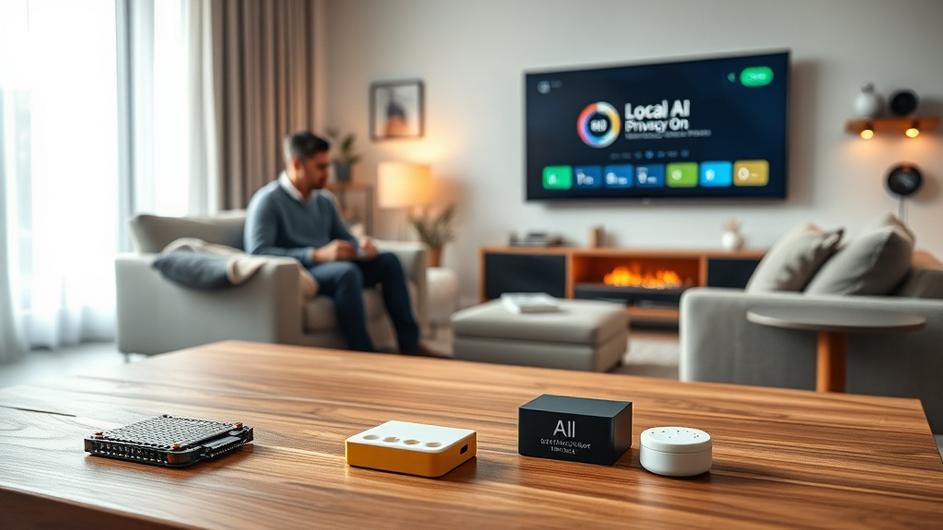
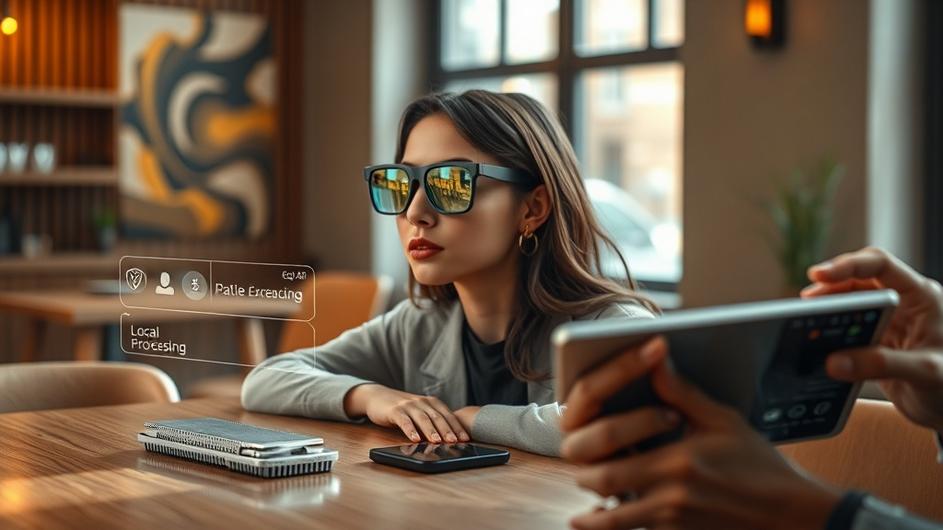
Integration suddenly matters more than raw power. Early AR devices will largely be phone-tethered or rely heavily on companion apps. This means mobile SDKs, strict latency budgets, and careful power management will define the user experience more than pure display resolution or pixel density. Development work is shifting toward sensor fusion, making on-device AI incredibly efficient, and designing graceful fallbacks for when network or compute resources are scarce.
Predictability is coming sooner. When giants like Samsung commit to a shipping window, it locks in component choices, vendor contracts, and thermal design limits. These become shared realities for the entire ecosystem. Developers can actually plan around these characteristics, and platform vendors will be pressured to standardize core capabilities like positional tracking and persistent anchors. This standardization, as explored in our look at how AR will redraw consumer tech in 2026, is a double-edged sword that creates both constraints and opportunities.
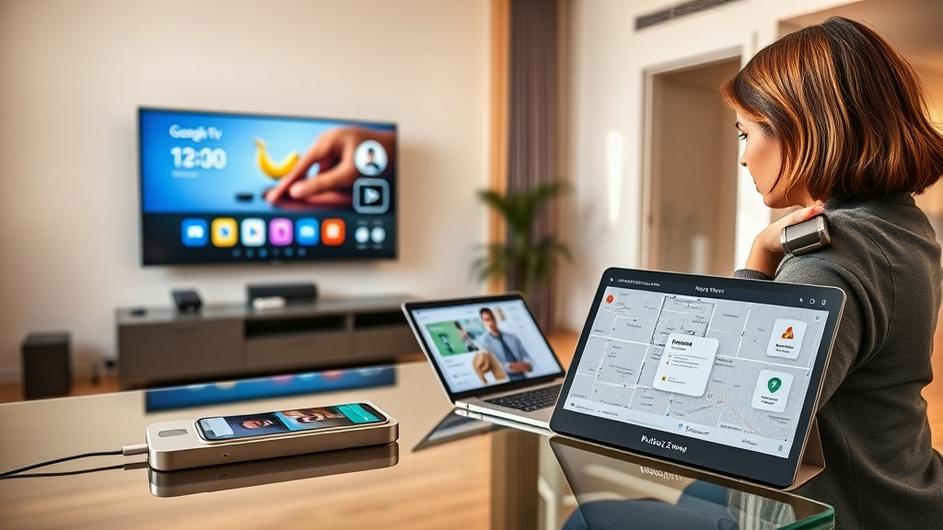
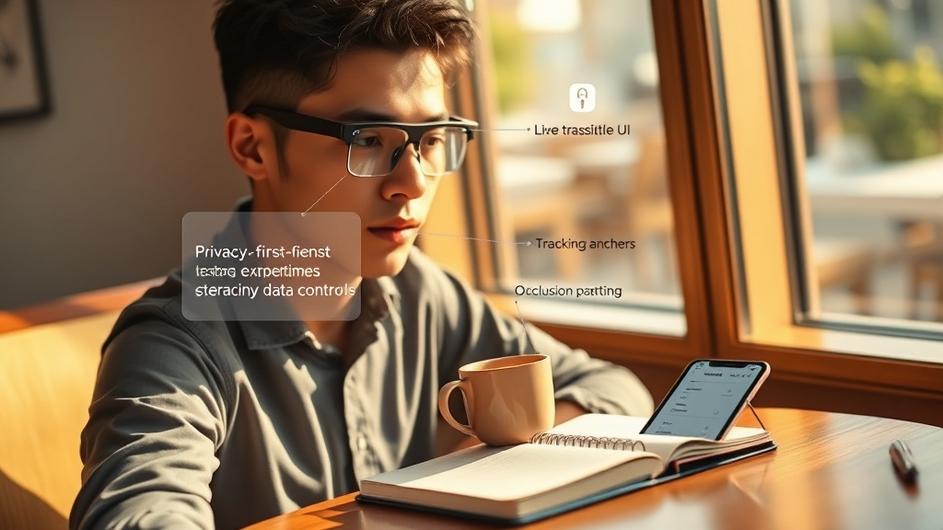
Finally, privacy and safety move from feature lists to foundational requirements. The ongoing public conversation around location trackers shows that consumers are acutely aware of how devices can find and follow them. Developers will need to bake in transparency mechanisms and clear opt-in flows from the very beginning, treating them as basic platform capabilities rather than compliance afterthoughts.
The Bigger Picture: Robots, Sailboats, and Tracking Tags
To really understand where sensing and mechanical tech is headed, you have to look beyond the AR headset. Events like CES 2026 showcased softer, more intelligent robots and wild mobility experiments, like the kite-powered sailboat designed to shatter speed records. These projects might seem worlds apart from a pair of smart glasses, but they’re advancing the same underlying sciences: materials, low-power actuation, and sensor fusion. Breakthroughs in battery efficiency from robotics labs or new lightweight composites directly enable more comfortable wearables.
Likewise, the iterative refinements in everyday tracking hardware reveal the practical hurdles developers will face. Recent updates to Apple’s AirTag demonstrate steady improvements to ultra-wideband and Bluetooth tracking. As covered by CNET, these updates remind us that real-world systems are judged not just on technical novelty, but on robustness, manufacturability, and social acceptability. The public scrutiny around tracking tools underscores a non-negotiable need for clear privacy defaults and anti-stalking safeguards. When AR glasses start placing persistent virtual objects in your living room, these same concerns will become front and center.
A New Playbook for Product Teams
For teams building right now, the message is clear. Start with assumptions that were optional just a few years ago. Plan for mass-market ergonomics and power efficiency from day one. Adopt modular designs that let you iterate software across a more predictable set of hardware profiles. Invest in simulation tooling that can model reduced tracking fidelity or a dying battery, so you can optimize for graceful degradation. Most importantly, treat privacy as a core platform capability you design for, not a regulatory box you check later.
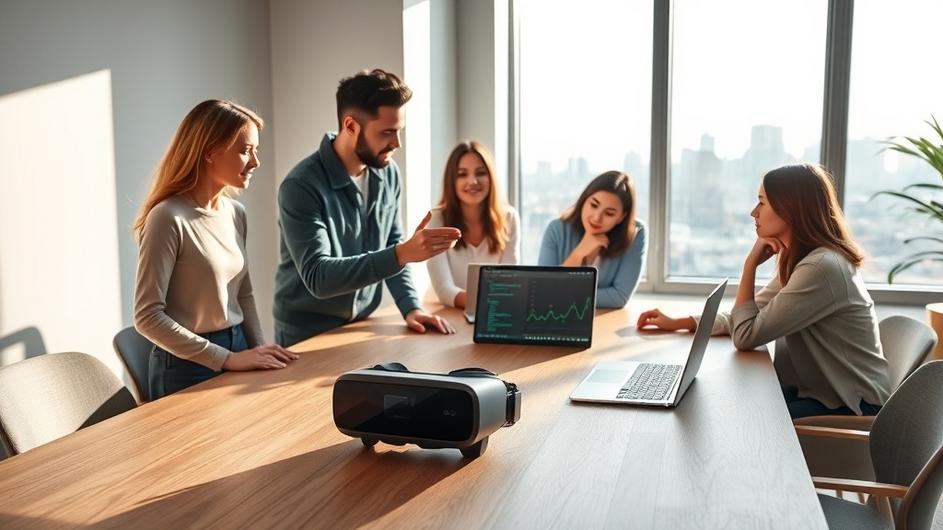
There’s genuine room for optimism here, though. This rush to ship real consumer AR, paired with the spread of advanced sensing into everyday mice and keyboards, opens up entirely new user experiences and business models. Imagine collaborative workspaces where head-worn displays show contextual data without locking you into one company’s walled garden. Or competitive gaming peripherals that bring sensing resolution once reserved for pro gear to everyone’s desk. These experiences depend on cross-disciplinary engineering, and the current industry shifts are dramatically shortening the time from a paper design to real user feedback.
Looking Ahead: Convergence, Pace, and Scrutiny
So, what’s next? The next two years will likely be defined by a few persistent themes. Convergence will continue, with AR, AI, advanced sensing, and efficient power systems packing into increasingly compact form factors. Commercial pressure will keep compressing timelines, putting a premium on robust, adaptable software architecture. And without a doubt, social and regulatory scrutiny will play a huge role in shaping what features are even permissible.
Developers who internalize these realities now, who build for the constrained, privacy-conscious, mass-market future that’s arriving, will be the ones who finally make wearable computing feel not just cool, but essential. The era of speculative prototypes is wrapping up. Practical, polished, and genuinely affordable devices are starting to hit the market. The question is no longer if the hardware will be capable, but how we’ll choose to use those capabilities to build experiences that are humane, useful, and respectful by design. For a deeper dive into the foundations of this shift, the key AR developments of 2025 set the stage for everything we’re seeing today.
Sources
1. 7 Augmented Reality Developments In 2026 That Reveal What Changes Now, Glass Almanac, 01 Feb 2026.
2. Inside the Kite-Powered Sailboat Made to Become the Fastest Ever, CNET, 01 Feb 2026.
3. The Logitech G Pro X2 Superstrike is expensive, but the company says future mice using the tech might not be, PC Gamer, 05 Feb 2026.
4. Testing the New AirTag, While Tim Cook’s White House Visit Sparks Apple Boycott Calls, CNET, 30 Jan 2026.
5. 5 AR Developments In 2025 That Surprise Investors And Change Devices, Glass Almanac, 30 Jan 2026.
6. Beyond the Numbers: How Apple, Meta, and Snap Are Racing to Make AI and AR the Next Hardware Story, Tech Daily Update.
7. How AR Glasses, AI Chips, and Privacy Debates Will Redraw Consumer Tech in 2026, Tech Daily Update.
8. CES 2026: When AI Left the Cloud and Entered the Real World, Tech Daily Update.
9. From CES Glow to Real-World ROI: What 2026 Tech Actually Means for Builders and Brands, Tech Daily Update.
10. The New AR Reset: Why 2025 Rewrote the Hardware Playbook and What Developers Should Build Next, Tech Daily Update.