
From Chips to Cubes, How Agentic AI and Self-Optimizing Warehouses Are Rewiring Infrastructure
Here’s something you might not expect. Two announcements from seemingly different corners of the tech world, Nvidia’s GTC conference and AutoStore’s CubeVerse launch, are actually telling the same story. It’s a story about intelligence moving out of isolated models and into the systems that manage compute, data, and real world processes. The result? Faster, more autonomous operations, and a whole new set of design tradeoffs for engineers building at scale.
Think about it this way. We’re moving beyond AI that just answers questions. We’re entering an era where AI coordinates, decides, and acts. That shift is forcing everyone, from chip makers to warehouse operators, to rethink their infrastructure from the ground up.
The Plumbing Behind the Promise at Nvidia GTC
If you followed Nvidia’s GTC event this year, you probably noticed something. The conversation wasn’t about flashy demos. It was about plumbing. The company doubled down on what it calls agentic AI, models that don’t just respond to prompts but coordinate multi step tasks, make decisions, and take action over time.
This style of AI changes everything about infrastructure. Sure, GPUs are still the heavy lifters for parallel model inference. But agentic workflows need something else. They need higher bandwidth for data transfer and more general purpose compute to orchestrate all those steps. That’s where CPUs are making a comeback.
Nvidia’s new Vera CPUs and companion chips like the Groq 3 LPU weren’t just random announcements. They were part of a calculated push to rebalance the entire stack. The goal? Make sure agentic systems don’t hit a CPU bottleneck. It’s a recognition that raw compute power isn’t enough anymore. You need the right kind of compute in the right place.
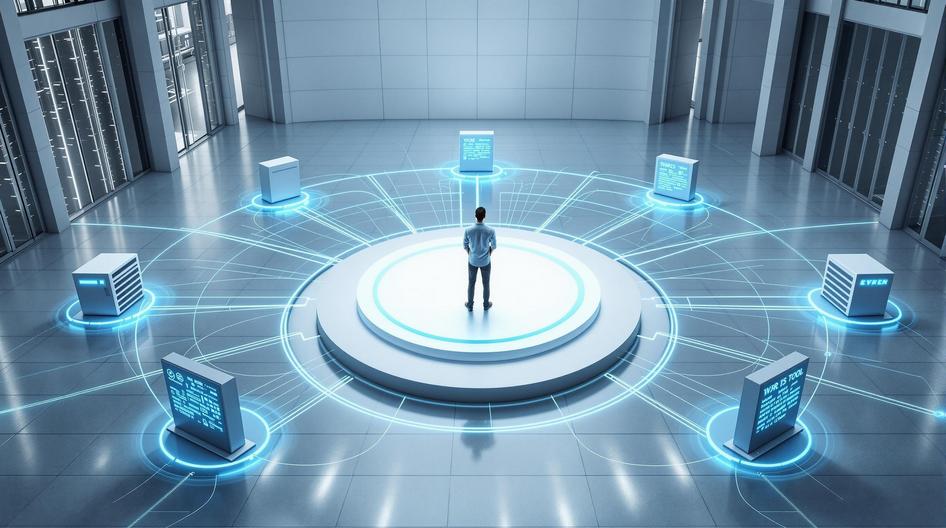
Let’s break down that LPU term. A Lightweight Processing Unit is a core optimized for specific control or data movement tasks. It’s not trying to do the massively parallel math that GPUs excel at. Instead, it handles the coordination work. The message from GTC was crystal clear. Compute is becoming heterogeneous by design. Specialized processors will work together, and the orchestration layer between them will be just as important as raw flops.
This isn’t just theory. As we’ve seen in our coverage of the inference layer battle, the real competition is shifting from training massive models to deploying them efficiently in real world systems.
From Data Centers to Warehouse Floors
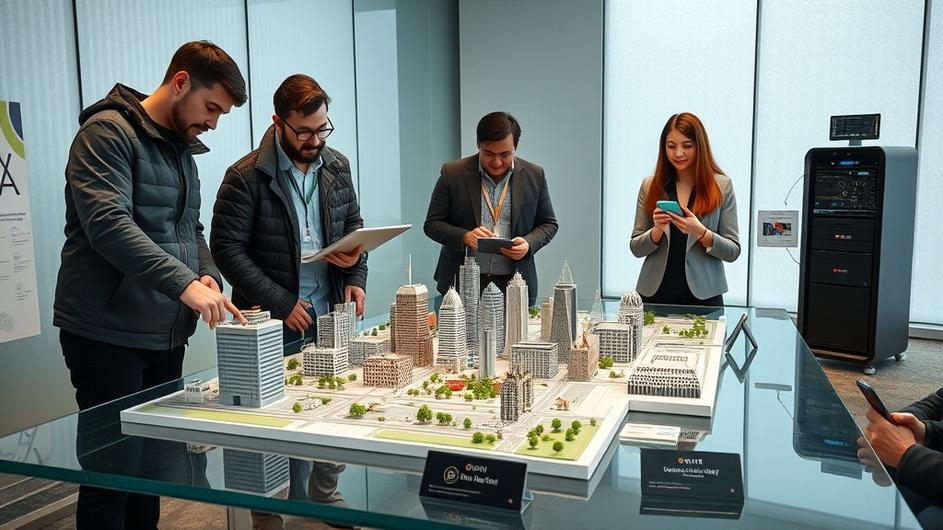
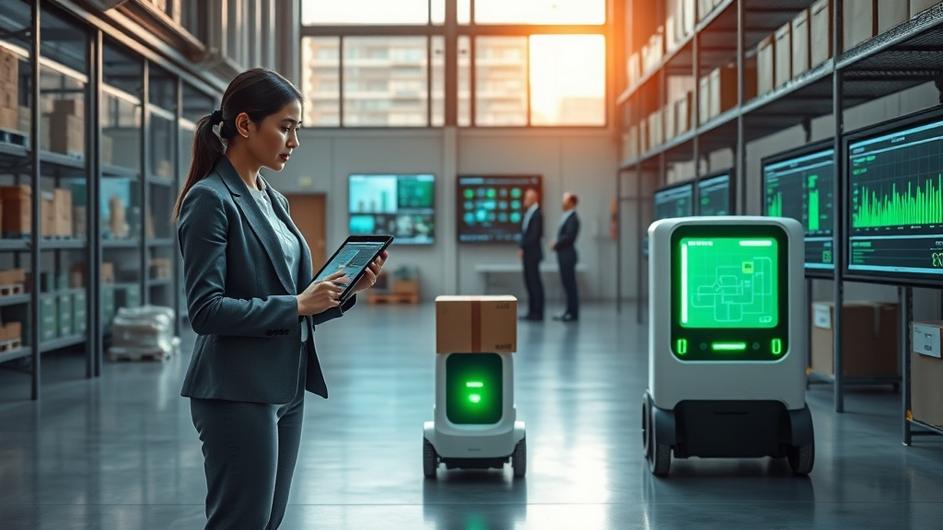
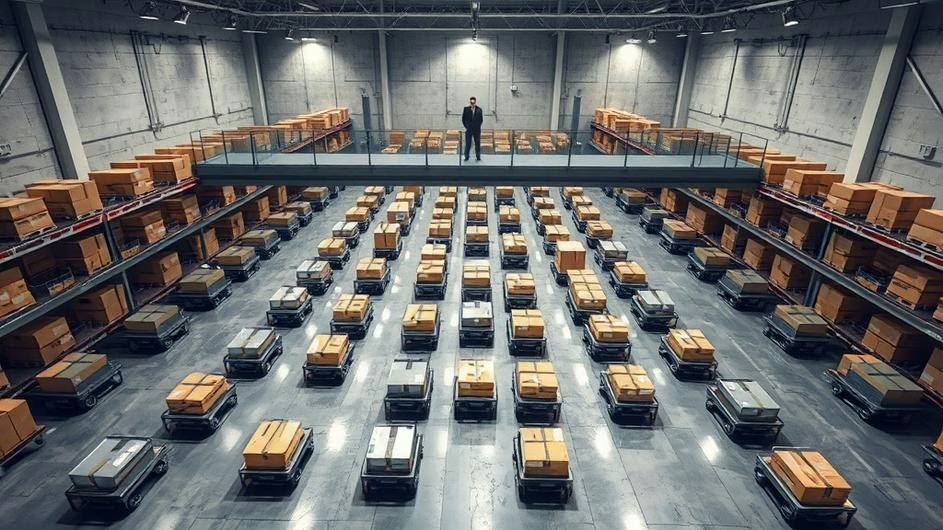
Now, let’s jump to a completely different industry. AutoStore, a leader in automated storage and retrieval, just introduced CubeVerse. It’s a cloud platform that layers AI, simulation, and analytics over existing warehouse automation. Here’s the interesting part. CubeVerse and AutoStore Intelligence use more than 20 proprietary models to predict issues, simulate throughput, and recommend optimizations. And they do it all without forcing customers to rip out their current orchestration or control software.
In plain English, AutoStore is turning warehouses into self optimizing systems. The software continuously tunes robot workflows, bin placements, and task scheduling to squeeze more throughput from the same hardware. It’s like giving a warehouse a brain that never stops learning and adjusting.
According to coverage from Robotics & Automation News, this represents a fundamental shift toward predictive maintenance and continuous optimization in industrial automation.
The Parallel That Matters
Here’s where it gets really interesting. Nvidia’s work addresses compute coordination between chips. AutoStore’s work coordinates robots, inventory, and software. They’re solving the same engineering problem at completely different scales. How do you get many moving parts to act as a single intelligent system? And how do you do it without forcing customers to throw out their existing investments?
Both approaches emphasize observability, prediction, and layered control. Both use simulation to test changes before they hit the real world. It’s the same philosophy applied to silicon and steel.
This convergence is part of a broader trend we’ve been tracking. As discussed in our piece on when agents meet robots, the line between digital intelligence and physical automation is blurring faster than many expected.

What This Means for Developers and Engineers
If you’re building systems that span hardware and the physical world, pay attention. The orchestration layer is becoming the new hot spot for optimization. Whether it runs on top of Vera CPUs or inside a fulfillment cloud, that layer needs to be fault tolerant, low latency, and capable of ingesting telemetry from dozens of sources.
Simulation and analytics aren’t optional anymore. AutoStore’s use of digital models to predict problems shows how simulated feedback loops enable incremental improvements without risking downtime. You can test changes in a virtual environment before rolling them out to physical systems.
System design is also shifting toward modular upgrades. Both the Nvidia and AutoStore announcements show that customers can gain performance and intelligence without wholesale replacements. That lowers adoption friction and makes it easier for businesses to evolve their systems gradually.
As we explored in our analysis of infrastructure intelligence, reliability and observability are becoming competitive advantages in their own right.
The Open Questions and Challenges
Of course, this shift raises important questions. Agentic AI that issues real world commands brings up safety, auditability, and regulatory concerns. Who’s responsible when an AI driven system makes a decision that leads to downtime or damage? How do we ensure these systems remain transparent and accountable?
Predictive systems that optimize warehouses must balance efficiency with human workflows and labor considerations. Engineers will need robust logging, explainability tools, and clear rollback mechanisms. The goal isn’t just automation. It’s automation that improves outcomes while remaining controllable.
This touches on themes we’ve covered regarding the rise of agentic AI, where the focus is shifting from what AI can answer to what it can accomplish safely and reliably.
Looking Ahead: The Convergence Accelerates
So what’s next? Expect tighter hardware software co design. Chip makers, cloud providers, and automation vendors will need to collaborate on standards for telemetry, orchestration APIs, and simulated testbeds. We’ll see more heterogeneous racks in data centers and more cloud native intelligence layered over legacy automation fleets.
This convergence will reshape industries from logistics to cloud services, making systems faster, more adaptable, and more autonomous. But there’s a catch. These benefits only materialize if developers build with safety and observability in mind from day one.
The work at GTC and AutoStore’s CubeVerse points toward a future where intelligence doesn’t live solely in a model. It lives in the interactions between models, hardware, and the physical processes they control. For engineers, that future is an invitation to rethink systems, tradeoffs, and the interfaces that let compute and the real world collaborate efficiently.
As AI continues its march from cloud models to physical systems, as we’ve documented in how AI is moving to the physical world, the most successful teams will be those that master both the silicon and the systems thinking required to make it all work together.
Sources
1) The Tech Download: Agentic tools and chips take center stage at Nvidia’s ‘Super Bowl of AI’, CNBC, Mar 20, 2026, https://www.cnbc.com/2026/03/20/nvidia-gtc-2026-agentic-ai-chips-tech-download.html
2) AutoStore shifts toward self optimizing warehouses with CubeVerse and AI driven analytics, Robotics & Automation News, Mar 19, 2026, https://roboticsandautomationnews.com/2026/03/19/autostore-shifts-toward-self-optimizing-warehouses-with-cubeverse-and-ai-driven-analytics/99923/