
From Chips to Cameras to Courtrooms, How 2026 Is Rewriting the Tech Playbook
If you’ve been watching the tech world lately, you might’ve noticed something interesting. The changes aren’t coming in big, flashy announcements anymore. Instead, they’re happening in quiet shifts across hardware, software, and business models. Taken together, these moves are sketching out a new reality where everything’s more connected than we expected, and it’s happening faster than most roadmaps predicted.
Let’s start with smartphones, those pocket-sized barometers of consumer expectations. Recent leaks about Sony’s next flagship tell a familiar but evolving story. The Xperia 1 VIII is reportedly getting a bolder design, a 21:9 aspect ratio, and a square camera module. More importantly, it’s tipped to run Qualcomm’s Snapdragon 8 Elite Gen 5 and pack a 200-megapixel telephoto lens.
Now, you might think that’s just marketing fluff. But here’s the thing, those higher megapixel counts and advanced image processing are turning phones into portable sensor platforms. They’re not just for better photos anymore, they’re becoming essential tools for AR, mapping, and computer vision tasks. When manufacturers experiment with screen ratios and bezels, they’re really testing how we’ll consume media, multitask, and interact with spatial content in the coming years.
AR’s Quiet Revolution
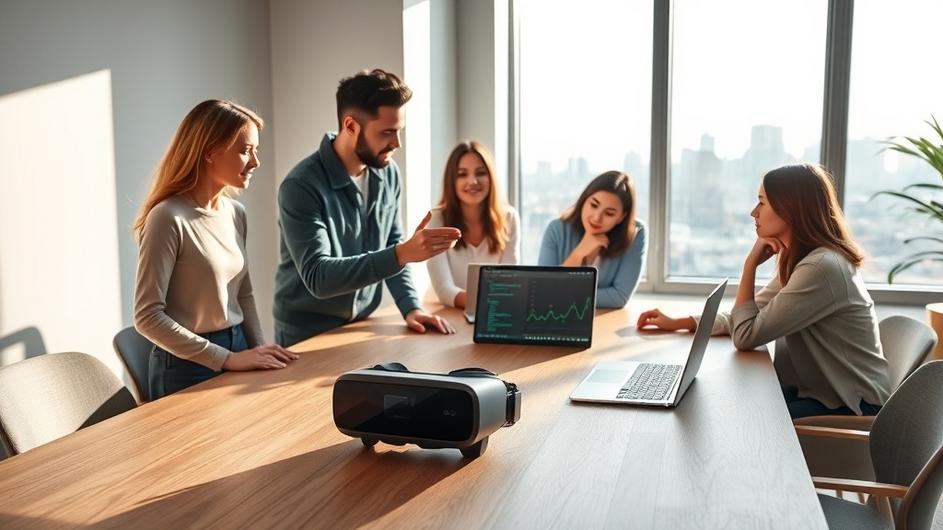
Speaking of spatial content, augmented reality is having its moment. Not with flashy demos, but with practical applications that might actually stick around. Apple’s been refining its Vision Pro hardware and visionOS software, making headset-based AR more usable for everyday apps. Meanwhile, Niantic’s Lightship platform, boosted by its acquisition of 8th Wall, has been pushing WebAR hard.
WebAR lets users launch AR experiences right from a web browser, no app installation needed. That might sound like a small thing, but it’s actually huge for developers and brands. Removing the installation barrier means more people will actually try AR experiences. For enterprise use cases where employees can’t be asked to install custom software, this is a game-changer.
The next wave of AR won’t be about novelty. Instead, expect camera-centric enterprise platforms and curated app stores to turn AR into a workplace utility. Think remote assistance, training, and workflow overlays that actually help people do their jobs better. As we’ve seen in our coverage of the 2026 hardware moment, the AR stack is maturing from bespoke experiments to sustainable building blocks.
When Hardware Lives Longer
Here’s something that might surprise you, product cycles are stretching in unexpected places. The Apple TV 4K might soon set a record for the longest gap between updates. Apple’s extending device lifespans with software features and incremental updates, and that’s changing the game for developers and content owners.
Longer refresh cycles mean software businesses need to optimize for backward compatibility. They’ve got to squeeze more value from older hardware, which shifts the calculus for hardware-dependent experiences. Do you build for the latest chips and sensors, or do you aim for broader reach? It’s a question more teams will be asking as we move through what we’ve called the year AI hardware goes mainstream.
Where Consumers Are Spending
Commercial dynamics are shifting too, and you can see it in how people allocate their attention and dollars. Parents are pouring more time and money into youth sports, and that concentrated spending has turned businesses like Dick’s Sporting Goods into powerful market aggregators.
For tech companies, this is a reminder that platform economics and consumer behavior can amplify winners in adjacent industries. Real-world verticals still matter. When consumer habits concentrate like this, software companies find fertile ground for targeted services, scheduling tools, analytics platforms, and localized commerce solutions.

The Legal Frontier Expands
All these product and market shifts are making deals, licensing, and regulatory risk more complex. Law firms are noticing. Latham & Watkins recently hired John McGaraghan as a partner focused on data and technology transactions in the Bay Area. His practice covers AI, software, semiconductors, and digital infrastructure, and his arrival shows just how sophisticated commercial and IP agreements have become.
Today’s counsel routinely negotiates around model rights, training data provenance, chipset supply, and cross-border data flows. As technology moves from single-device novelty to integrated systems across hardware, cloud, and edge, companies need transaction lawyers who understand technical constraints and product roadmaps as well as legal precedent. This aligns with what we’ve been seeing about how AI is resetting corporate law practice.
That legal sophistication maps to a rethinking of software business models too. People are asking whether software pricing will move toward pay-per-outcome models, where customers pay based on actual results rather than fixed seat fees or subscriptions. For AI and sensor-driven services, this could align incentives better, but it complicates contracts, auditing, and liability. Who owns the metric used for billing? How do parties verify it? These are exactly the questions driving demand for counsel versed in complex licensing.
What Developers Should Watch
So what does all this mean if you’re building tech today? A few things stand out.
First, invest in cross-platform and browser-based capabilities. WebAR and similar approaches lower distribution friction dramatically. Second, design for longevity as much as novelty. Longer hardware cycles will force you to support a range of device capabilities. Third, treat legal and commercial strategy as part of product design from day one. Licensing, data governance, and outcome-based pricing aren’t afterthoughts anymore, they’re product levers.
Looking ahead, the next 18 months will likely be defined by deeper integration rather than isolated breakthroughs. High-resolution sensors, more capable mobile chips, and low-friction AR distribution will create new classes of applications that blend media, measurement, and workflow. Retail and consumer concentration will shape where those applications gain traction, and legal teams will become strategic partners in enabling cross-border, multi-party products.
The winners will be teams that can move quickly across hardware, software, business model, and regulatory domains while keeping user experience crisp and developer stacks efficient. As we’ve explored in our look at 2026 tech momentum, it’s about connecting dots that didn’t used to talk to each other.
In short, 2026 isn’t about single big bets. It’s about alignment across the stack, components coming together in ways that feel inevitable in hindsight but demand nimble thinking today. The companies that understand this interconnected reality, like those leveraging Apple’s AR and AI hardware wave, will be the ones writing the next chapter of the tech playbook.
Sources
- Latham & Watkins Hires McGaraghan for Bay Area Tech Transactions, Bloomberg Law News, April 2, 2026
- Youth Sports Has Only One Winner: Dick’s Sporting Goods, The Wall Street Journal, March 28, 2026
- Sony Xperia 1 VIII leaks with fresh design and 21:9 display, Notebookcheck, April 1, 2026
- 6 AR Shifts In 2026 That Will Reshape Apps And Work, Glass Almanac, April 1, 2026
- Apple TV 4K might break a record no one wants to see happen, 9to5Mac, April 1, 2026