From Birdbaths to Boardrooms, AI Is Reshaping Hardware and Software — Fast
Remember when AI was just something that lived in the cloud, answering your questions or generating images? Well, that era is over. At CES 2026 in Las Vegas, the real story wasn’t about thinner screens or faster processors. It was about artificial intelligence stepping out of the digital realm and into the physical world, while simultaneously rewriting the economics of enterprise software. We’re witnessing a dual transformation that’s happening faster than anyone predicted.
The Hardware Revolution Hits the Show Floor
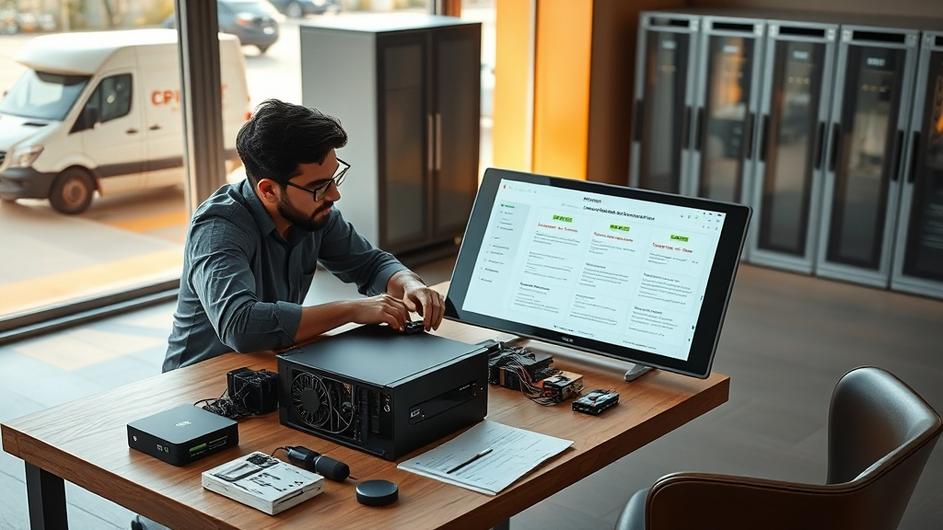
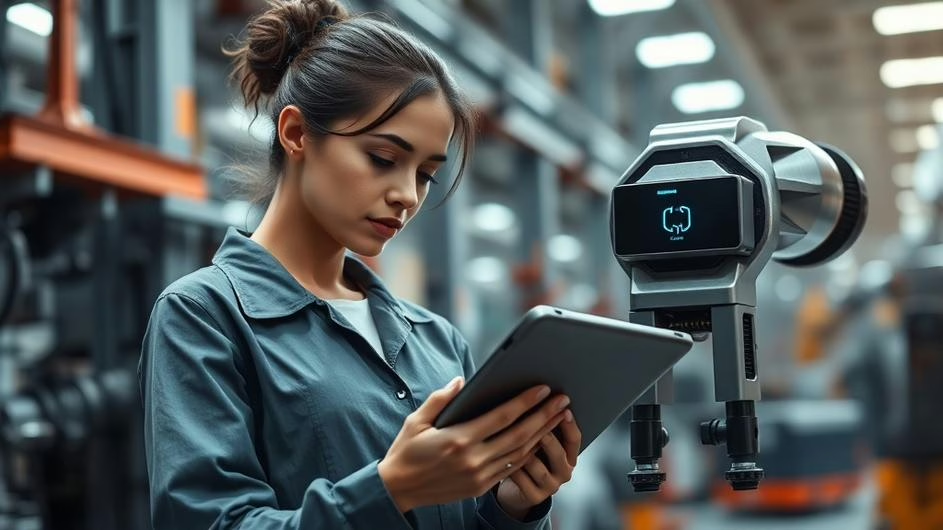
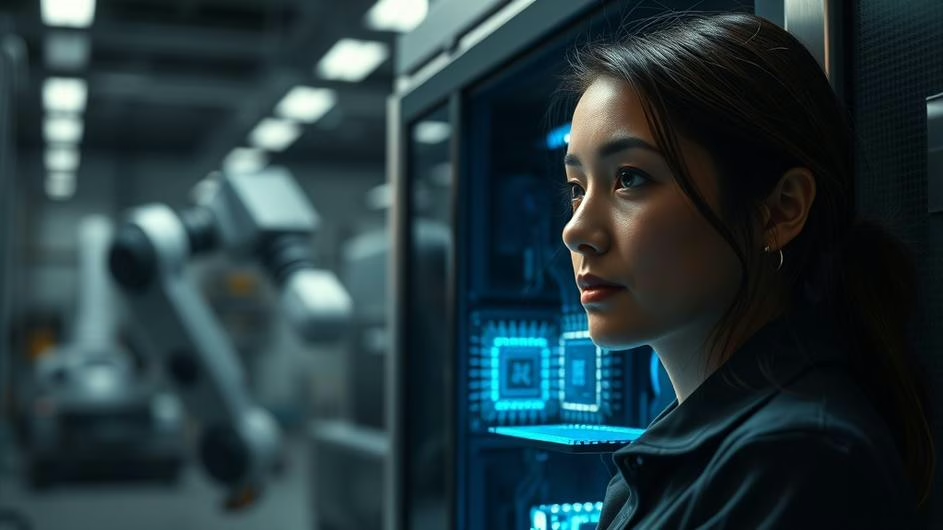
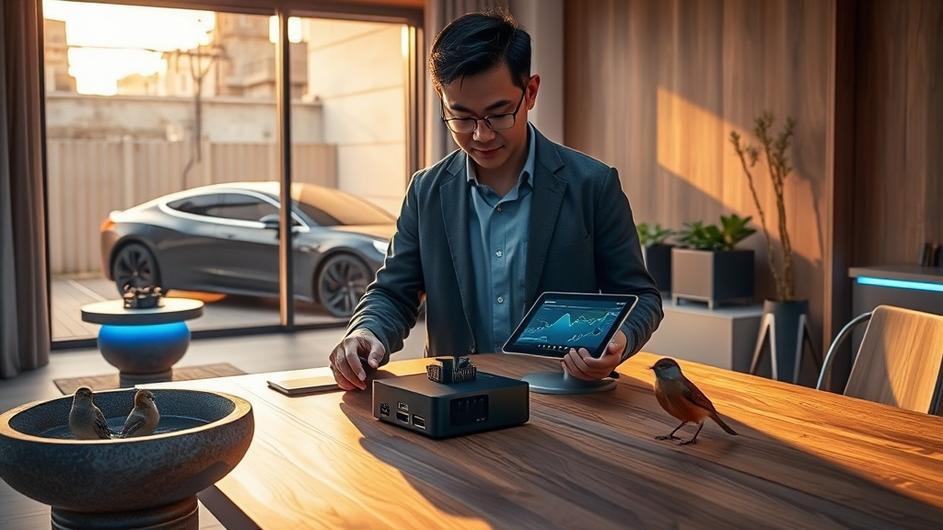
Chinese manufacturers dominated the conversation at CES this year, but not with the usual parade of smartphones. Instead, they brought a wave of intelligent devices that actually do things in the real world. We’re talking about humanoid robots that can navigate complex environments, quadruped robots for industrial inspection, AI-enabled cars that understand their surroundings better than ever, and yes, even novelty items like smart birdbaths that track wildlife patterns. The message was clear: AI isn’t just software anymore, it’s becoming the brains inside everything we touch.
As our coverage of CES 2026 detailed, this shift from cloud-based AI to physical, tangible intelligence represents a fundamental change in how we think about computing. When hardware can sense, reason, and act autonomously, it opens up entirely new categories of products and services.
Market research firm Beijing Runto Technology projects some staggering numbers for China’s AI hardware market. They expect it to grow about 18 percent annually through 2030, starting from roughly $153 billion in 2025. That’s not just growth, that’s a complete redefinition of what hardware means in the age of artificial intelligence.
| Year | China AI Hardware Market Value | Annual Growth Rate |
|---|---|---|
| 2025 | $153 billion | — |
| 2026 | $180.5 billion (projected) | 18% |
| 2030 | $350+ billion (projected) | 18% CAGR |
Software’s Existential Moment
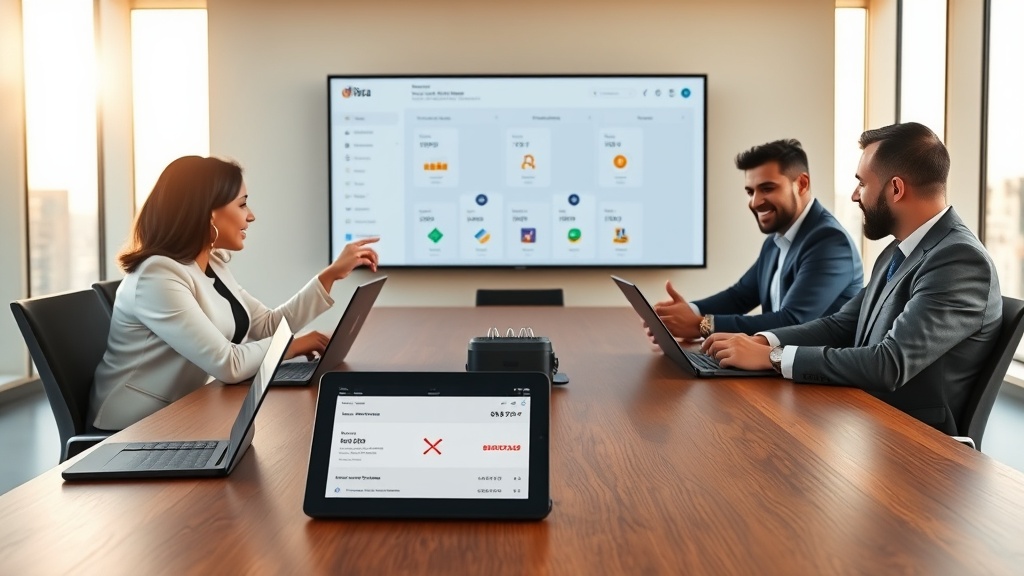
While hardware was getting smarter in Las Vegas, the software world was having what some analysts are calling an existential crisis. Anthropic’s recent announcements of new productivity and healthcare tools triggered immediate concern across the software sector. RBC Capital Markets analysts directly linked these announcements to a broad selloff in software stocks, arguing that AI capabilities now threaten the pricing power of vertical software vendors.
Let’s break that down. Vertical software refers to applications built for specific industries, think electronic health records for hospitals or specialized CRM platforms for sales teams. These products have traditionally commanded premium subscription fees because they bundle specialized workflows, compliance features, and deep integrations. Generative AI, on the other hand, refers to models that can create text, code, images, or other content from simple prompts.
Here’s the problem for software vendors: as AI models become more capable, they’re getting better at tasks that used to require specialized software. Drafting medical summaries? Composing detailed business reports? Automating routine customer support? These are exactly the kinds of value propositions that vertical software companies have built their businesses on.
Investors Are Asking Tough Questions
The rapid pace of announcements from Anthropic, OpenAI, and Google has shifted the conversation from theoretical to immediate. Investors aren’t just wondering if AI will boost software revenues anymore, they’re asking whether it might actually eat into them. If a single AI assistant can replace several niche applications, what happens to all those subscription fees?
Software vendors now face a critical challenge: they need to prove that their domain-specific capabilities and integrations justify continued price points in an age where general-purpose AI can handle more and more specialized tasks. This debate isn’t just about quarterly earnings, it will shape product roadmaps and R&D priorities for years to come.
As Anthropic continues to expand its capabilities, the pressure on traditional software business models only intensifies.
Where Hardware and Models Collide
There’s a fascinating interplay happening between the hardware revolution and the model revolution. Those robots and smart devices you saw at CES? They rely on AI models that span perception, planning, and natural language understanding. Meanwhile, improvements in on-device inference and edge computing mean we can run increasingly capable models without constantly hitting the cloud.
This changes everything. Lower latency means devices can respond in real-time. Keeping some data processing local addresses privacy concerns. And it enables entirely new user experiences that weren’t possible when everything had to go through a remote server. Conversely, powerful cloud-hosted models can serve as the central brain for fleets of relatively simple, inexpensive devices, turning commodity hardware into intelligent endpoints.
The edge computing revolution is making this possible, creating a distributed intelligence network that blends cloud power with local processing.
The Geopolitical Dimension
This isn’t just about technology, it’s about global competition. Chinese firms are packaging AI into consumer and industrial goods at a scale that could translate into significant global market share and influence. As the Los Angeles Times reported, China is already putting AI in everything from cars to birdbaths, creating a tangible form of computational dominance.
Neil Shah of Counterpoint Research captured the strategic importance perfectly when he noted that deployable AI products represent more than just commercial success, they’re the machines people actually use in their daily lives. Whoever controls these tangible interfaces to AI gains influence that goes far beyond software code.
What This Means for Builders
For developers and product leaders watching these trends unfold, the path forward requires some strategic thinking. First, focus on composability and defensibility. What unique workflow glue can you provide that customers can’t easily replicate with a general-purpose AI model? Second, invest in data and integrations that create real lock-in value. Third, don’t ignore the edge, experiment with embedding models into devices where latency, privacy, or offline operation matter.
As we explored in our analysis of physical AI’s emergence, the companies that succeed will be those that understand both silicon and service, algorithms and user experience.
Looking Ahead: A Two-Track Future
So where does this leave us? Expect a two-track shift in the coming years. On one track, AI will continue infiltrating hardware, making everyday objects smarter and more autonomous. On the other track, foundational models will keep pressuring traditional software business models, forcing incumbents to either adapt or specialize.
The most successful companies won’t choose between hardware and software, they’ll combine both strengths. They’ll deliver domain expertise through tangible form factors with seamless AI assistance built right in. We’re entering a period where innovation will be judged by both silicon and service, by both algorithm quality and real-world implementation.
The winners in this new landscape won’t just write better code, they’ll decide how that code meets the world, from the robot on the factory floor to the AI assistant inside your enterprise applications. And as Business Insider reported, the pace of change is only accelerating, leaving little time for hesitation.
Sources
- CES 2026: When AI Left the Cloud and Entered the Real World
- CES 2026: The Year Physical AI Left the Lab and Started Working the Floor
- Anthropic at a Crossroads: Expanding Claude, Defining AI Policy, and Navigating the Unpredictable Future of Artificial Intelligence
- Edge AI Revolution: How Hardware Innovations and Strategic Partnerships Are Reshaping Connected Intelligence
- From Chip Wars to Cure Paths: How AI Leaders and Multimodal Models Are Shaping Technology and Medicine
- China is already putting AI in everything from cars to birdbaths, Los Angeles Times, January 15, 2026
- OpenAI freaked out the software industry. Now, it’s Anthropic’s turn., Business Insider, January 15, 2026