Black Friday, Bargains, and the New Rules of Convenience: What This Holiday Season Says About Tech’s Next Chapter
Remember when Black Friday was just about camping outside stores for a single day of deals? Those days feel almost nostalgic now. This year’s holiday shopping season has morphed into something bigger, a full-scale pressure test for the entire technology ecosystem. It’s not just about finding the right gadget at the right price anymore. We’re watching pricing stunts, platform decisions, and serious investments in people all converge to reshape what consumers actually expect from their devices and services.
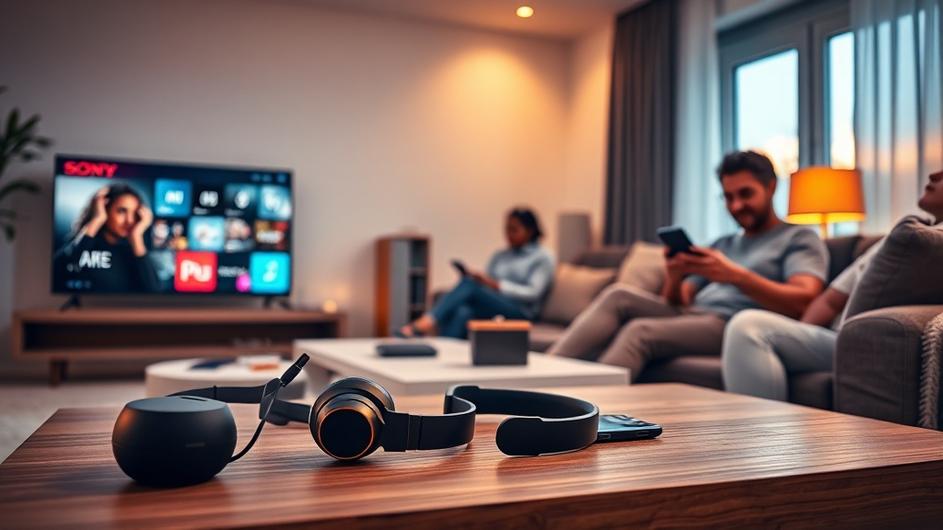
The scene on the ground is both familiar and surprisingly different. Retailers and manufacturers aren’t just offering discounts, they’re pushing deals that read like headlines. Take Sony’s move with the WH-1000XM5 headphones. When Sony cuts prices until it’s effectively a zero-profit item, that’s not just a markdown, it’s a market signal. Think about what happens when a marquee product sells with minimal margin. Consumers win in the short term, sure, but the perception of value shifts dramatically. Competitors suddenly have to reassess their own pricing or product positioning. For shoppers, it means luxury audio no longer requires that premium price tag, and that changes expectations for future hardware cycles. It’s a classic case of what we’ve seen in headphone innovation driving consumer tech trends.
At the same time, major retailers and publishers are curating lists of what to buy and what to skip, steering volume toward a smaller set of winners. Why do these curated recommendations matter so much? They reduce friction for buyers, and in today’s crowded market, even small nudges can determine which devices become truly ubiquitous. The result is a feedback loop where discounts drive adoption, adoption justifies more support and ecosystem investment, and those ecosystems reward devices that achieve real scale. It’s a cycle that’s playing out across the tech landscape, from smartphones to smart home devices.
But here’s the thing, this season isn’t only about bargains. It’s also about everyday convenience, or the sudden lack of it. Nothing exposes the tension between price and experience more than when something you rely on just stops working the way you expect. Recently, there was a change that prevents casting Netflix from some Samsung phones to TVs. For users, this is a sharp reminder that hardware, software, and content providers often operate under very different priorities.
Let’s break that down. Casting is simply the act of sending video or audio from your mobile device to a larger screen or speaker over your local network. It relies on compatibility between apps, phone software, and TV firmware. When that chain breaks, the impact is immediate and visible. People notice when a favorite habit, like throwing a show from pocket to living room, suddenly doesn’t work anymore.
The technical explanation might range from an update in an app’s streaming protocol to a policy change by a content provider, but the business implication is broader. Platform friction erodes trust. It lowers the perceived value of both device and service, and it raises the cost of ownership in the form of time spent troubleshooting or buying alternate hardware. In a market where devices are frequently sold on razor-thin margins, user experience becomes one of the few defensible differentiators. This kind of platform control issue is something we’re seeing more of, similar to the challenges discussed in our look at the new Android era and its implications for tech ecosystems.
That’s where operators and service providers are stepping in. Across regions, telecom companies are investing not just in networks but in people, preparing workforces and communities to actually benefit from these technologies. Zain KSA recently received recognition for inclusive hiring and its national digital skills programs, a reminder that hardware ubiquity alone doesn’t guarantee meaningful use. Digital skills programs teach people how to leverage devices and services, from basic connectivity to more advanced topics like web development or cloud tools. For industry watchers, this matters because the democratization of technical skills is the prerequisite for sustained demand and for novel services to flourish.
There’s a second, quieter trend running through these stories, and that’s the consolidation of power in platform ecosystems driven by artificial intelligence and data. Black Friday moves still dominate headlines, but behind the discounts, companies are making strategic plays for user engagement. AI features, personalization, and integrated services are becoming the currency of loyalty. For developers and product teams, that means building features that scale across contexts, and for users it means choosing environments where personalization actually improves daily life. This shift toward intelligent automation is part of a larger trend we’ve been tracking with AI agents transforming business and security landscapes.
The immediate interplay between deep discounts and platform control creates some real tradeoffs. Aggressive pricing can accelerate adoption, but if the underlying platform makes unilateral changes that degrade experience, the cost is churn. Conversely, companies that invest in human capital and inclusive programs can create sticky, sustainable demand that outlives any single sales season. The implication for designers, engineers, and product managers is clear, it’s not enough to chase feature parity. Teams need to think holistically about reliability, compatibility, and the social context of their products.
For tech-savvy readers and developers, these aren’t abstract forces. They’re practical constraints on system design and business strategy. When a streaming app changes how it talks to a TV, engineers need better interoperability testing and clearer versioning policies. When a vendor chooses zero-profit pricing for a flagship product, product managers must model long-term retention, accessory ecosystems, and service monetization. When telecoms fund digital skills, learning teams and developer communities gain a larger pool of contributors who can build local solutions tailored to regional needs.
Looking ahead, the lesson from this season is pretty straightforward. First, price wars and promotional moments will continue to shape short-term adoption, but long-term value will be settled by the balance between user experience and ecosystem openness. Second, investments in people and skills are becoming strategic levers, not corporate philanthropy. Companies that simultaneously deliver reliable, compatible experiences and invest in the communities that use their products will create durable advantages.
That combination is where the next phase of consumer technology will be decided. Expect future Black Fridays to be less about one-time bargains and more about which platforms actually convert discounts into lasting relationships. Expect regulatory and technical pressure for better compatibility and clearer consumer rights around interoperability. And expect telcos and major vendors to deepen their role in workforce development, because a skilled user base expands the market for smarter, more connected products. These dynamics are part of the broader shifting landscape we’re seeing across tech sectors.
In short, the holiday shopping frenzy is revealing deeper shifts. Discounts draw attention, technical changes test loyalty, and workforce investments lay the groundwork for broader adoption. Developers and product leaders who pay attention to all three will be best positioned to build the services and devices that earn trust beyond a single season. After all, as the tech world’s Black Friday developments show, it’s not just about the deals, it’s about what happens after the shopping carts are emptied.
Sources
SamMobile, “Love casting Netflix from your Samsung phone to TV? This change ends it”, SamMobile, Mon, 01 Dec 2025, https://www.sammobile.com/news/love-casting-netflix-from-your-samsung-phone-to-tv-this-change-ends-it/
BestTechie, “The Tech World’s Black Friday: Deals, Developments, and a Dash of Humor”, BestTechie, Sat, 29 Nov 2025, https://www.besttechie.com/the-tech-worlds-black-friday-deals-developments-and-a-dash-of-humor/
Kotaku, “Sony Goes Zero-Profit on WH-1000XM5, 2x Cheaper Than AirPods Max and Bose”, Kotaku, Wed, 26 Nov 2025, https://kotaku.com/sony-goes-zero-profit-on-wh-1000xm5-2x-cheaper-than-airpods-max-and-bose-2000647400
TechAfrica News, “Saudi Telecom Leader Zain KSA Awarded for Inclusive Workforce and Digital Skills Programs”, TechAfrica News, Fri, 28 Nov 2025, https://techafricanews.com/2025/11/28/saudi-telecom-leader-zain-ksa-awarded-for-inclusive-workforce-and-digital-skills-programs/
NBC News, “Best Black Friday 2025 Tech Deals — Apple, Sony, Samsung and More”, NBC News, Fri, 28 Nov 2025, https://www.nbcnews.com/select/shopping/black-friday-tech-deals-2025-rcna245834