
AI at Scale, from Delhi to Mountain View: Infrastructure, Models, and the New Developer Playbook
Remember when artificial intelligence felt like a Silicon Valley exclusive? Those days are fading fast. Over the past month, we’ve watched geography, infrastructure, and product strategy collide in ways that will reshape how developers build and users experience AI. It’s no longer just about who has the smartest algorithms, but where the compute lives, how models adapt to local contexts, and what happens when AI leaves the cloud and lands in your pocket.
India’s Infrastructure Gambit
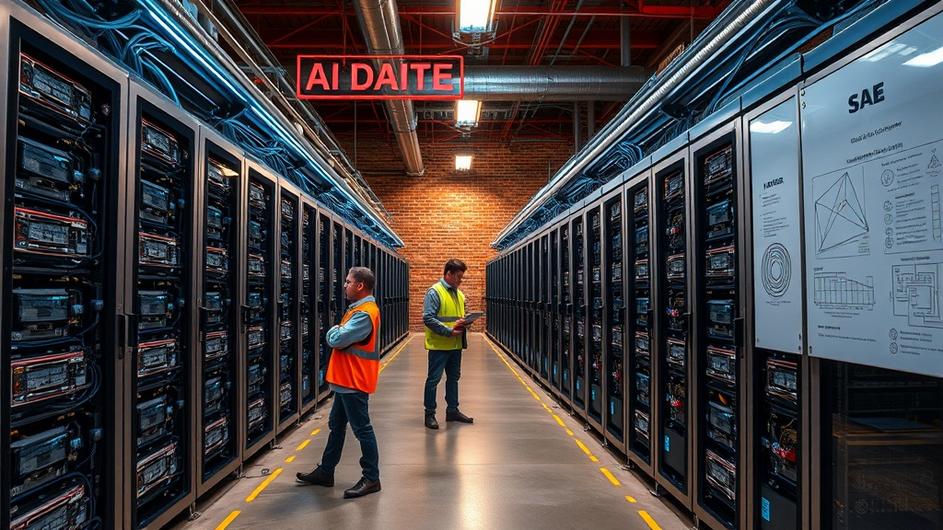
India isn’t just watching from the sidelines. The country is making a serious play to become a central node in the global AI network. Governments and private companies are pouring money into landing stations, fiber routes, and data centers. Cloud giants are signing partnership deals, while homegrown startups are busy adapting models to local languages and the diverse range of devices that define the Indian market, from basic Android feature phones to connected cars.
This push tackles two critical constraints head-on: latency and relevance. New physical infrastructure shortens network hops, while region-specific models can handle local idioms and cultural nuances. The result? A more distributed AI topology where heavy training might happen in regional clouds, but inference runs closer to the user. For a deeper look at this infrastructure race, check out our analysis on the new race for reliable AI infrastructure.
The money flowing into this space is substantial. Vendors are deploying top-tier accelerators in local data centers and building the network fabric to connect them. For developers, this means access to lower-latency GPU instances and potentially new pricing dynamics. But it also introduces complexity. Models now need optimization for varied hardware stacks and regulatory environments that can differ dramatically from the United States. Localization isn’t just about translation anymore, it’s about retraining, evaluation, and integrating local datasets while navigating privacy and compliance rules that are still being written.
The Model Arms Race Heats Up
While infrastructure spreads geographically, the core model competition continues to intensify. Google’s recent release of Gemini 3.1 Pro represents a focused push on what the company calls “core reasoning.” In practical terms, this means a model’s ability to chain ideas, plan ahead, and solve multi-step problems rather than just generating surface-level answers. Google claims Gemini 3.1 Pro outperforms contemporaries on key benchmarks, but perhaps more importantly for builders, it’s being made available through familiar developer touchpoints: APIs, command-line interfaces, and integrations for Android Studio.
This accessibility reduces friction. It becomes easier to prototype features that leverage stronger reasoning, whether that’s building smarter coding copilots or automating complex data synthesis tasks. The evolution of these multimodal models is part of a broader trend we explored in our piece on how AI leaders are shaping technology across sectors.
Hardware Gets Smarter, Creativity Expands
Generative AI is stretching its creative muscles too. Google has added music generation capabilities to Gemini, enabling short jingles and background audio to be produced on demand. This capability dovetails neatly with hardware moves from device makers. Recent rumors suggest Apple may spread several focused AI announcements across a week in March rather than hosting one monolithic keynote. Reports point to AI-first wearables like smart glasses and camera accessories that could redefine how we interact with technology.
If device makers push more audio and sensor capabilities into the market, developers will gain new input modalities to work with. Models that can generate or transform audio in real-time could become standard tools in the developer’s kit. This hardware-software convergence is something we’ve been tracking closely, especially in our coverage of Apple’s product strategy and what it means for developers.

The Risks in the Rush
But let’s not get carried away by the hype. Rapid capability gains bring real risks and trade-offs. Bugs in assistant-style features have already produced embarrassing, and sometimes concerning, lapses. Remember the Copilot issue that summarized confidential emails? Courts and regulators are now scrutinizing training data sources and licensing agreements with renewed intensity.
Developers can’t afford to treat these as edge cases. Building safety nets, audit logs, and intelligent fallback behaviors into applications is becoming non-negotiable. A misfired summary or a tone-deaf response can erode user trust faster than any marketing campaign can rebuild it. The conversation around trust and security in generative AI has never been more relevant.
A Practical Playbook for Builders
So what’s a practical approach for engineering teams navigating this landscape? The strategy needs to be hybrid from the ground up. Design architectures where heavy training or large-batch inference runs in regional clouds, while latency-sensitive tasks execute on-device or at nearby edge nodes. This edge AI revolution is reshaping how intelligence gets distributed.
Invest seriously in localization pipelines, and I’m not just talking about language translation. Culturally relevant evaluation, dataset curation, and compliance checks are equally important. Build robust monitoring that tracks not just performance metrics, but privacy compliance, hallucination rates, and user sentiment. And keep a close eye on tooling ecosystems. When models are exposed through polished APIs and IDE plugins, adoption accelerates, but so does the need for rigorous integration testing and cost management.
| Regional AI Infrastructure Focus | Key Developer Considerations |
|---|---|
| India & Southeast Asia | Local language models, mobile-first optimization, diverse device support |
| European Union | GDPR compliance, data sovereignty, transparent AI governance |
| North America | High-performance compute, enterprise integration, regulatory scrutiny |
| Edge & On-Device | Latency optimization, privacy-by-design, battery efficiency |
Looking Ahead: A Blended Future
We’re heading toward an AI landscape that’s more geographically distributed, more integrated with device hardware, and more commercially diverse than anyone predicted just a few years ago. This opens opportunities not just for tech giants, but for startups and developers who understand how to navigate this new terrain. The choices teams make now about where to run models, how to evaluate them, and how to build in safeguards will determine which products feel seamless and intuitive, and which ones feel brittle and unreliable.
Expect a blended future where regional compute hubs power high-scale training, global models get fine-tuned closer to users, and everyday devices contribute sensor data while running lightweight inference. For developers, the mandate is clear: adapt architectures for hybrid execution, prioritize thoughtful localization, and treat safety as foundational, not an afterthought. Those who get this right will be building the AI experiences that people actually use and trust in their daily lives.
As India’s ambitious push demonstrates, the center of gravity for AI innovation is shifting. It’s no longer a single-story narrative controlled by a handful of companies in one region. For developers, traders watching AI token markets, and policymakers trying to craft sensible regulations, this geographic and infrastructural diversification represents both challenge and opportunity. The question isn’t whether AI will become more distributed, but how quickly we’ll adapt to building for this new reality.
Sources
- India Wants to Be the Center of AI, Daily Tech News Show, Wed, 18 Feb 2026
- Google germinates Gemini 3.1 Pro in ongoing AI model race, The Register, Thu, 19 Feb 2026
- 2026 Infrastructure Intelligence and the New Race for Reliable AI, Tech Daily Update
- From Chip Wars to Cure Paths: How AI Leaders and Multimodal Models Are Shaping Technology and Medicine, Tech Daily Update
- 2026 Device Moment: Apple’s Product Blitz, the AR Glasses Surge, and What It Means for Developers, Tech Daily Update
- Edge AI Revolution: How Hardware Innovations and Strategic Partnerships Are Reshaping Connected Intelligence, Tech Daily Update
- Navigating Trust, Security, and Expertise in the Age of Generative AI, Tech Daily Update