
From Foldables to Faceware, Pricing Pressure and AI Access Rewrite 2026 Hardware Playbooks
If the first weeks of 2026 have shown us anything, it’s that the hardware game is changing faster than anyone predicted. What used to be exclusive, premium tech is suddenly facing serious price competition, and that’s rewriting the rules for everyone from device makers to app developers. We’re seeing this play out across three major fronts: foldables getting cheaper, AR glasses becoming actually affordable, and AI access dropping to subscription prices that make sense for real products.
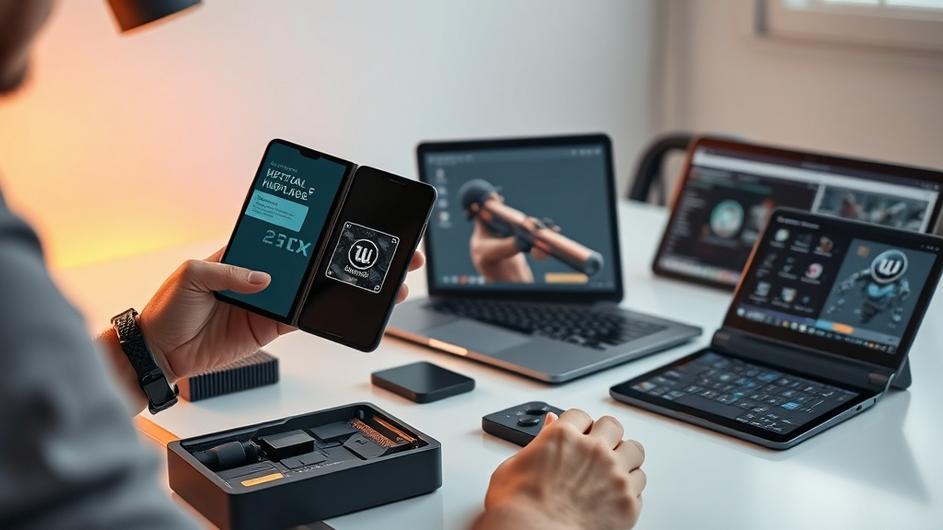
Take Samsung’s rumored Galaxy Z TriFold. This was supposed to be the ultimate halo device, the kind of tech that makes headlines but stays out of most people’s pockets. Now leaks suggest pricing that’s far more aggressive than expected. It’s not just Samsung either. Manufacturers across the board are accelerating their foldable and multi-screen launches, which means innovations that were once reserved for luxury devices will spread faster and wider.
Why should you care? Because price changes everything. When a tri-fold phone moves from concept car to something people might actually buy, developers suddenly have reason to optimize for those wild new form factors. We’re talking about interfaces that handle three-panel multitasking, content that flows naturally across screen seams, and input methods that blend touch, pen, and voice. It’s no longer just theoretical.
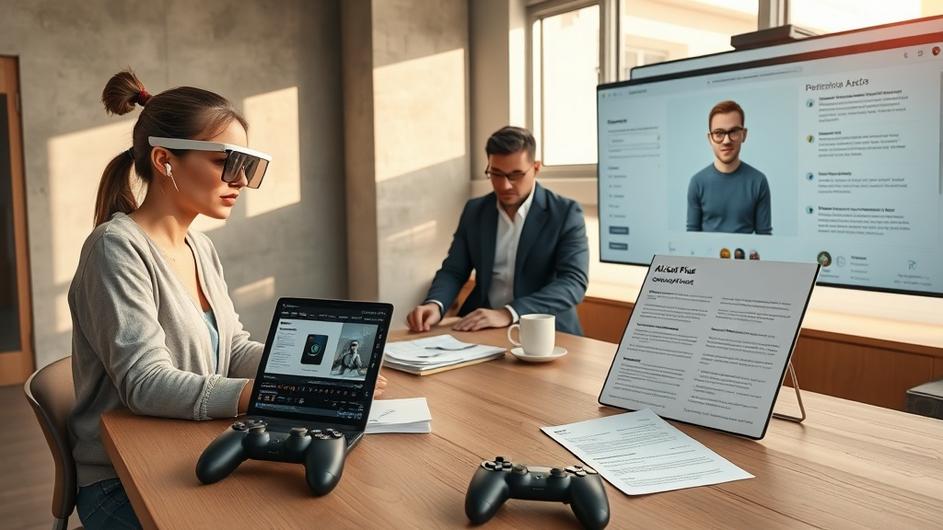
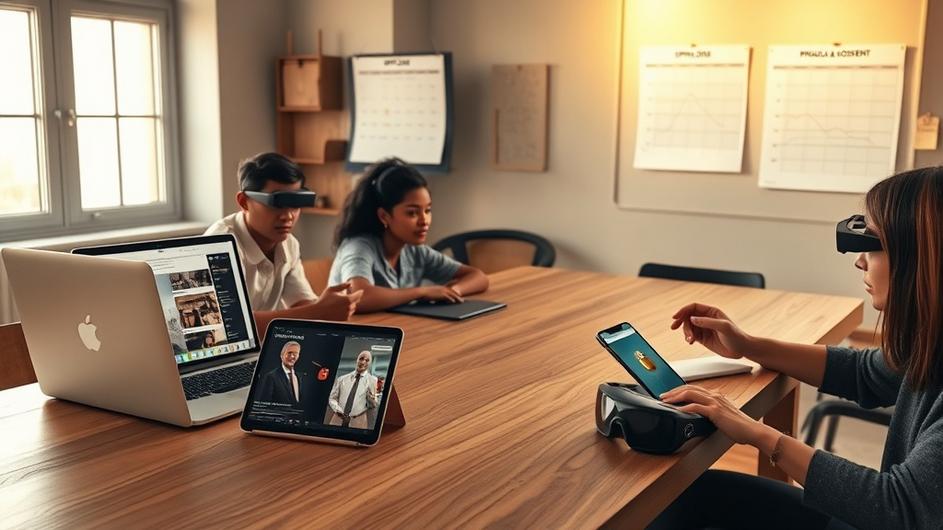
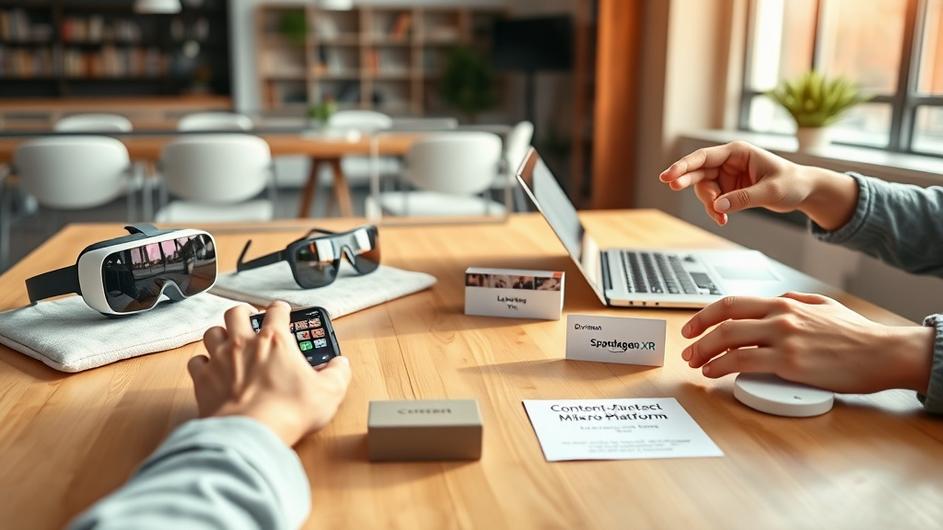
Meanwhile, the AR landscape is heating up in ways that make spatial computing feel imminent rather than distant. Samsung has confirmed consumer AR glasses for 2026, and companies like Snap are pouring billions into scaling their trials. Then there’s Xreal, which just dropped a $100 price cut on its 1S glasses while adding Switch 2 support. That last part matters. It shows these companies are thinking about mainstream use cases like gaming and console pairing, not just tech demos.
A sub-$500 price point changes the conversation completely. AR shifts from “cool experiment” to “maybe I’ll buy that” territory. For developers, that means the audience actually exists. We’re talking about lightweight glasses that overlay information on the real world, not full VR immersion. They’re becoming practical for notifications, navigation, and dual-screen workflows. The ability to pair with existing hardware like the Switch 2 or convert 2D content opens up immediate opportunities that developers can actually build for today.
Then there’s the AI piece. Google just expanded its AI Plus plan to 35 countries for $7.99, with introductory discounts making advanced AI features accessible to way more people. This signals something important: large language models and multimodal AI are moving from premium tiers to mass-market services. For device makers and app teams, that dramatically lowers the cost of embedding sophisticated AI into user experiences.
Put these pieces together and you start seeing new possibilities. Affordable AR glasses paired with accessible AI could enable contextual, voice-first experiences that understand what’s happening around you. Imagine navigation that layers directions with landmark recognition, all without needing expensive hardware or subscriptions. Or consider foldable phones where AI manages layout and attention across multiple panels automatically.
Apple’s early moves are telling too. The company introduced an updated AirTag with longer range and hinted at a year packed with launches, including a delayed smart home hub that depends on a more personalized Siri. For developers working with location and proximity, improvements in tracking hardware mean new reasons to integrate UWB and proximity-aware features. When voice assistants get smarter and more personal, household-scale services become more interesting to build.
So what does all this mean for technical teams? For starters, they need to prioritize adaptive interfaces that work across different screen formats. Developers should design for hybrid compute, where latency-sensitive tasks run on-device while heavier models tap into those affordable cloud plans. And they absolutely must prepare for multimodal inputs, because users will mix touch, voice, and gaze as these hardware platforms mature.
There are practical considerations too. Testing for AR and foldable experiences requires new device matrices, which means budgeting for physical labs or realistic emulation. AI subscription costs need to be factored into product economics from day one. And privacy remains crucial, especially when you’re dealing with spatial awareness and persistent tracking.
Looking ahead, the near-term horizon is both exciting and demanding. Hardware is becoming more accessible, and AI is becoming more affordable. That combination accelerates product cycles and raises user expectations. It also highlights the importance of cross-disciplinary teams that can bridge industrial design, systems engineering, and machine learning.
We’re not at the point where AR glasses replace phones or foldables make traditional devices obsolete. Instead, 2026 looks like the beginning of an ecosystem where different form factors overlap and compute becomes more flexible. The tools are arriving at prices that make real experimentation possible. The audiences are forming. Now the question is what experiences developers will build when physical screens no longer define the boundaries of what’s possible.
If you’re building in this space, now’s the time to think about how AR glasses and AI chips might reshape your product roadmap. Consider how the lessons from CES 2026’s hardware shifts apply to your development cycle. And don’t underestimate how quickly AR reset the hardware playbook just last year. The pace isn’t slowing down.
Sources
- New Galaxy Z TriFold leak suggests cheaper pricing for Samsung’s ultra-premium foldable, Notebookcheck, 26 Jan 2026
- 7 Augmented Reality Developments In 2026 That Reveal What Changes Now, Glass Almanac, 01 Feb 2026
- Apple Unveils First New Products of 2026, MacRumors, 26 Jan 2026
- Google Brings Cheaper $7.99 ‘AI Plus’ Plan to 35 Countries, Including U.S., MacRumors, 27 Jan 2026
- Xreal 1S Reveals Switch 2 Support And $100 Cut In 2026 – Why It Matters Now, Glass Almanac, 26 Jan 2026