
Voice, Agents, and the Road to General Intelligence: What AI Looks Like in 2026
Right now, we’re living through one of those rare moments in tech where two powerful forces are converging. AI is simultaneously moving into our everyday devices while making leaps at the cutting edge of what’s possible. This dual movement is changing everything, from how we work to how we talk to machines, and it’s reshaping what we even mean by “intelligence” in the first place.
Remember when voice assistants felt like party tricks? That’s over. In the last year, voice interfaces stopped being novelty features and started feeling like a fundamental shift in how humans interact with computers. Your smartphone, laptop, and smart home devices now use generative models that actually understand messy, conversational requests. They provide useful, context-aware responses that make talking to your device as effective as typing. Maybe more effective.
The proof is everywhere. Walk down any city sidewalk or through an open office, and you’ll see people comfortably issuing spoken commands in public. A year ago, that would’ve felt awkward. Today, it’s just how we get things done. This shift isn’t just about convenience, it’s about productivity reimagined.
The Engine Behind the Change
So what’s driving this transformation? Two linked trends that are feeding off each other. First, we’ve seen incremental but crucial engineering improvements in latency, accuracy, and cost. These make always-available, always-listening agents practical for the first time. Second, and perhaps more importantly, the models themselves have taken a leap forward. They can now summarize, plan, and act across multiple steps, often by coordinating with other services and APIs.
When a model can perform reliable multi-step reasoning, even imperfectly, it becomes something more than a question-answering machine. It becomes an assistant that can actually accomplish real tasks. Think about it like this: early AI could tell you the weather. Today’s AI can check your calendar, find a restaurant that fits your schedule and dietary preferences, make a reservation, and add it to your calendar. That’s a different kind of tool entirely.
This capability shift raises a deeper question that the research community has been circling for years. Does current progress point toward general intelligence, a system that can improve itself and generalize across domains? It’s not just an academic question anymore. Practically speaking, the crucial metric here is error rate, meaning how often a model makes a wrong judgment. As error rates fall toward zero, a model can chain more reasoning steps safely, because each step adds less cumulative risk.
If that chaining becomes effectively limitless, you approach a form of self-improvement that could accelerate capability in surprising ways. It’s like watching a blockchain protocol scale from handling 15 transactions per second to thousands, once the right layer-2 solutions click into place. The underlying architecture suddenly unlocks potential that was always there, just waiting for the right engineering breakthroughs.
Beyond the Buzzwords
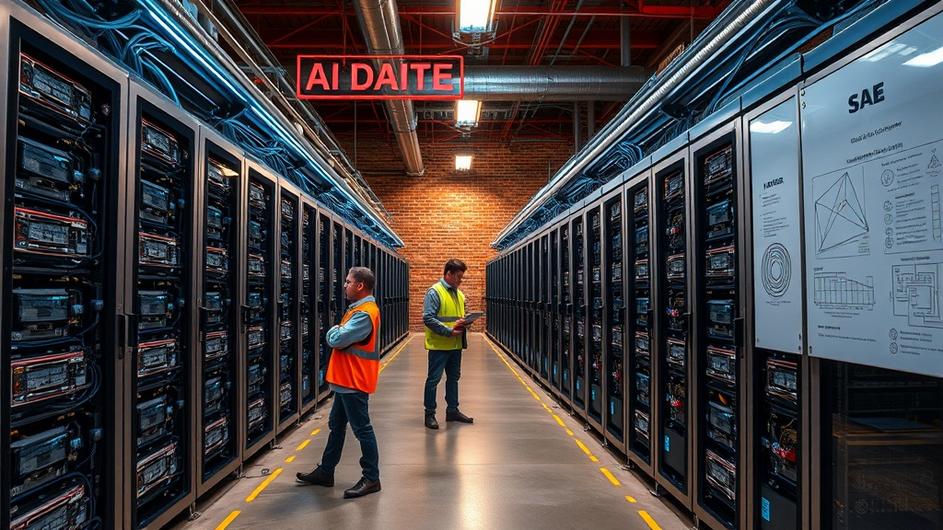
We should be careful with words like superintelligence and consciousness. They carry philosophical weight and often distract from engineering realities. But the technical story is simple, and honestly, it’s urgent. Small improvements in reliability unlock qualitatively different behaviors. Companies building frontier AI are racing to reduce errors, scale compute, and integrate models into products. Whoever sustains that combination stands to reshape entire industries.
This isn’t theoretical anymore. Look at enterprise software right now. Partnerships that embed AI agents into business tools are bringing autonomous helpers to workflows, automating routine decisions and triage. On the consumer side, assistants with hundreds of millions of users serve as practical testbeds for behavior change, data collection, and iterative model improvement.
The result is a powerful feedback loop. Real-world usage improves models, which then enable new features, which drive more usage. It’s a virtuous cycle that’s accelerating faster than many predicted. Just like we saw with hardware and AI reaching a tipping point, the pieces are falling into place for mainstream adoption.
The Social Equation
The social impact is complex, and we need to be honest about it. Jobs that require repetitive cognitive work will continue to be automated. That’s already happening. But new roles are appearing around model supervision, prompt design, and system orchestration. The labor market is shifting, not disappearing.
Privacy and social norms are being renegotiated in real time. People are becoming more comfortable speaking to devices in public and sharing behavior with platform-level assistants. Regulation and corporate stewardship will matter more than ever, because these systems will increasingly mediate information and decisions that affect our lives.
Think about it from a crypto-native perspective. We’ve already seen how decentralized systems create new governance challenges. AI presents similar questions about transparency, accountability, and control. Who gets to decide how these systems work? How do we ensure they serve users rather than extract value from them?

What Builders Need to Know
For developers and technical leaders, the immediate challenge is pragmatic. Build with the assumption that models will be part of your products. Design for failure modes from day one. Instrument behavior so you can lower error rates through monitoring and retraining. This isn’t optional anymore, it’s table stakes.
For researchers, the work is to push reliability, transparency, and alignment so that gains in capability don’t outpace our ability to control them. We’ve seen what happens when technology moves faster than our understanding of its implications. The crypto space learned this lesson through hard experience with smart contract vulnerabilities and exchange collapses.
Looking ahead, expect interfaces to keep moving toward natural language and real-time multimodal interactions. Your phone won’t just hear you, it’ll see what you’re looking at and understand the context. Backend models will continue improving their stepwise reasoning and robustness. This convergence won’t just make devices easier to use, it will change what software can do, turning passive tools into active collaborators.
The next few years will be decisive. Engineering, economics, and social adoption will lock together to determine who wins in this new landscape and how broadly the benefits are shared. Will we see a repeat of the mobile app store gold rush, or something more like the gradual, infrastructure-heavy build-out of cloud computing? The answer probably lies somewhere in between.
The Big Picture
What does this mean for different stakeholders? For users, it means interfaces that finally feel natural. For traders and investors, it means watching which companies can actually deploy AI at scale profitably. For developers, it means a new toolkit that’s both powerful and requires new skills to wield effectively. For policymakers, it means grappling with questions about competition, privacy, and labor markets that don’t have easy answers.
One thing’s clear: we’re not just building better chatbots. We’re building a new layer of intelligence that sits between humans and the digital world. As CES 2026 showed us, this technology is moving out of the lab and into our homes, offices, and pockets. The question isn’t whether this will happen, but how we’ll navigate the transition.
Will AI become another walled garden controlled by a few giants, or will open models and protocols create a more diverse ecosystem? The infrastructure race is already heating up, with companies competing on reliability and intelligence at scale. Much like the early days of blockchain, the architecture decisions being made today will shape the landscape for years to come.
So what should you do? Stay curious, stay skeptical, and start experimenting. The tools are here, and they’re getting better every day. But remember: technology is never neutral. It reflects the values and priorities of those who build it. As we move toward more intelligent systems, we need to be intentional about what kind of intelligence we’re creating, and who it serves.
Sources
AI in 2026, Uncharted Territories by Tomas Pueyo, January 24, 2026