CES 2026: When AI Left the Cloud and Started Living in Your TV, Desk, and Mop
If you’ve been to Las Vegas for CES before, you know the drill. The future doesn’t show up in one big bang. It trickles in, piece by piece, until you look around and realize everything’s changed. That’s exactly what happened at CES 2026. This year, artificial intelligence stopped being something that lives in distant data centers or shows up in flashy demos. It started moving into the hardware you actually use every day.
The show floor felt different. Less about “what if” prototypes and more about “here’s what you can buy next month.” Assistants, charging standards, and robots weren’t just concepts anymore. They were becoming products you’d actually plug in, wear, or set loose in your living room.
The Living Room Gets a Brain
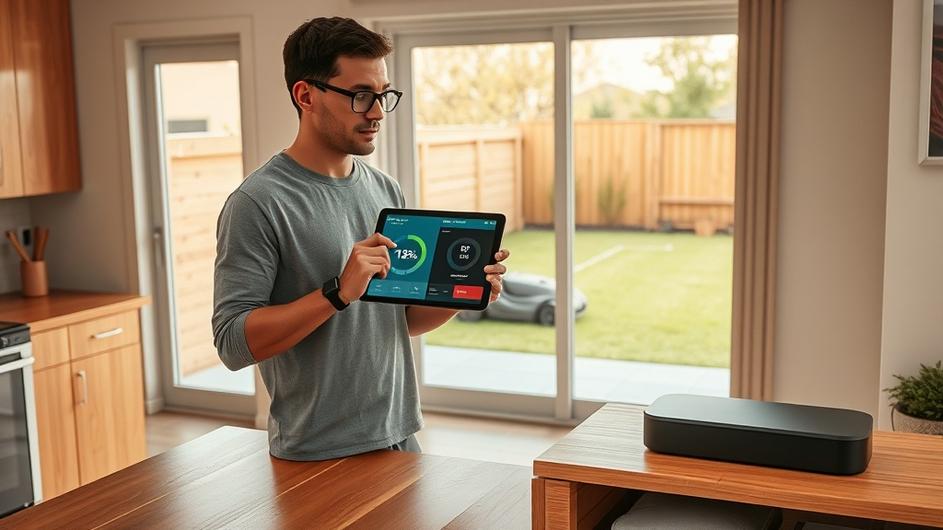
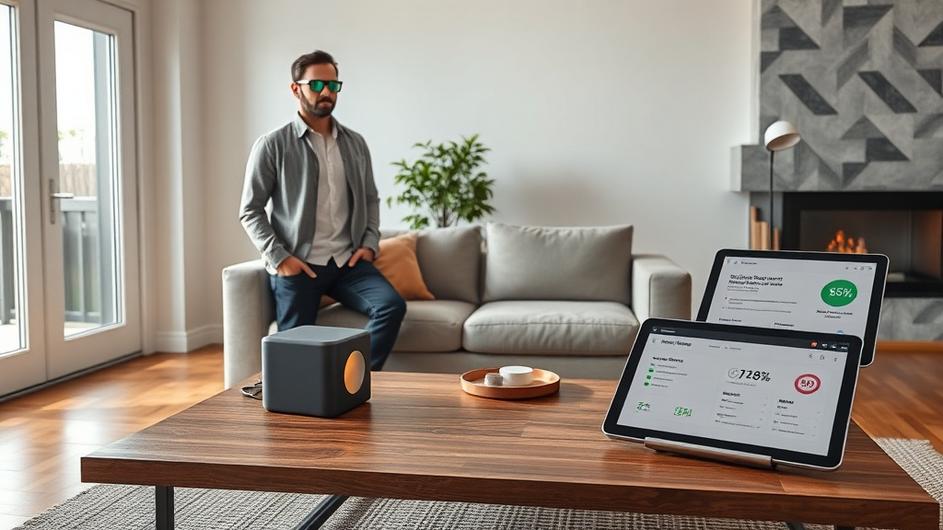
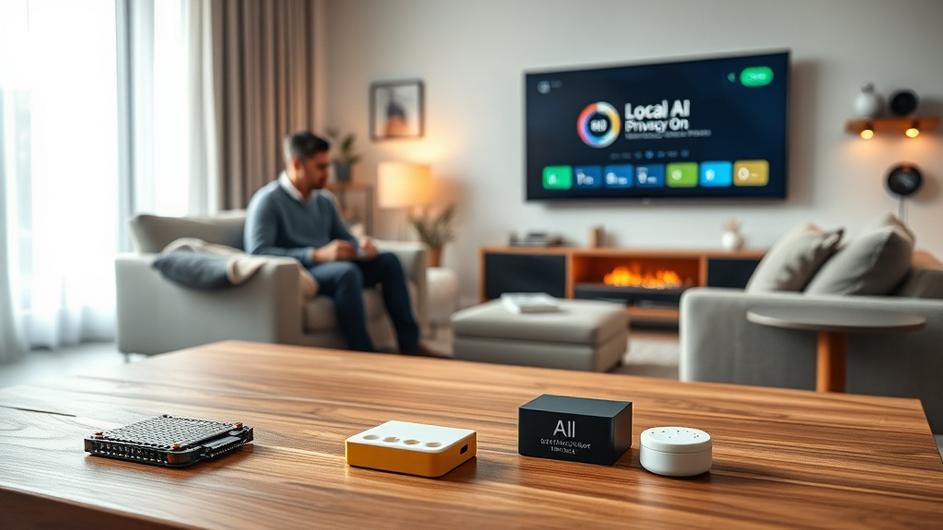
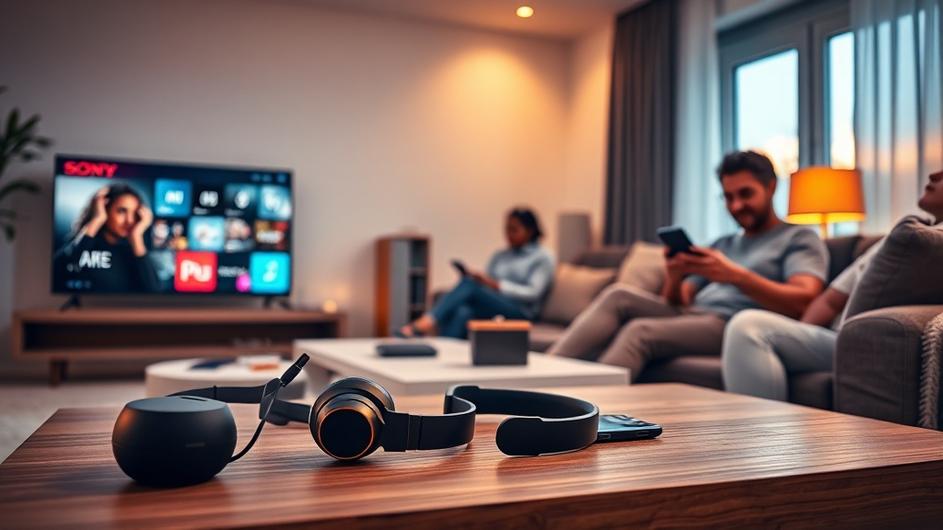
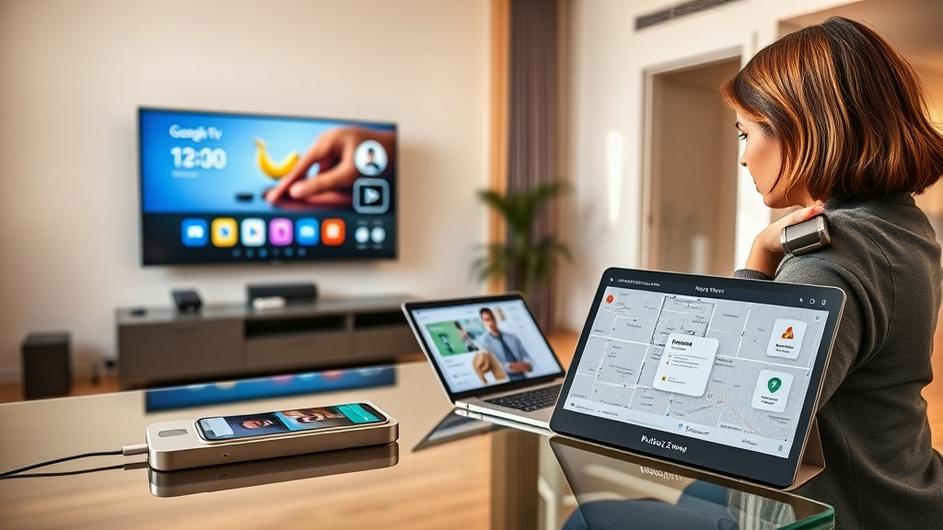
The most obvious shift happened right where we all relax. Google showed off some serious upgrades to Gemini on Google TV, pushing the assistant way beyond simple search and recommendations. Now it wants to be a persistent, interactive presence in your home.
There’s a new avatar called Nano Banana. Sure, it’s cute branding, but it signals something bigger. TVs are becoming surfaces for richer visual feedback, where an assistant can overlay context, suggestions, and controls right on your screen. More importantly, you can now change display and playback settings with natural voice commands. No more digging through nested menus with a remote. TCL will be first to ship these features, with other Google TV devices following soon.
Why should developers and product teams care? Because the television is being reimagined as a shared, ambient computing surface, not just a streaming box. That changes everything. Latency, multi-user interactions, and privacy controls become critical. Building for this surface means thinking about conversational state, designing UI fallbacks for when voice isn’t available, and implementing tight permissions for camera and microphone access. It’s part of a larger shift in consumer AI where convenience meets increased scrutiny.
Your Desk Just Got Smarter
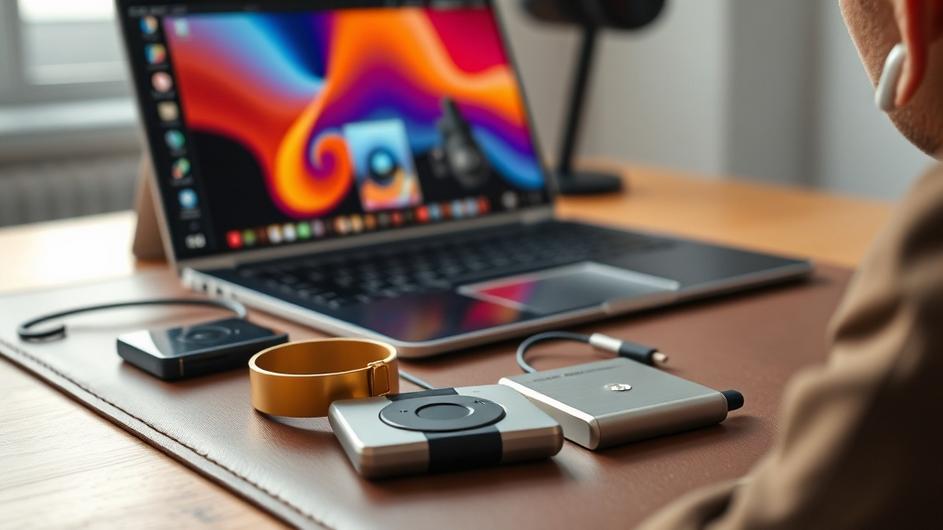
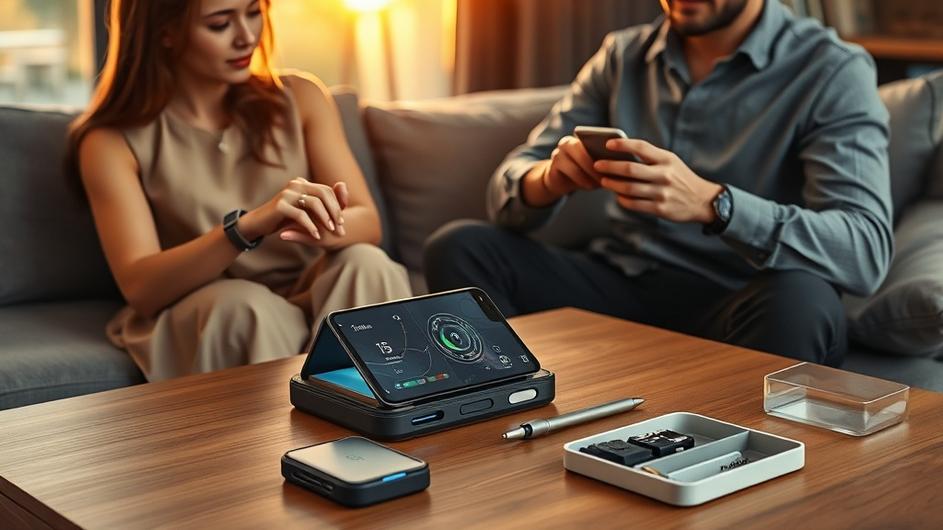
At the other end of the room, productivity hardware is leveling up too. Baseus introduced a desktop dock that reads like a power user’s wish list. It packs abundant ports with modern charging standards, with each USB-C port delivering up to 100 watts via USB Power Delivery. The clever part? A magnetic Qi2 25-watt wireless charger built into a flipping pad on top.
Qi2 is the latest wireless charging standard, and it’s a game changer. It improves alignment between your device and the charger, enabling faster, more reliable charging compared to older coils. The dock can push 160 watts overall, which matters when your laptop, headphones, and phone all need juice at the same time.
This isn’t just about convenience. It’s about consolidation. Developers and IT teams should expect more devices designed as primary endpoints in hybrid workflows. Imagine a single cable or dock that instantly restores your peripherals, power, and connectivity. Software needs to anticipate this instant context switching, restoring window layouts or meeting setups when you dock your laptop. Better power management APIs and clearer hardware signaling will make these transitions seamless. This reflects the broader design and utility trends we saw emerging in 2025.
AI You Can Wear (and Trust)
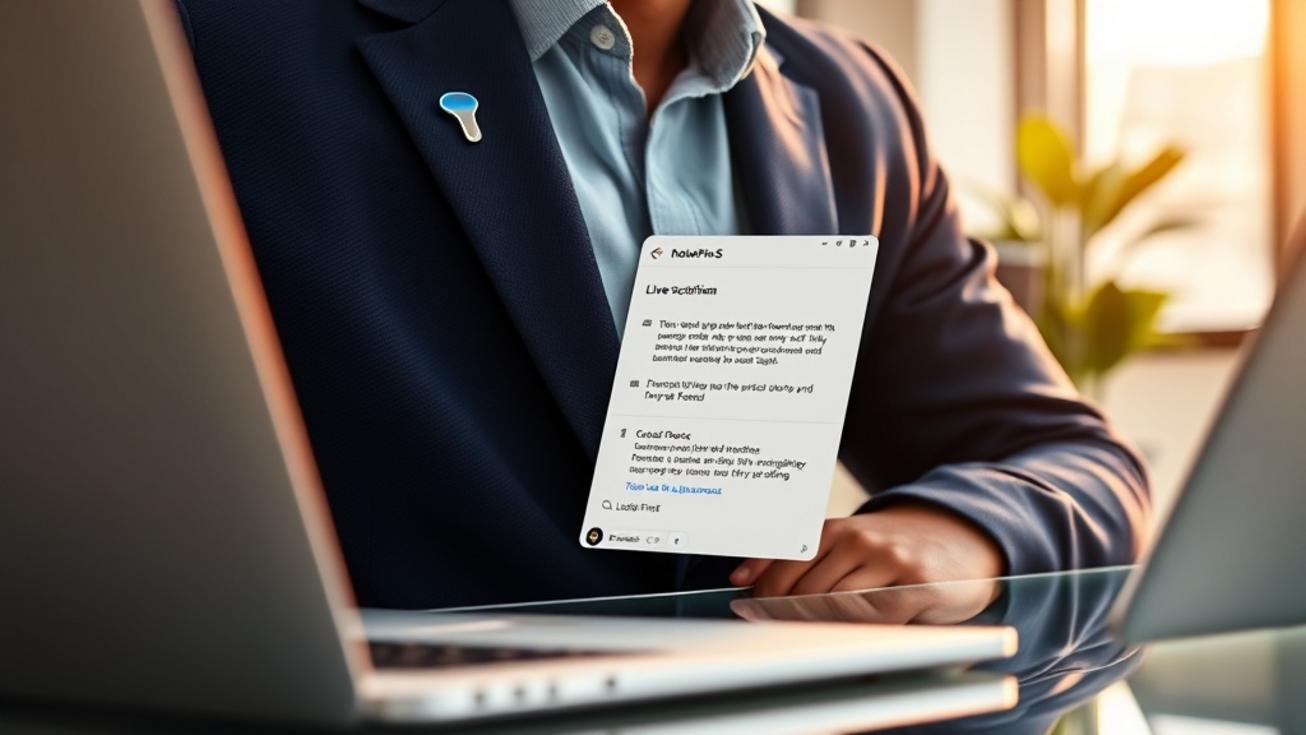
CES also showcased AI hardware that lives on your body and at the edge. Plaud unveiled the NotePin S, an updated AI pin, plus a desktop app that transcribes and summarizes meetings. The kicker? It produces action items without needing a bot account to join the call.
An AI pin is a small, wearable device that surfaces assistant features with minimal friction, often using local sensors and on-device models. Plaud is extending that concept into online work, using a companion app to capture audio, apply AI summarization, and surface follow-up tasks. As TechCrunch reported, this represents a new category of productivity tools.
For developers, this raises two crucial points. First, contextual, short-form AI experiences are becoming more valuable. Building concise, actionable outputs matters more than producing verbose analysis. Second, privacy and security are non-negotiable. These devices record and transform sensitive conversations. Expect design patterns and SDKs that let apps request narrowly scoped access to transcripts, supporting local-first processing to keep raw audio on the user’s device. This aligns with the new rules of AI deployment that emerged last year.
Robots That Actually Work
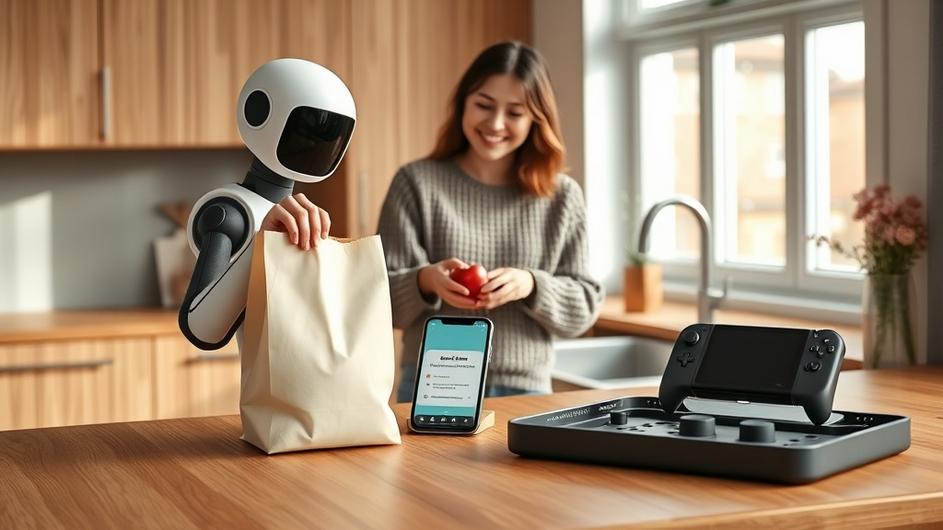
Home robotics moved from novelty to utility at this year’s show. Narwal announced the Flow 2 robovac and mop, which the company calls its most advanced robotic mop yet. The advances here blend better sensors, smarter mapping, and refined liquid handling to treat mopping as a distinct task rather than an afterthought.
The bigger picture? Robots are acquiring fine-grained domain expertise, whether that’s cleaning floors or navigating dynamic home layouts. As Mashable covered, these aren’t just gadgets anymore. They’re becoming reliable household tools.
What This All Means
Taken together, these announcements reflect a larger industry trend that TechCrunch editors spotted throughout the show: the convergence of AI and the physical world. This goes beyond consumer convenience. Companies are talking about smarter factory floors, collaborative robots, and autonomous vehicles, but the same principles apply at home and at your desk. Devices are becoming context-aware, with embedded AI helping manage power, interactions, and even mundane chores.
There are practical implications for engineering teams. Edge compute and model optimization matter now because latency and privacy often demand local inference. Interoperability standards, like USB Power Delivery and Qi2 for charging, reduce friction and make ecosystems more predictable. UX teams must design for mixed modalities, combining voice, touch, and visual feedback in ways that feel coherent across different physical surfaces. This represents a fundamental reset in hardware thinking.
CES 2026 didn’t promise a utopia, but it sketched a credible path forward. The smartest products weren’t those with the largest AI models, but those that tied AI to real user problems and hardware realities. Whether it’s changing a TV setting with a spoken phrase, restoring a developer workstation with one cable, summarizing meetings without an added bot, or scrubbing a kitchen floor more effectively, the emphasis was on usefulness.
Looking ahead, expect this migration to accelerate. Developers and product managers should prepare for tighter software-hardware integration, stronger expectations around local processing and privacy, and new APIs that expose context and power state. For users, the payoff will be reduced friction and automated tasks. But this shift also raises important questions about consent, data ownership, and how we expect devices to behave in shared spaces.
One thing became crystal clear at CES 2026: artificial intelligence isn’t just in the cloud anymore. It’s becoming part of the surfaces and objects we touch every day. The next stage of innovation will be about making those interactions predictable, secure, and genuinely helpful. That’s the real test of whether AI actually improves everyday life, or just adds another layer of complexity to manage.
As we’ve seen with previous tech waves, from smartphones to cloud computing, the most successful innovations aren’t necessarily the most powerful. They’re the ones that solve real problems in ways that feel natural and reliable. If CES 2026 is any indication, we’re entering an era where AI stops being something you “use” and starts being something that’s just there, working quietly in the background of your life.
Sources
- Gemini on Google TV is getting Nano Banana and voice-controlled settings, The Verge, 05 Jan 2026
- CES 2026: Follow live as NVIDIA, Lego, AMD, Amazon, and more make their big reveals, TechCrunch, 05 Jan 2026
- Baseus’ new desktop dock includes a Qi2 25W charger, The Verge, 04 Jan 2026
- Plaud has a new AI pin and a software notetaker, TechCrunch, 05 Jan 2026
- Narwal Flow 2 robovac announced at CES 2026: Specs, features, price, more, Mashable, 04 Jan 2026