From Chip Floors to Factory Lines: How CES 2026 and OpenAI’s Manufacturing Move Signal a New Era for Consumer AI
The CES Shift: From Prototypes to Products
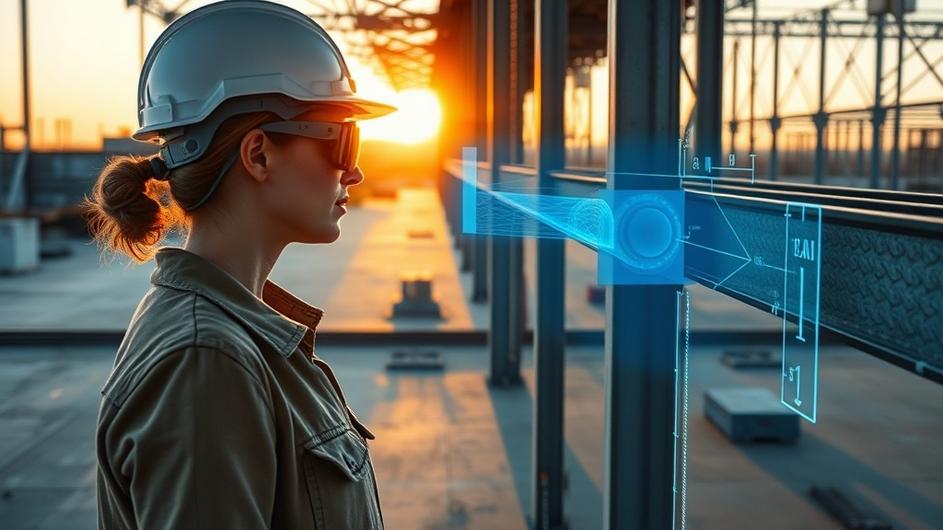
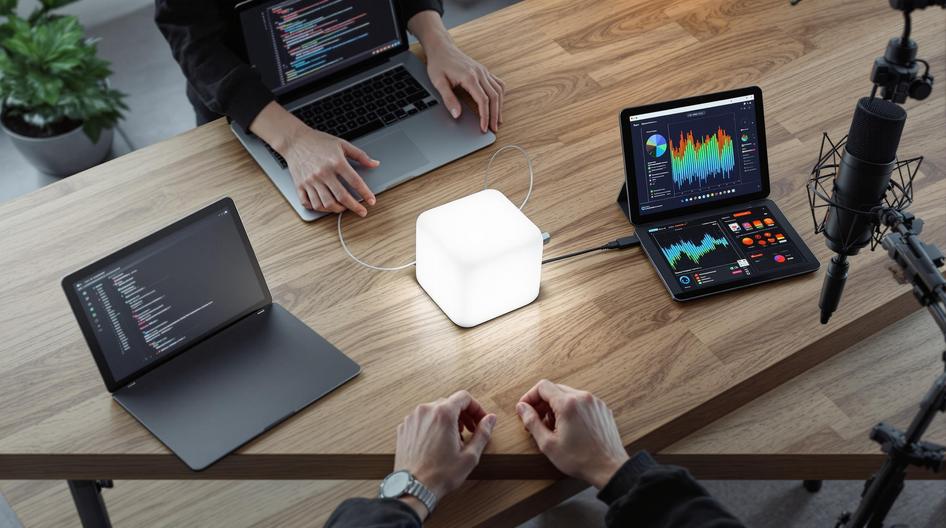
Walking the floor at CES 2026 felt different this year. It wasn’t just another showcase of futuristic prototypes or concept devices that might never see the light of day. Instead, what we saw were actual products, the kind of devices that’ll soon be sitting on our desks, strapped to our wrists, or humming quietly in our workshops. The difference? Artificial intelligence has finally grown up and moved out of the cloud.
OpenAI’s Manufacturing Pivot: More Than Just a Vendor Switch
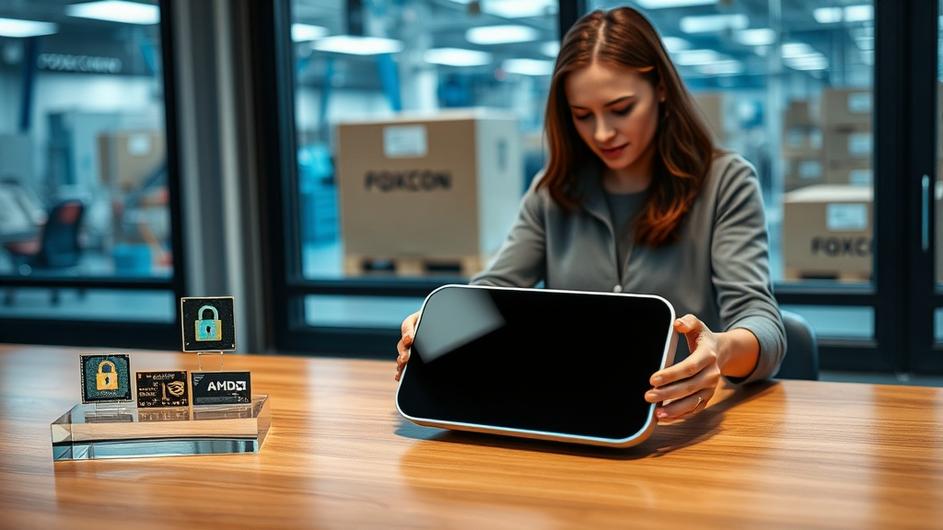
Here’s where things get interesting. Recent reports confirm that OpenAI has shifted manufacturing of its first consumer AI device from Luxshare to Foxconn. On the surface, this looks like a simple vendor change. But dig deeper, and you’ll find it’s actually a strategic repositioning with serious implications.
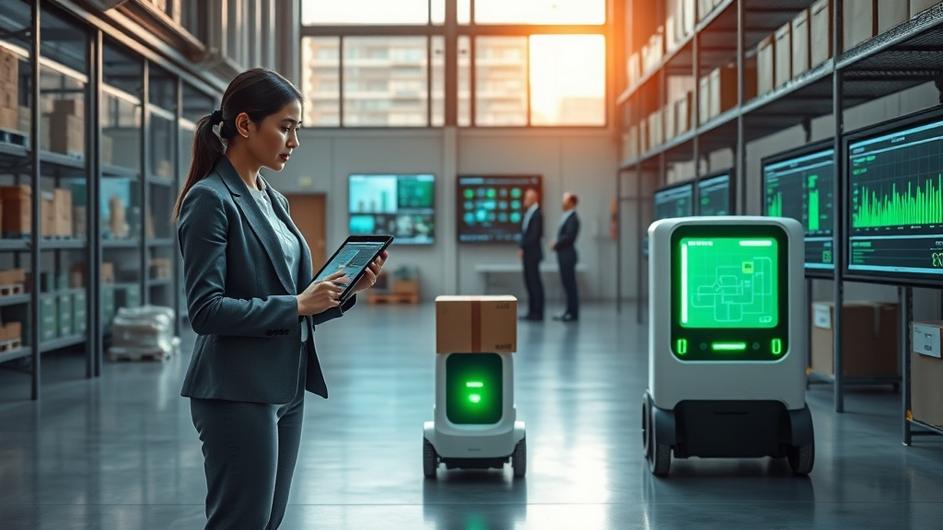
The device, reportedly designed by former Apple legend Jony Ive, isn’t just getting a new manufacturer, it’s getting a whole new approach to supply chain resilience. In today’s geopolitical climate, where and how you build hardware matters almost as much as what you build. Moving away from a single China-based manufacturer reduces concentration risk, could smooth regulatory hurdles in certain markets, and reflects a broader industry caution about hardware production.
Think about it: if you’re betting big on consumer AI devices, you can’t afford supply chain hiccups. This move suggests OpenAI is thinking long-term about scaling production while managing geopolitical risks. It’s a playbook we’ve seen before in smartphones and laptops, now being applied to the next generation of intelligent devices.
AI Chips Grow Up
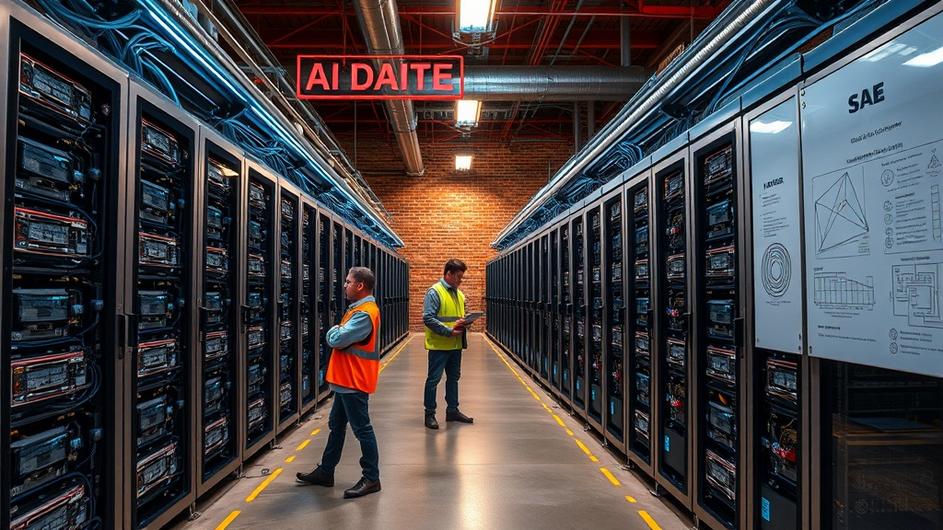
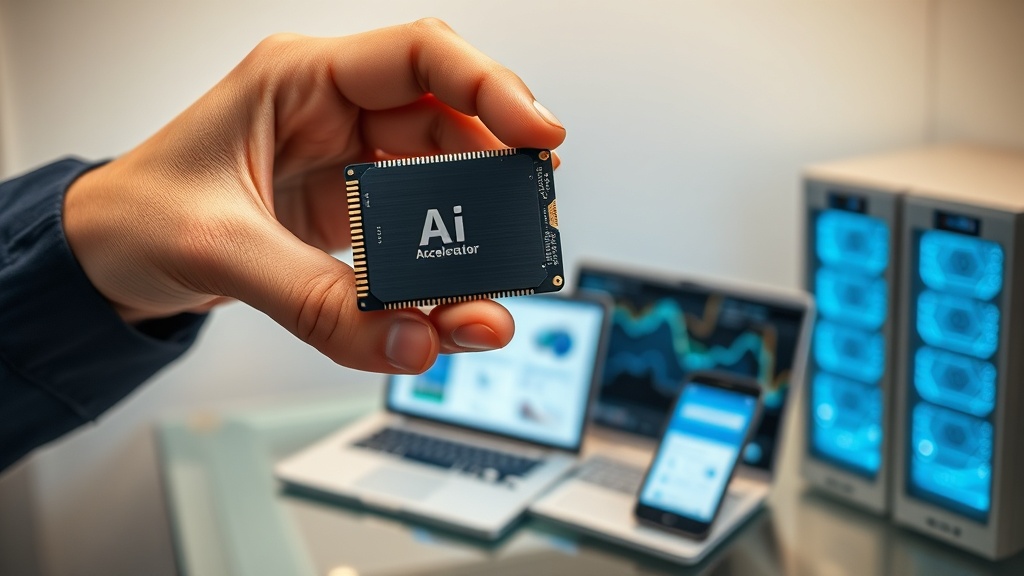
Meanwhile, the component story at CES was impossible to ignore. AI chips aren’t lab experiments anymore, they’re ready for prime time. Companies like AMD showcased platforms that stretch from personal devices to cloud systems, demonstrating how computation can be intelligently distributed. These aren’t your general-purpose processors trying to do everything, they’re specialized silicon designed specifically for machine learning workloads.
What does that mean in practice? Higher throughput, lower power consumption, and the ability to run complex models without constantly phoning home to the cloud. It’s the hardware foundation that makes true edge computing possible, and it’s arriving just in time for the consumer AI boom.
New Form Factors Emerge
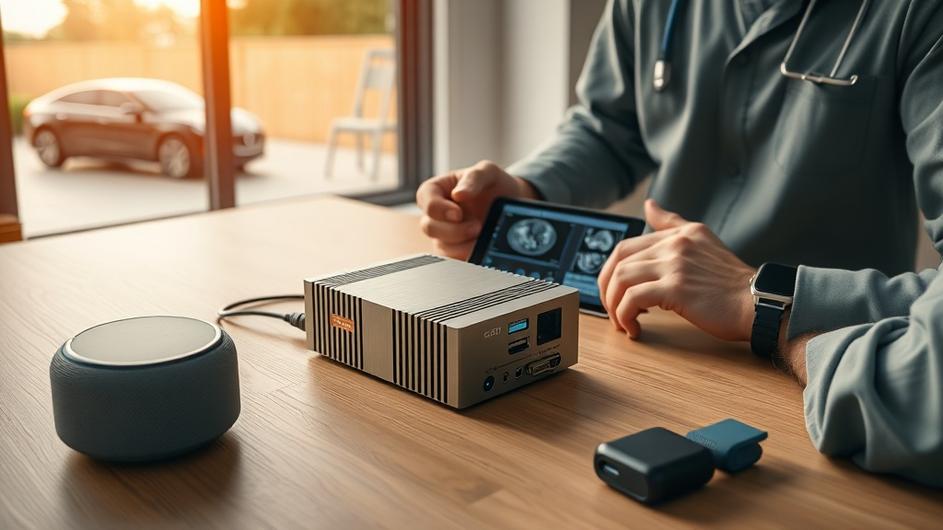
With efficient AI silicon comes new possibilities. Samsung demonstrated this with a brain health feature that analyzes data from wearables and phones to flag early signs of memory decline. This is edge AI in action, processing happens on-device or nearby, preserving both latency and privacy.
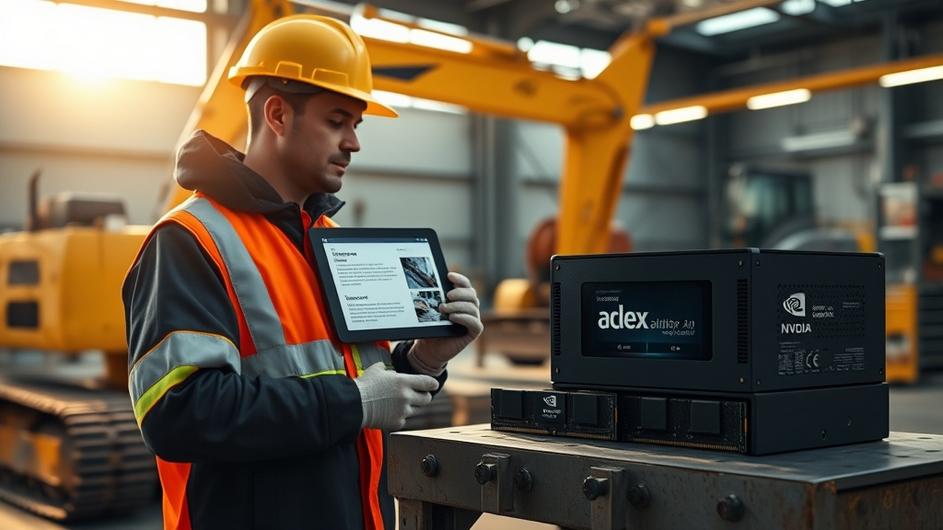
Nvidia took it further with their vision of “physical AI”, systems that combine perception, control, and learning to interact with the real world. We’re talking about robotics, sensors, and autonomous systems that can actually do things, not just think about them. Better sensors, lower-power AI chips, and more capable inference engines are what make autonomous vacuums, assistive robots, and proactive health monitors not just possible, but affordable.
The Strategic Picture Comes Together
Put these pieces together and the logic becomes clear. If AI models can run efficiently on specialized chips, and if manufacturing networks can be diversified and scaled with lower geopolitical risk, companies can deliver polished, reliable devices rather than one-off demos. The involvement of a designer like Jony Ive signals something important too: it’s not just about raw capability anymore. User experience, industrial design, and seamless integration matter just as much.
For developers and hardware engineers, this means a wave of new platforms to optimize for. It also means system-level thinking becomes crucial, where software, silicon, and supply chains are co-designed from the start. As we’ve seen in our analysis of how 2025 reset the AI race, the rules are changing fast.
Real-World Trade-Offs and Challenges
Of course, real-world deployment brings its own challenges. On-device health analysis raises legitimate privacy and regulatory questions. Developers will need to think carefully about data minimization, secure enclaves for sensitive computation, and clear user consent flows. It’s not just about building cool tech, it’s about building responsible tech.
Manufacturing shifts also expose complexity. Adapting production lines to AI devices requires coordination across firmware, calibration, and long-term maintenance planning. Supply diversification can mitigate risk, but it also demands new relationships and quality control regimes with large contract manufacturers. As explored in our piece on hardware and supply chain dynamics, these aren’t simple logistics problems.
What’s Next for Consumer AI?
Looking ahead, expect steady acceleration rather than overnight transformation. AI-specialized silicon will continue getting more efficient, enabling richer local experiences without constant cloud dependency. More companies will rethink where their devices are made, balancing cost, security, and market access in an increasingly complex global landscape.
For practitioners, the opportunities are broad. From optimizing models for power-constrained chips to building robust over-the-air update systems for distributed fleets, there’s plenty of work to be done. The consumer AI landscape in 2026 will look very different from what we’ve seen before.
The Big Picture: Intelligence as Hardware
These developments point toward something fundamental: intelligence is becoming as much a hardware problem as a software one. The next wave of innovation won’t come from software teams working in isolation. It’ll come from teams that can marry machine learning, thoughtful industrial design, and resilient manufacturing.
The result? A world where AI isn’t tucked away in some distant data center. It’s embedded in the everyday objects that augment how we live and work. From new consumer AI tools to smarter home devices, the integration is happening now.
But this shift raises new technical and ethical questions that the industry must solve in step. How do we ensure privacy when AI is everywhere? What regulatory frameworks make sense for devices that learn and adapt? How do we build trust in systems that make decisions on our behalf?
These aren’t just engineering challenges, they’re questions about the kind of future we want to build. And if CES 2026 is any indication, that future is arriving faster than many of us expected.
Sources
• OpenAI shifts AI device manufacturing to Foxconn: Report, Times of India, January 2, 2026
• CES 2026 Highlights the Next Growth Phase for AI Chips and Devices, TipRanks, January 4, 2026
• Design, AI and the New Hardware Playbook: How 2025 Rethought Devices for Real Life, Tech Daily Update
• Edge AI Revolution: How Hardware Innovations and Strategic Partnerships Are Reshaping Connected Intelligence, Tech Daily Update