Design, Utility, and AI: What 2025’s Standout Tech Says About the Next Wave of Devices
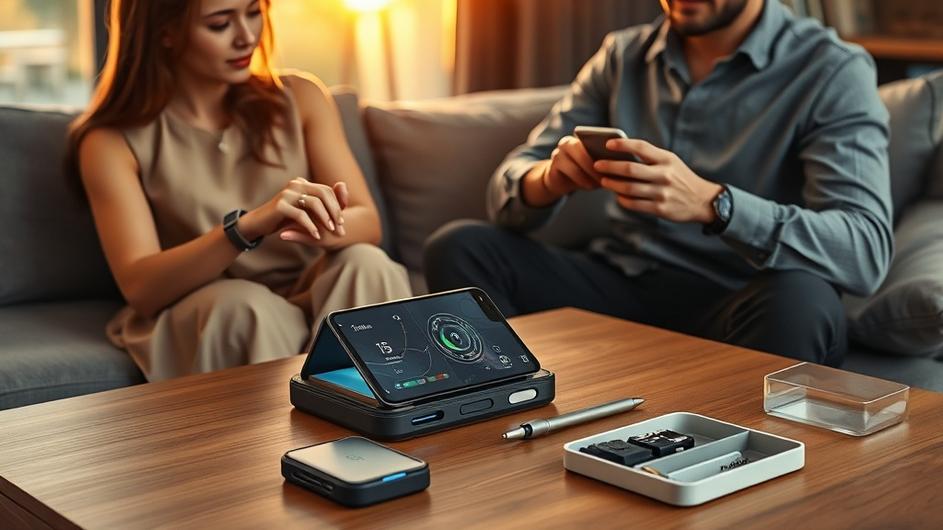
If you look back at the consumer tech landscape of 2025, one lesson stands out above the rest. It wasn’t just about faster processors or higher resolution screens. This was the year where form and function finally started speaking the same language, creating devices that people actually wanted to use every day. From hardware wallets that feel like premium jewelry to foldable laptops that fit into a crypto trader’s mobile lifestyle, the most interesting releases paired emotional design with genuine utility.
Think about it. How many times have you bought a gadget for its specs, only to find it collecting dust because it’s awkward to use or just plain ugly? 2025 seemed to answer that question with products that invited interaction, rewarded daily habits, and even expressed personal identity. We saw everything from cassette-inspired audio gear that makes listening to music a deliberate ritual, to robot vacuums with actual claws that can pick up your stray crypto hardware wallet from the floor. The message was clear: good design isn’t just a sticker you put on a box. It’s a fundamental product feature.
When Design Becomes the Experience
A clear thread running through the year was this return to tactile, expressive design. Companies weren’t just slapping retro aesthetics on modern tech. They were revisiting analog rituals and nostalgic cues while completely updating the performance underneath. Take that compact DAC and amp that looks and feels like a 90s cassette player. It doesn’t just play music. It frames album art like a small exhibition, turning what was often a background task into a focused experience.
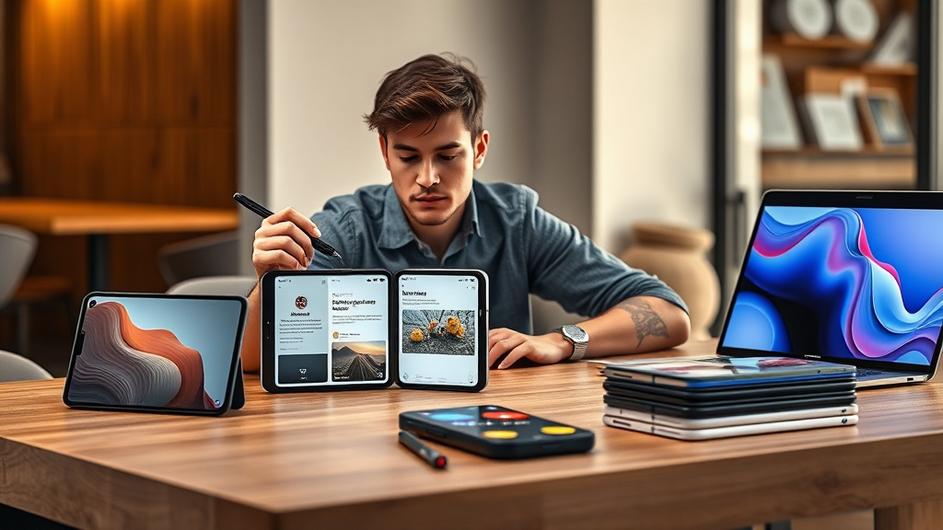
At the same time, manufacturers pushed bold experiments with folding displays. Laptops built around single, continuous OLED panels started to rethink what portability really means for developers and traders who need multiple screens for monitoring crypto markets. The lesson here is simple, and it’s crucial for anyone building hardware interfaces, whether for consumer gadgets or specialized crypto devices. People want tools that are pleasurable to touch and look at, devices that reduce friction in real tasks rather than adding to it.
This aesthetic shift influences everything from material choices to how a product communicates its state. Should your hardware wallet use a subtle LED pulse or a physical switch to indicate it’s ready for a transaction? These aren’t just engineering decisions. They’re design choices that affect user trust and daily workflow.
The Mainstream Gets a Polish
The hardware that actually made its way into editors’ bags and living rooms this year reinforced the same point. Reviewers kept talking about displays and audio accessories, and these were the items people actually bought and kept. Bright, efficient OLED televisions became practical investments not just for movie nights, but for traders who need accurate color representation across multiple charts. Compact studio-class desktops returned as workhorses for creative workflows that might include designing NFT collections or rendering blockchain visualizations.
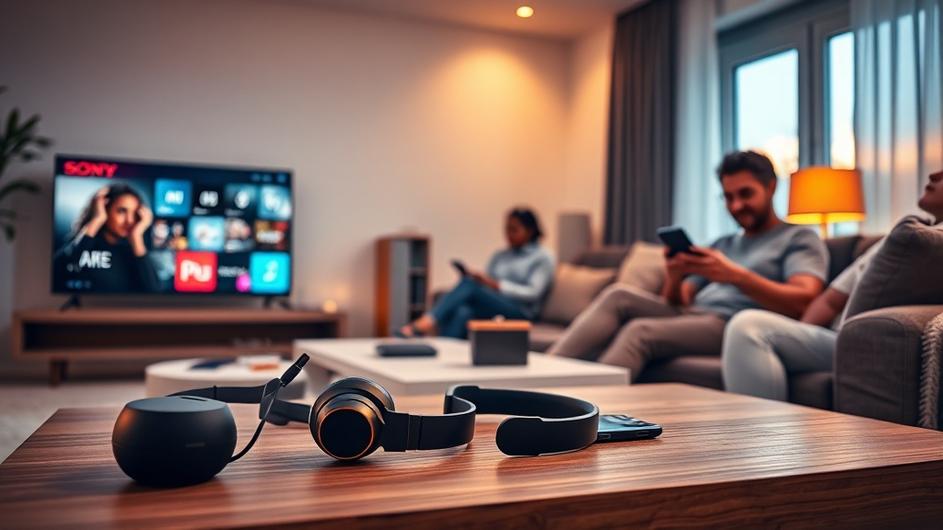
Wireless earbuds matured in interesting ways too. Better noise control and spatial audio made them useful in both work and leisure contexts. Could you imagine monitoring a DeFi protocol’s governance call while blocking out office noise? That’s the kind of practical utility that drove adoption.
Retail dynamics played a huge role too. Major holiday promotions, like the Samsung monitor and TV sales, made high-end displays accessible to more people. This accelerated the upgrade cycle for developers who need pixel-perfect accuracy and for gamers balancing performance with budget. When deals change behavior, experimental form factors become more likely to find their early adopters.
Small Accessories, Unexpected Impact
Here’s something that might surprise you. Not every meaningful innovation in 2025 required a massive R&D budget. One of the most compelling categories was the humble USB add-on. We’re talking about desk fans, mug warmers, biometric dongles, and compact network adapters that leverage spare USB ports to extend a PC’s utility without adding bulk.
These devices underscore a practical truth for platform designers, especially in the crypto space. They meet direct, immediate needs and slot into existing workflows. A USB-powered hardware wallet warmer? Maybe not. But a compact biometric authenticator that fits right into your trading station? That solves a real security problem without disrupting your setup.
For developers and system builders, the lesson is to respect peripheral ecosystems. Simple, low-friction accessories that solve one problem well can have an outsized influence on daily productivity. As BGR highlighted, these aren’t just novelty items. They’re tools that make existing technology work better.

Robots, Wearables, and the AI Layer Gets Real
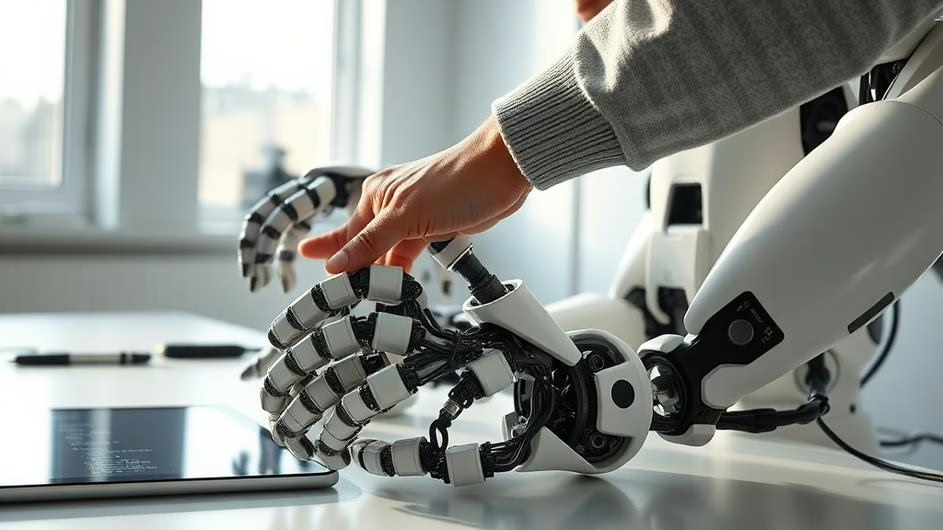
Robotics and wearable tech moved from proof-of-concept to practical, if sometimes surprising, products this year. Household robots experimented with more capable manipulators. We saw vacuum models with claw-like appendages that could actually pick things up, not just push them around. Imagine a robot that could retrieve your cold storage device from a safe or organize cables in a mining rig setup.
Wearables continued their quiet evolution too. They shrank, got smarter, and began blending sensors with AI to offer contextual assistance rather than just raw data. Your smartwatch might not just track your heart rate. It could notice stress patterns during volatile market hours and suggest a break. This shift from telemetry to insight is where wearables meet practical utility.
On the software side, AI tools aimed at creators exploded. Lightweight generative editors and camera-assist features made routine tasks like photo editing faster, with quality that’s becoming reliably good. But here’s where it gets interesting for crypto. The same AI capabilities that power these creative tools are being applied to smart contract auditing, market analysis, and portfolio management.
That said, the discussion around biometric technology and privacy kept pace with the capability gains. New features like under-screen fingerprint sensors promise cleaner industrial design for phones and hardware wallets. But they raise serious questions about consent and data handling that product teams, especially in finance and crypto, can’t ignore. When CNET covered the biggest tech products, they weren’t just talking about cool features. They were documenting how these technologies integrate into daily life, with all the privacy implications that come with that.
Competition Heats Up the Innovation Engine
Competition between major platforms accelerated feature development in noticeable ways this year. Leaks and early builds gave developers glimpses of upcoming operating system capabilities and hardware integration. This isn’t just insider gossip. It influences roadmaps and sets expectations for cross-device continuity.
Think about it this way. When flagship phones introduce better low-light photography, the entire ecosystem of apps that rely on imaging—including those for documenting physical assets for tokenization or scanning QR codes for crypto transactions—gets a boost. This cycle, from hardware improvements to API updates, reinforces why staying close to platform previews matters. Early knowledge lets teams plan compatibility work before wide releases hit.
What does this mean for crypto and blockchain development? It means the devices your dApps run on are getting smarter about context, security, and user experience. A foldable phone with a better multi-tasking interface could become the preferred device for managing multiple DeFi positions. A laptop with superior color accuracy might be essential for NFT artists. As we’ve seen in hardware evolution, these aren’t marginal improvements. They’re shifts that create new possibilities.
Where We’re Heading Next
So what ties all these threads together? It’s a new standard for what counts as innovation in tech. Bold gestures still matter, but only when they solve real problems or enhance established rituals. The standout products of 2025 combined surprising form factors with honest utility. They respected users’ time, anticipated workflows, and in some cases, invited entirely new habits.
For developers and product teams building in the crypto space, this suggests a few practical priorities. Design for delight and clarity, not just novelty. Treat the accessory and peripheral market as a first-class channel for incremental gains. And integrate AI where it meaningfully reduces friction, while baking transparent privacy practices into your foundation from day one.
The remainder of this decade won’t be defined by single breakthrough gadgets. Instead, we’ll see ecosystems that knit expressive hardware, smart software, and useful accessories into coherent experiences. Foldable displays and retro-tinged audio gear taught us that emotion and ergonomics drive adoption. AI tools proved they can save hours on complex tasks. Affordable displays and clever accessories widened access to better tools.
The most exciting part? These trends reinforce each other. Better hardware enables more ambitious software, which in turn creates demand for even better hardware. It’s a virtuous cycle that’s just getting started.
If you’re building products for the crypto and tech space, ask yourself where your feature set meets a human ritual. Focus on utility, respect the peripheral ecosystem, and treat privacy as a design constraint as important as battery life or processing power. The next wave of technology will reward teams that can blend craft, engineering, and genuine empathy into devices people don’t just use, but actually care about.
As PCMag’s editors noted, the tech that stuck around in 2025 wasn’t always the flashiest. It was what worked seamlessly in daily life. And looking ahead to what 2026 might bring, that focus on practical, human-centered design seems more important than ever.
Sources
Top 10 Technology Posts of 2025, Design Milk, Wed, 17 Dec 2025, https://design-milk.com/top-10-technology-posts-of-2025/
Samsung Expands Holiday Sale With Major Discounts on Popular Monitors and TVs, MacRumors, Wed, 17 Dec 2025, https://www.macrumors.com/2025/12/17/samsung-expands-holiday-sale/
Robot Vacuums with Claws? The Biggest Tech Products of 2025, CNET, Thu, 18 Dec 2025, https://www.cnet.com/videos/robot-vacuums-with-claws-the-biggest-tech-products-of-2025/
Here’s the Top Tech Our Editors Bought (and Loved) in 2025, PCMag, Thu, 18 Dec 2025, https://www.pcmag.com/picks/tech-pcmag-editors-bought-and-loved-2025
5 Cool New Gadgets That Use Your PC’s Extra USB Ports, bgr.com, Sun, 21 Dec 2025, https://www.bgr.com/2053460/cool-gadgets-use-pc-usb-ports/