
2026 Hardware Moment: From Apple Refreshes to Snap’s Specs and the Year AR Goes Mainstream
If you thought the smartphone era was settled, 2026 has other plans. We’re not just looking at another round of spec bumps and camera upgrades. What’s unfolding feels less like incremental updates and more like a genuine hardware reset, with Apple, Snap, Google, and a host of others all racing to define what personal computing looks like next. It’s a blend of conventional devices, spatial computing, and persistent AI that’s about to shift product roadmaps and platform economics in ways developers can’t ignore.
Apple’s Cadence Sets the Baseline
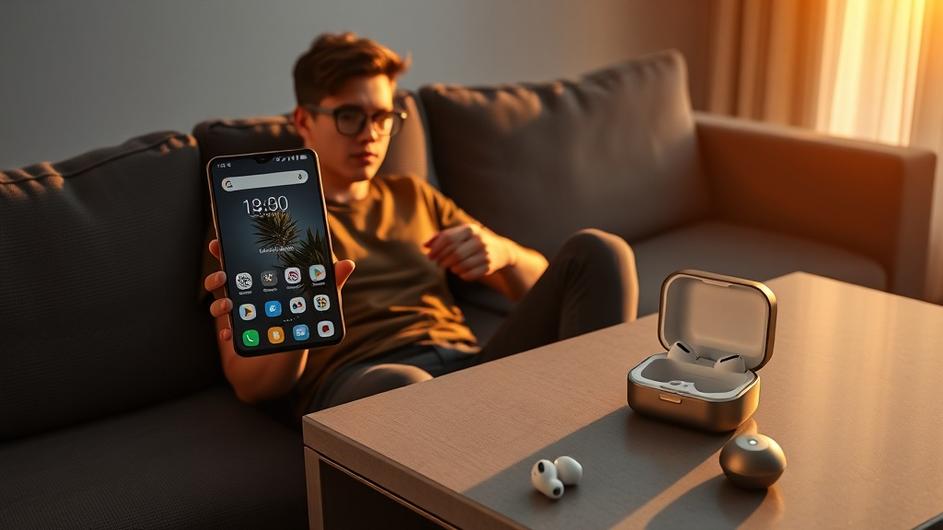
Let’s start with the elephant in the room. Apple’s early 2026 lineup, centered on the iPhone 17e and refreshed iPads and Macs, isn’t just about selling new hardware. It’s about resetting expectations. When Apple upgrades processors, sensors, or machine learning accelerators in mainstream devices, it changes the lowest common denominator that apps can rely on. That creates new opportunities for richer user experiences, from on-device AI features to tighter continuity between phone, tablet, and laptop.
Think about it this way: Apple’s product cadence shapes what developers prioritize. Better performance, improved interoperability, and enhanced AI capabilities become the new baseline. For anyone building mobile apps or services, this isn’t just background noise. It’s a signal that the playing field is about to change, and the experiences users expect are about to get more sophisticated.
Snap’s Bold Move with Specs Inc
While Apple refreshes its mainstream lineup, Snap is making a strategic play that could reshape how we think about AR hardware. The company recently carved out Specs Inc as a standalone unit, focused entirely on consumer augmented reality glasses with a public pledge to target a retail launch in 2026. This isn’t just corporate restructuring. It’s a statement about how AR hardware needs to be funded and built.
Spinning off a hardware division does two important things. First, it makes the capital needs and risks of AR hardware more visible. External investors can now fund a capital-intensive business without buying exposure to Snap’s ad-driven social network. Second, it signals that Snap believes consumer AR needs dedicated product and go-to-market efforts, separate from a social app roadmap. As we’ve explored in our look at how AR glasses and flexible AI chips will redefine wearables, the hardware stack matters just as much as the software.
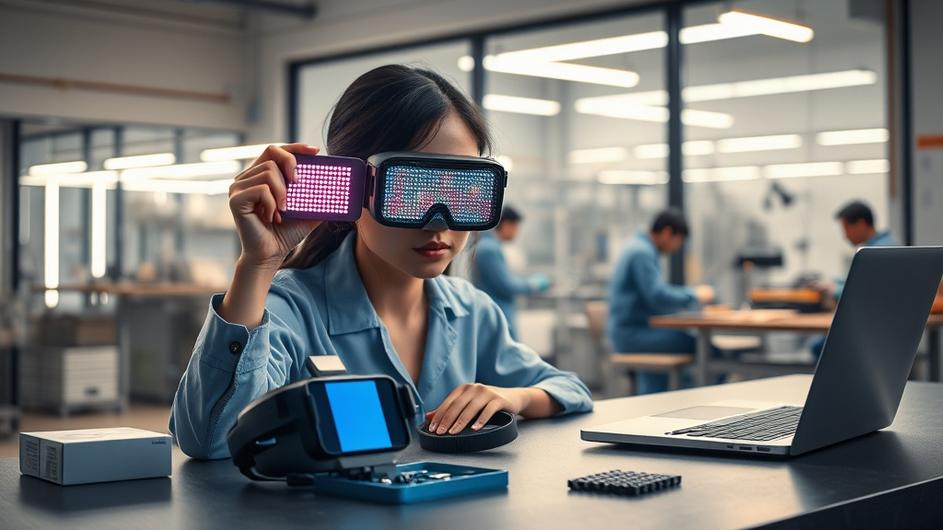
AR hardware isn’t just about optics and miniaturized screens. It requires a tight integration of hardware, firmware, and software: low-latency displays that reduce motion sickness, efficient processors for spatial tracking, batteries that last a full day, and an ecosystem of apps that give people reason to wear the devices regularly. Snap has been showing off features that hint at this ecosystem work, from spatial tips to shared AR games, which underscore a crucial point: hardware only wins when the applications deliver clear daily utility.
The Broader AR Hardware Race Heats Up
Snap’s move changes the competitive geometry for everyone else. Meta, Amazon, Google, Xreal, and retail partners like Warby Parker are all adjusting product plans and supply chains. According to recent analysis of AR glasses releasing in 2026, we’re looking at devices like Xreal and ROG gaming glasses with high refresh rates and low latency, Project Aura (which stitches Google’s Android XR ambitions with Xreal hardware), and Warby Parker’s partnership for mass-market AI glasses.
If these efforts converge around reasonable pricing and clear use cases, we could see faster app support, broader retail availability, and a meaningful shift in how people carry and use their phones. It’s part of a larger trend we’ve been tracking in our coverage of how Apple, Meta, and Snap are racing to make AI and AR the next hardware story.

What Developers Need to Know Now
For developers watching this unfold, the implications are clear but challenging. First, start thinking spatially. AR isn’t just a new UI. It’s a new interaction paradigm that affects input, notification models, and persistence of context. Designing for glance-driven, voice-assisted, and gesture-aware interactions will be fundamentally different than building a traditional mobile app.
Second, pay attention to platform boundaries. Snap’s Specs Inc could expose APIs that integrate with Snapchat features, while Google-led efforts will likely emphasize Android XR compatibility. Cross-platform tooling and standards will be decisive, so early investments in adaptable architectures and content pipelines are prudent. This aligns with what we’re seeing in the new playbook for AR OS upgrades and device security.
The shift toward spatial computing requires developers to reconsider everything from user onboarding to data persistence. How do you guide someone through setting up AR glasses for the first time? How do you handle permissions for always-on spatial sensors? These aren’t just technical questions. They’re design and ethical considerations that will shape user adoption.
The Investor Perspective: Hardware Economics 101
Investors are paying attention because hardware requires scale, and scale often requires external capital. By separating Specs into a distinct legal and financial entity, Snap has made it easier for outside investors to underwrite the long tail of hardware losses while the consumer business matures. That’s an essential step toward achieving the manufacturing, inventory, and retail muscle necessary for mainstream hardware adoption.
As analysis of AR hardware and business bets in 2026 shows, the financial models for wearable tech are evolving. We’re moving beyond the “sell the hardware at a loss, make it up on services” approach to more nuanced strategies that account for different user segments, use cases, and geographic markets.
Real Challenges That Remain
Let’s not get ahead of ourselves, though. Battery life, thermal constraints, and aesthetics remain hard engineering problems. No one wants to wear glasses that overheat after 30 minutes or need charging every few hours. Developers will also wrestle with privacy, permissions, and social norms as always-on spatial sensors become more common.
Regulatory scrutiny and consumer acceptance will shape which features become table stakes, and which remain niche. As we’ve discussed in our examination of pricing pressure and AI access rewriting 2026 hardware playbooks, getting the price right matters just as much as getting the technology right.
Why 2026 Feels Different
So why does 2026 feel like a turning point? Multiple forces are converging in ways we haven’t seen before. Apple’s device refreshes raise the baseline for what standard apps can do. Snap’s corporate restructuring focuses attention and funding on consumer-grade AR hardware. A cohort of competitors promises diverse product strategies, from gaming-first glasses to AI-enhanced mass-market frames.
For creators and builders, this is fertile ground for new experiences that span phone, glasses, and cloud services. It’s about creating distributed intelligence that moves seamlessly between devices, not just building apps for a single platform.
The Future: Complementary, Not Replacement
Looking forward, the most interesting outcomes won’t be a single killer device, but a set of complementary habits and markets. AR glasses could replace some phone use cases, like navigation, quick notifications, and contextual overlays, while phones remain indispensable for photography and heavy compute. Developers and platform owners who plan for distributed experiences, where state and intent move seamlessly between devices, will be best positioned.
In short, 2026 may not deliver a sudden replacement of smartphones, but it could mark the year when spatial computing becomes a credible, developer-friendly extension of the mobile ecosystem. As analysis of why consumers should care about Snap’s Specs Inc suggests, the user experience benefits could be substantial if executed well.
Key Takeaways for Builders
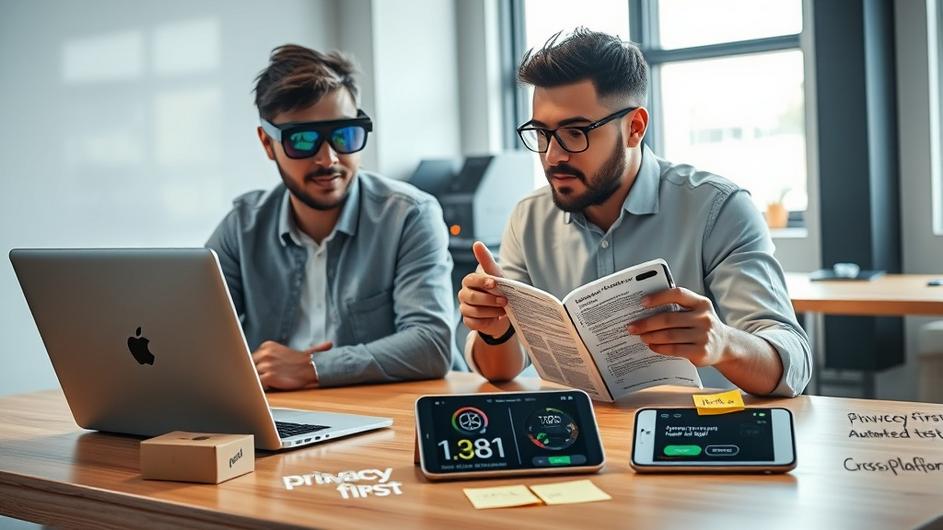
For anyone building the next generation of interfaces, the lesson is clear. Invest in cross-device design, prioritize privacy-forward sensing, and prepare for a world where hardware and software companies pursue different business models to make AR viable. The coming months will reveal which strategies endure, but the momentum suggests that a broader shift in personal computing is no longer hypothetical. It’s happening.
The question isn’t whether AR will become mainstream. It’s how quickly, in what form, and which platforms will dominate. For developers, investors, and consumers alike, 2026 looks like the year we start getting real answers.
Sources
Bloomberg, Apple Prepares to Kick Off 2026 With the iPhone 17e, New iPads and Macs, Bloomberg.com, 08 Feb 2026, https://www.bloomberg.com/news/newsletters/2026-02-08/apple-readies-iphone-17e-new-siri-entry-level-ipad-ipad-air-and-macbook-pro-mldr3hpk
Glass Almanac, Snap Reveals Specs Inc. Subsidiary in 2026 – Why Investors Should Care, Glass Almanac, 06 Feb 2026, https://glassalmanac.com/snap-reveals-specs-inc-subsidiary-in-2026-why-investors-should-care/
Glass Almanac, 7 AR Hardware And Business Bets In 2026 That Could Reshape Wearables, Glass Almanac, 05 Feb 2026, https://glassalmanac.com/7-ar-hardware-and-business-bets-in-2026-that-could-reshape-wearables/
Glass Almanac, 7 AR Glasses Releasing In 2026 That Could Upend Your Phone Habit, Glass Almanac, 09 Feb 2026, https://glassalmanac.com/7-ar-glasses-releasing-in-2026-that-could-upend-your-phone-habit/
Glass Almanac, Snap Reveals Specs Inc In 2026 – Why Consumers Should Care Now, Glass Almanac, 05 Feb 2026, https://glassalmanac.com/snap-reveals-specs-inc-in-2026-why-consumers-should-care-now/