
2026 Device Moment: How AR Glasses, AI Phones, and Matter Cameras Are Rewriting the Platform Playbook
If you’re trying to figure out where consumer tech is headed in 2026, forget about looking for a single winner. The market isn’t converging on one dominant device anymore. Instead, we’re seeing something more interesting, a busy ecosystem where big companies place multiple bets at once, hardware fragments into distinct shapes, and interoperability standards finally start to matter. For developers and product teams building the next generation of apps, these shifts present both a serious challenge and a real opportunity. What will decide which platforms dominate the next five years? Look at readability, privacy, and how seamlessly commerce gets woven into daily life.
AR Gets Practical, Not Just Speculative
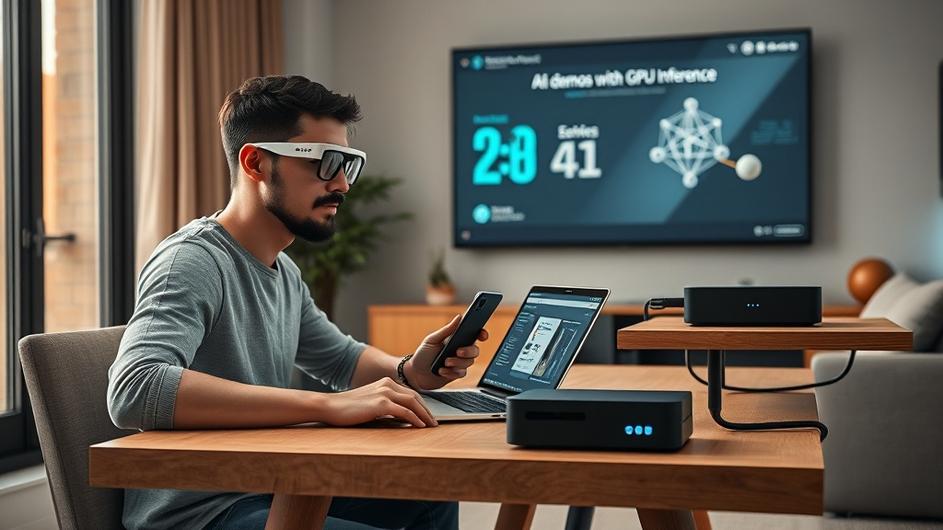
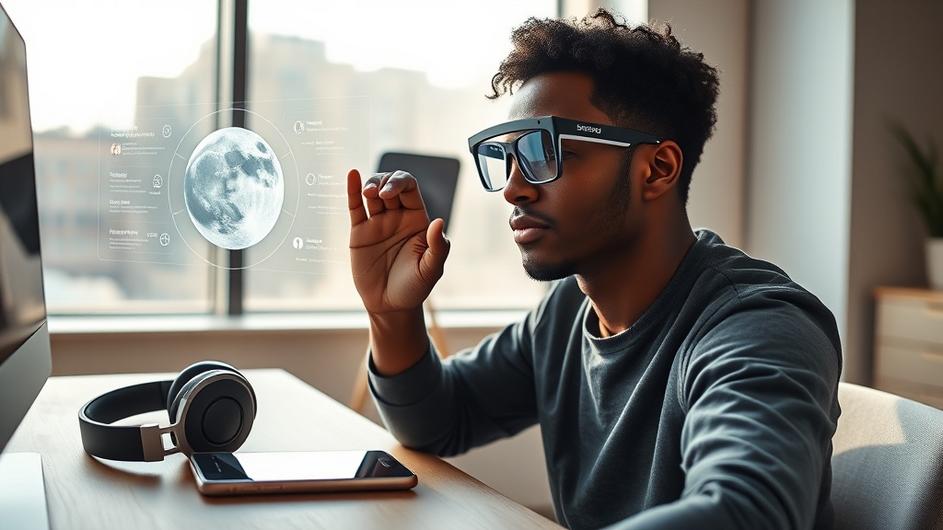
Augmented reality has quietly moved from speculative hype into the realm of pragmatic engineering. After years of talk about immersive metaverse worlds, companies are now prioritizing lightweight experiences that actually fit into daily routines. Think subtle overlays and glanceable information, not full holographic gameboards that nobody has time for.
What makes this shift clear? For starters, major players aren’t betting everything on a single flagship product anymore. Public reports indicate Meta is building several AR and mixed reality glasses families through 2026, which suggests we’ll see device fragmentation even within its own ecosystem. Developers should prepare for varying fields of view, different sensors, and uneven performance across models. The smart approach? Design experiences that degrade gracefully.
Then there’s the fashion factor. It’s becoming central to whether people actually wear these things. Partnerships and rumors involving Warby Parker and Google point toward prescription-ready smart glasses that prioritize wearable comfort and aesthetics. The goal is making AR something people actually want to put on every morning. This pushes interfaces toward lighter overlays, heads-up contextual cues, and APIs built for glance-based interactions. For UX teams, that means rethinking interaction models away from long-form content and toward rapid, context-aware micro-interactions.
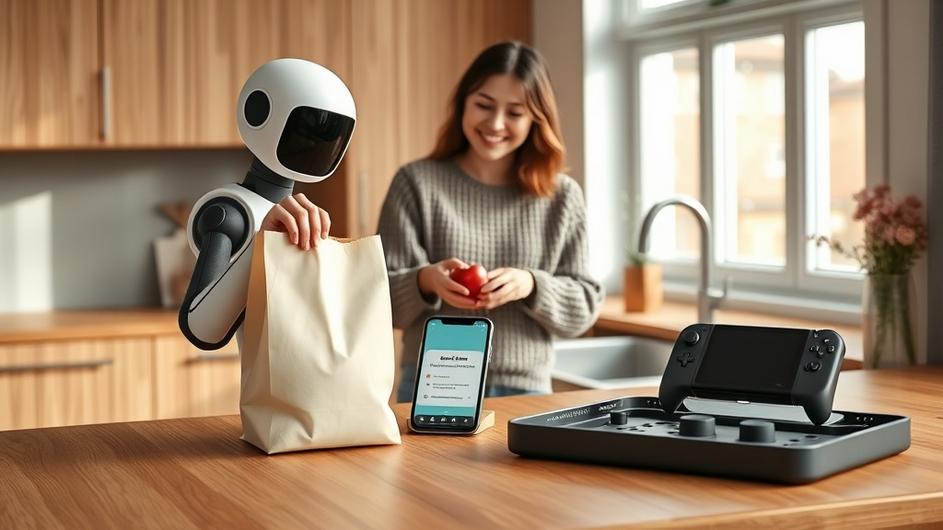
Hardware competition is accelerating the entire timeline. Snap has created a dedicated AR glasses unit and is seeking outside investment, which could mean faster product rollouts. Amazon is quietly developing AR glasses too, with reports suggesting the company wants to tie hardware directly to commerce and convenience. If Amazon succeeds in embedding shopping flows and product recognition into eyewear, developers will need to think about commerce hooks, privacy-preserving product matching, and edge processing to keep latency low. It’s a whole new developer playbook in the making.
The Privacy Push and On-Device Intelligence
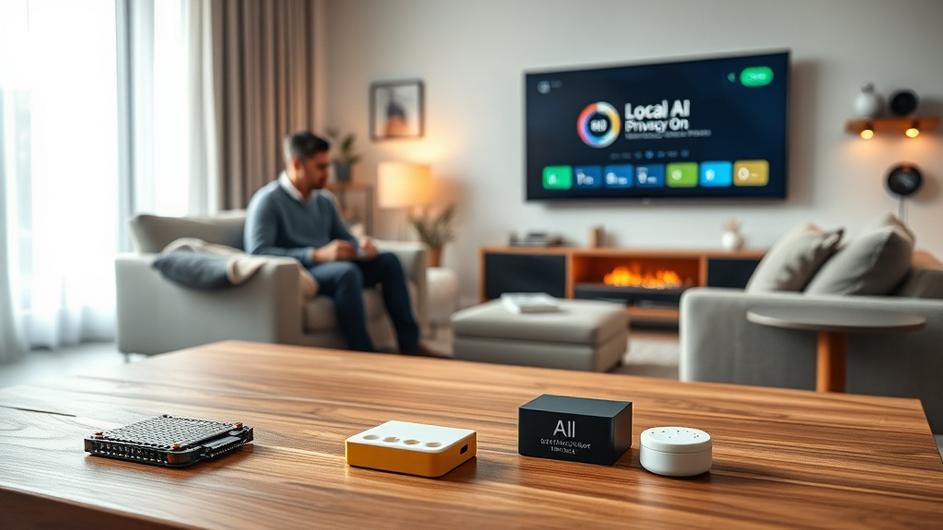
As AR moves from phone screens to glasses sitting on our faces, moderation and user privacy will make or break adoption. The push toward on-device intelligence isn’t just about speed, it’s about trust. Processing data locally reduces the need to stream visual feeds to the cloud, which appeals to privacy-minded consumers and regulators alike. Developers should plan for hybrid architectures where models run locally for immediate responses and selectively sync with cloud services for heavier tasks. It’s a balancing act, but getting it right could be a major competitive advantage.
This trend toward local processing aligns with what we’re seeing across the broader AI hardware wave. Companies realize that users want smart devices, but they don’t want every glance and conversation uploaded to a server farm.
Smartphones Get Smarter, and More Voice-First
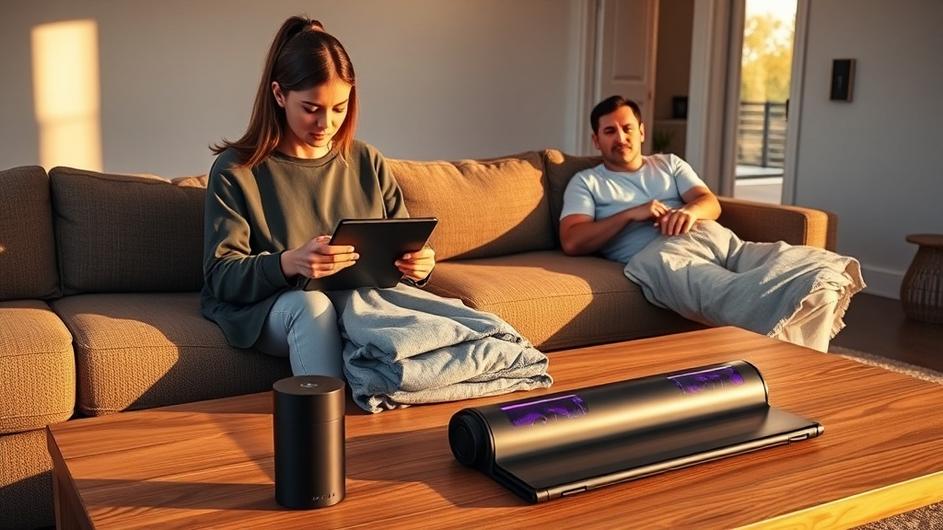
Here’s where things get really interesting. The smartphone isn’t disappearing, but it’s changing in ways we didn’t expect. Amazon is reportedly building a new smartphone with Alexa at its core, designed to leverage its AI and smart home investments. Think about what that means. A phone built around a voice and AI assistant changes app priorities completely. Instead of being a pure UI canvas, the device gets optimized for ambient intelligence, background context, and voice-first flows.
This could reshape how users discover services, authenticate transactions, and interact with smart home devices. For developers, it means investing in voice interfaces, intent resolution, and robust privacy controls. The phone becomes less of a standalone device and more of a bridge between personal AI and the physical home. Could this be the moment when voice finally becomes the primary interface for mobile? The signs are pointing that way.

Mainstream Hardware Gets More Accessible
Meanwhile, mainstream device makers are lowering the bar for capable hardware, which expands the potential user base for modern apps. Apple introduced value-oriented devices like the MacBook Neo and the iPhone 17e, bringing affordable access to the Apple ecosystem. On the Android side, flagships like the Galaxy S26 and high-performance laptops like the Dell XPS 16 continue to push what’s possible. The net effect? A larger, more diverse pool of users with capable machines.
That diversity supports more ambitious cross-device experiences, from cloud-synced workflows to lightweight AR served via phones or glasses. It’s part of why Apple’s AR and AI strategy matters so much right now. When capable hardware becomes accessible to more people, the market for advanced applications grows exponentially.
Interoperability Finally Gets Real with Matter
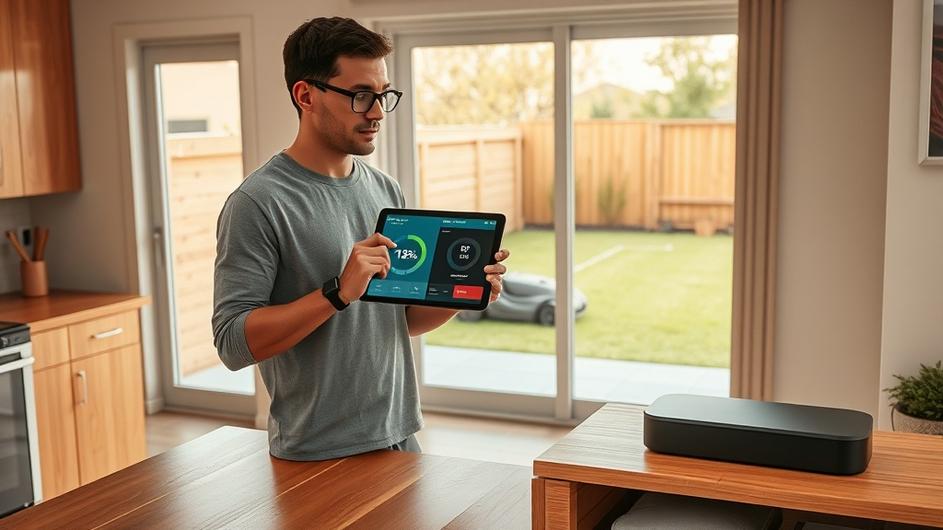
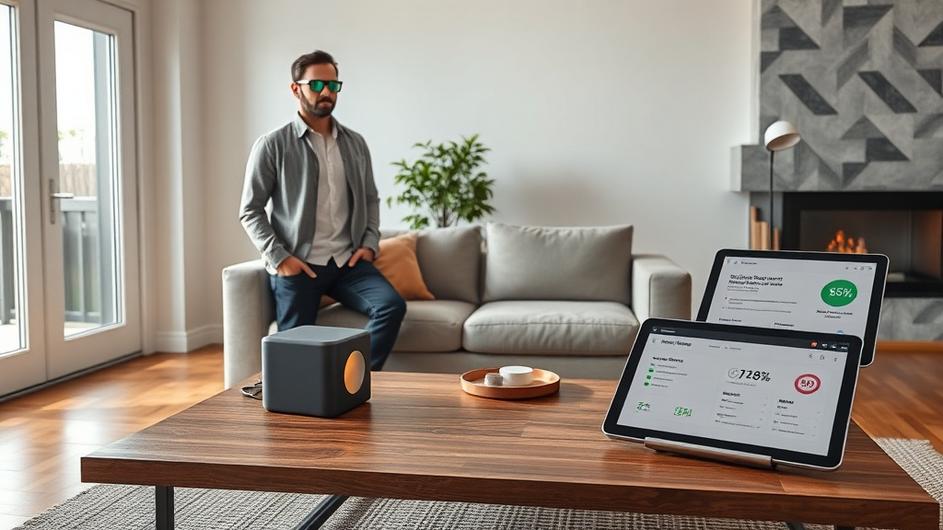
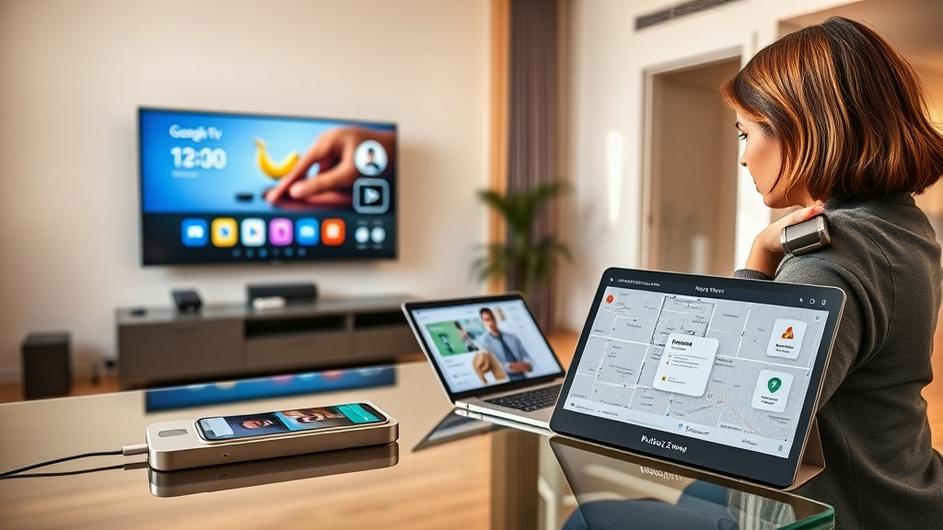
One of the most promising developments for device ecosystems is the concrete traction we’re seeing with smart home standards. The Aqara Camera Hub G350 has emerged as the first Matter smart security camera to ship, showing that the Matter standard for device interoperability is moving from promises to products. For developers, Matter provides a common protocol for discovery and control, which reduces integration friction dramatically.
When security cameras, smart locks, and lighting speak a shared language, apps can orchestrate richer scenarios without fragile hacks or custom drivers. This matters because it lets teams focus on higher-level experiences rather than wrestling with compatibility issues. As AR shifts toward practical applications, having a reliable smart home backbone becomes increasingly important.
The Tradeoffs: More Devices Mean More Security Concerns
Of course, all these advances come with tradeoffs. More capable, cheaper devices mean more endpoints to secure. Cross-vendor interoperability raises legitimate questions about credential management and threat models. Standards like Matter help, but they don’t replace careful design around authentication, encrypted channels, and least-privilege data access.
If your product touches cameras, voice assistants, and AR overlays, building robust permission models and telemetry that respect user expectations isn’t just good practice, it’s becoming a competitive advantage. Users are getting smarter about what data they share and with whom. Companies that recognize this early will build more trust, and trust translates directly to adoption.
Location-Based AR Makes a Comeback
Here’s something developers should watch closely. Location-based AR is re-emerging as a compelling playground for innovation. Companies like Niantic are refocusing on real-world gameplay and experiences that leverage local maps, environmental understanding, and social mechanics anchored to physical places. For developers, this means investment in localization, spatial mapping, and content moderation tools that operate at scale, often on-device when required.
It’s part of the broader trend toward wearables that understand context. When your glasses know where you are and what you’re looking at, they can deliver experiences that feel genuinely useful rather than just novel.
The New Platform Playbook
So what does all this add up to? A new platform playbook for 2026 and beyond. The market is fragmenting across device families, but common layers are forming beneath the surface. On-device AI, voice assistant ecosystems, and open smart home standards are creating a foundation that favors developers who build modular, privacy-first services.
These services need to adapt to multiple input modalities, from taps and voice to glances and gestures. The companies that succeed won’t be the ones with the flashiest hardware alone, but those that understand how to blend information, AI, and services into the fabric of everyday life. As hardware prices continue to tell an important story, accessibility will drive the next wave of adoption.
Looking forward, the near future will be defined by the tension between convenience and control. Companies will race to embed AI and commerce into every surface, while standards and privacy concerns shape what consumers actually accept. For engineers, product managers, and designers, the right strategy is to design for variability, invest in local intelligence, and embrace interoperability where it genuinely lowers friction.
The next wave of user experiences won’t be about dazzling immersive worlds that few people use. Instead, it will be about seamlessly blending useful information, intelligent assistance, and practical services into moments that matter. That opens a broad frontier for creative, responsible engineering, where the richest opportunities sit at the intersection of hardware diversity, software modularity, and human-centered privacy. The race isn’t to build the most powerful device, but to create the most useful ecosystem.
Sources
- 7 AR Devices And Trends Revealing 2026 Winners, Glass Almanac, Mon, 23 Mar 2026
- 6 Augmented Reality Shifts In 2026 That Reveal What Changes Now, Glass Almanac, Mon, 23 Mar 2026
- Amazon working on new smartphone with Alexa at its core, report says, TechCrunch, Fri, 20 Mar 2026
- Engadget review recap: Lots of Apple devices, Galaxy S26, Dell XPS 16 and more, Engadget, Sat, 21 Mar 2026
- The First Ever Matter Smart Security Camera Is Here, Forbes, Thu, 19 Mar 2026